

 Call Us Today (732) 249-0444
 October 24, 2026

You may qualify for injury compensation in New Jersey if someone else’s negligence caused your injury and you can show what you lost. Compensation may cover medical bills, lost income, and pain and suffering. You may still have a claim if you were partly at fault, but your share of fault can reduce what you receive. In most New Jersey personal injury cases, you have two years to file a lawsuit.
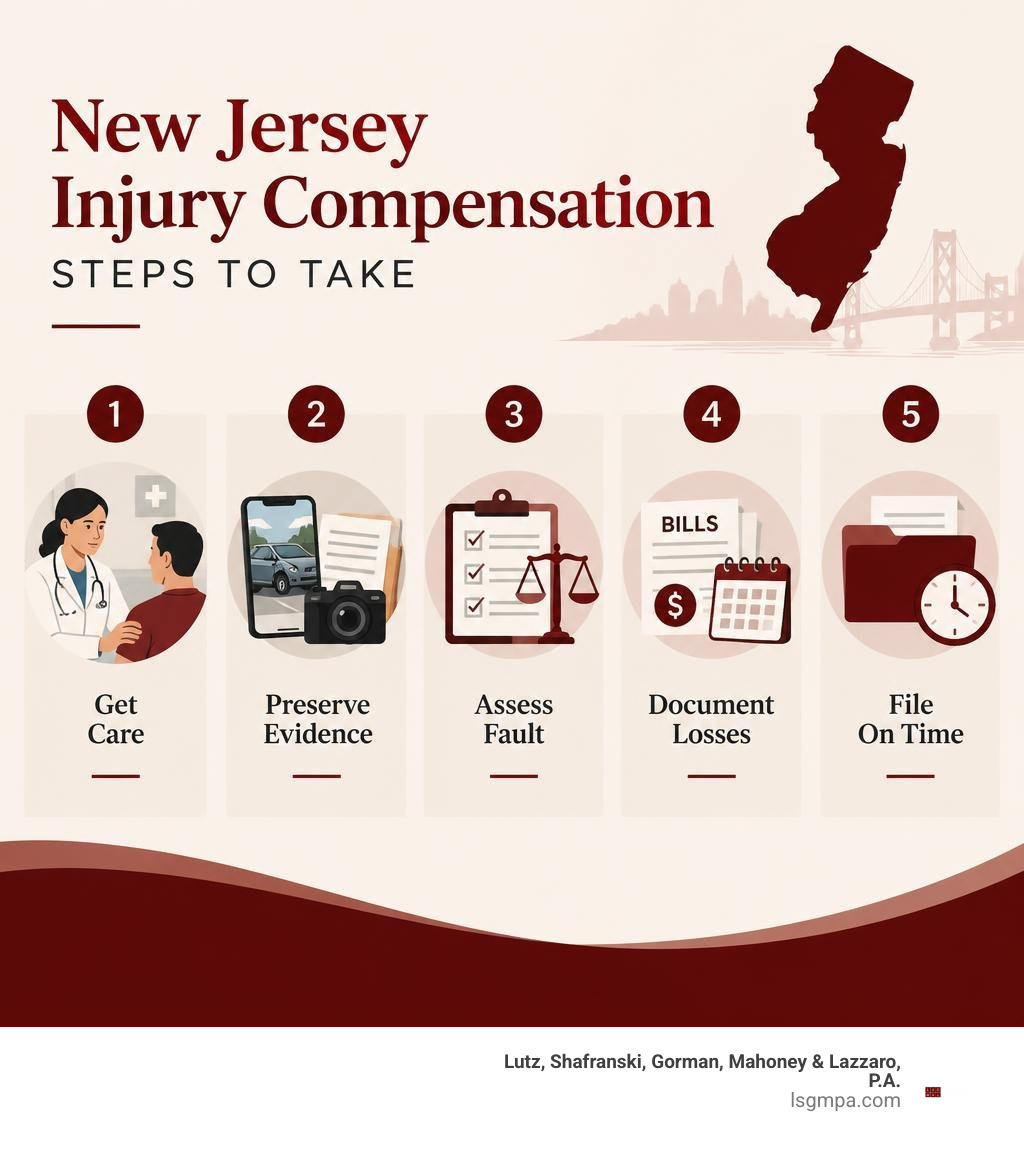
Start by getting medical care. Then save photos, witness details, accident reports, bills, and proof of missed work. The rules depend on where the injury happened: the UK’s Criminal Injuries Compensation Authority, or CICA, is a separate route for eligible victims of violent crime, not a New Jersey claims program.
I’m Frank Lazzaro, a New Jersey Certified Civil Trial Attorney who has handled injury compensation cases resulting in six- and seven-figure verdicts. I’ll walk you through the eligibility rules, claim steps, and deadlines that matter most.

When pursuing financial recovery after an accident, understanding how the legal system categorizes your losses is essential. Broadly, compensation is designed to restore you—as closely as financially possible—to the position you would have been in had the harmful event never occurred. Different legal systems achieve this through various frameworks, including civil liability torts, statutory compensation funds, and no-fault insurance mechanisms. Reviewing comprehensive guidelines on injury compensation types and claim processes can help clarify how these systems operate across jurisdictions.
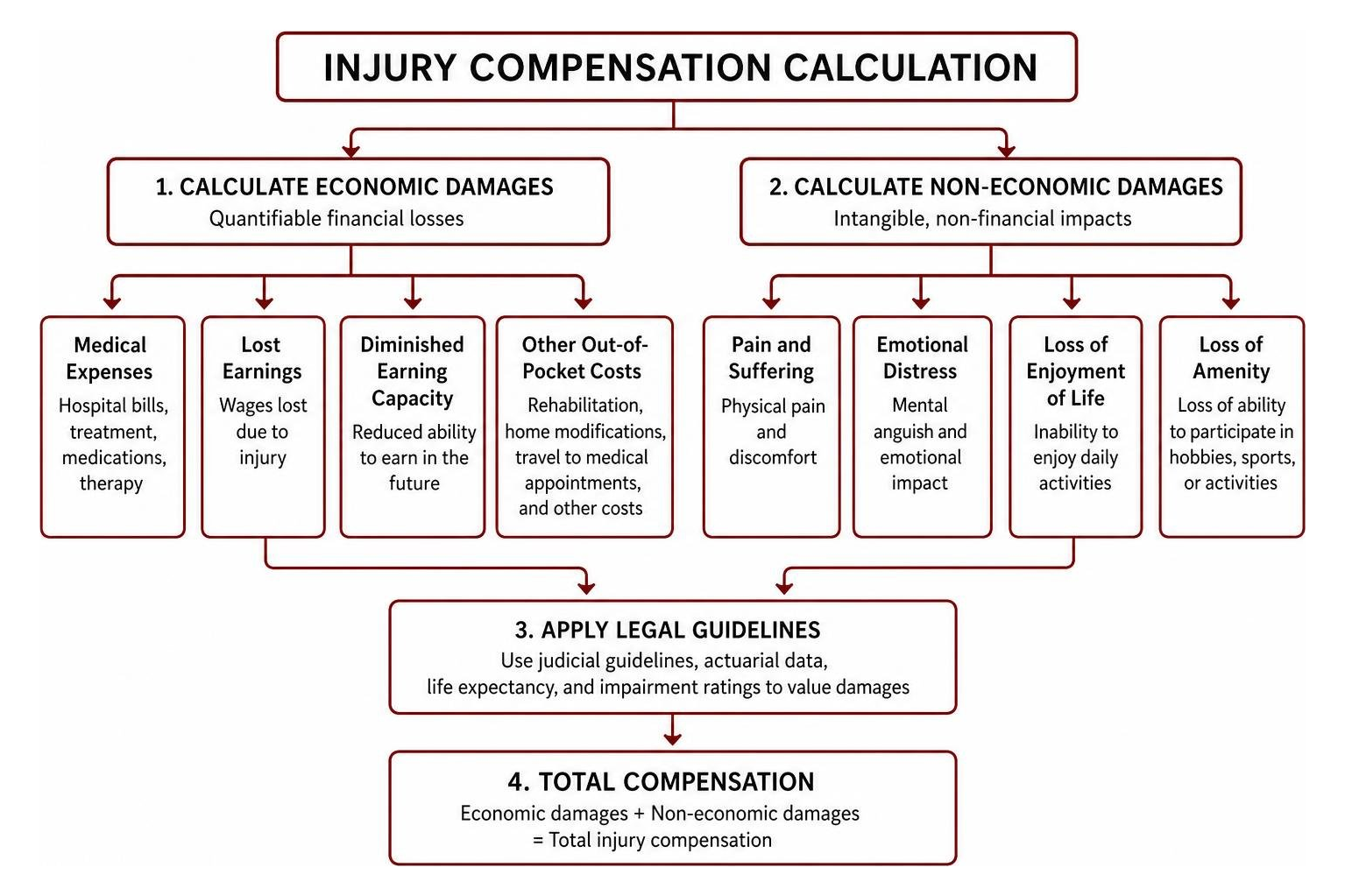
Civil personal injury claims divide damages into two primary categories: economic losses and non-economic losses.
Securing full recovery requires detailed documentation for both categories. Seeking early legal guidance from accident claim lawyers ensures that every element of your financial and personal loss is properly identified and valued.
A civil personal injury claim is brought directly against the at-fault individual or business (or their liability insurer) and requires proving negligence on a balance of probabilities. However, when an individual is harmed by intentional violence, the perpetrator may lack insurance or assets.
In jurisdictions like Great Britain, victims of violent crime can turn to the Criminal Injuries Compensation Authority (CICA), a state-administered scheme that provides standardized tariff-based payments regardless of whether the offender has been identified, charged, or convicted. CICA covers physical and psychological injuries resulting from crimes of violence, as well as terrorist incidents under its overseas terrorism scheme. Eligible claimants can access the official portal to claim compensation for violent crime injuries to start that statutory process. In contrast, standard civil claims pursue unlimited common-law damages tailored to actual losses, whereas CICA operates within fixed statutory limits and strict eligibility rules.
Valuing a personal injury claim involves analyzing medical prognoses, life expectancy tables, impairment ratings, and established legal guidelines. In civil court systems, judges and attorneys rely on established benchmarks—such as the Judicial College Guidelines in the UK or standardized actuarial formulas in American civil courts—to calculate fair settlement ranges for general damages.
Published judicial benchmarks establish clear baseline ranges for general damages based on injury severity:
| Injury Category | Severity Description | Typical Guideline Range |
|---|---|---|
| Brain & Head Injury | Very severe; significant cognitive deficit, full dependence | £372,570 to £533,720 |
| Psychiatric Damage | Severe; major impact on daily coping, prognosis poor | £72,440 to £152,900 |
| Sensory Loss | Total blindness and loss of sight | In the region of £355,020 |
| Paralysis (Tetraplegia) | Complete paralysis of all four limbs | £428,850 to £533,720 |
| Facial Scarring | Very severe cosmetic disfigurement | £39,340 to £128,590 |
| CICA Scheme Limits | Minimum tariff to maximum statutory cap | £1,000 to £500,000 |
These figures reflect baseline non-economic awards; total recoveries often exceed £1,000,000 or multimillion-dollar equivalents once lifetime special damages, loss of earnings, and round-the-clock nursing care are calculated.
Catastrophic injuries permanently alter a victim’s life and require comprehensive life-care plans that project future medical needs over decades. These plans factor in adaptive housing modifications, specialized mobility equipment, ongoing surgical interventions, and occupational therapy.
Victims facing severe tissue trauma can benefit from understanding burn injury compensation calculations, which incorporate extensive pain management and skin graft procedures. Similarly, learning how amputation injury lawsuits work highlights the necessity of accounting for lifetime prosthetic replacements. Working under the guidance from a catastrophic injury lawyer ensures these complex, lifelong damages are thoroughly documented and pursued.
To establish eligibility for compensation under standard negligence law, four legal elements must be proven:
Filing deadlines, known as statutes of limitations, strictly govern your right to seek legal redress:
Being partially responsible for an accident does not automatically bar you from receiving compensation. Under comparative negligence (or contributory negligence) principles, fault is apportioned as a percentage:

Taking organized steps immediately after an accident helps protect your health and establishes the evidence needed to support your claim.
Most personal injury claims are managed through Conditional Fee Agreements (CFAs), commonly referred to as “No Win, No Fee” arrangements. Under a CFA, you pay no upfront legal fees; your legal representation is compensated via a legally capped success fee deducted from the final damages only if the case succeeds.
If an insurer or compensation board issues an undervaluation or rejection:
In most jurisdictions, personal injury compensation payouts awarded for pain, suffering, and personal loss are non-taxable lump sums. However, receiving a substantial cash payout can push your assets above statutory capital limits for means-tested welfare benefits. To protect ongoing benefit eligibility, claimants frequently establish a Personal Injury Trust, which holds and manages the compensation funds separately from personal capital.
Yes. Civil injury claims and CICA applications operate under the civil standard of proof—the “balance of probabilities” (meaning it is more likely than not that the event occurred as described). This is a lower threshold than the criminal standard of “beyond reasonable doubt.” You can successfully claim compensation even if the police never identified, charged, or secured a conviction against the perpetrator.
If your claim is rejected or undervalued, request written reasons for the decision. For administrative schemes like CICA, you have a strict window to submit a formal request for an internal review with additional medical reports or witness testimony. In civil matters, your attorney can obtain independent expert medical reports, issue formal settlement demands, or initiate court proceedings to ensure your case is fully and fairly assessed.
Securing fair compensation after an accident is vital to recovering your financial stability, managing ongoing medical care, and rebuilding your life. Whether you are navigating complex civil litigation, comparative fault disputes, or statutory injury schemes, understanding your rights ensures you do not settle for less than your claim is worth. For comprehensive evaluation and dedicated advocacy across Middlesex County, contact the experienced legal team at Lutz, Shafranski, Gorman, Mahoney & Lazzaro, P.A. to protect your rights and pursue the financial recovery you deserve.