Accident Claim Lawyers Explained: Everything You Need to Know Before Filing
 August 13, 2026
Accident Claim Lawyers Explained: Everything You Need to Know Before Filing
What Accident Claim Lawyers Do After a New Jersey Injury
Accident claim lawyers help injured people pursue compensation when another person or company may be responsible for an accident. They investigate what happened, preserve evidence, handle insurance communications, calculate losses such as medical bills and lost income, and negotiate or file a lawsuit when needed.
In short, an accident lawyer can help protect your claim while you focus on treatment and recovery. This can matter most when injuries are serious, fault is disputed, several parties are involved, or an insurer offers a fast settlement before the full impact of your injuries is known.
| What they help with |
Why it matters |
| Evidence and fault |
Photos, crash reports, witnesses, medical records, and expert analysis can help show negligence. |
| Insurance claims |
Insurers may seek recorded statements or push early offers that do not reflect future costs. |
| Damages |
A claim may include financial losses and non-economic harm, such as pain and suffering. |
| Legal deadlines |
New Jersey filing rules can limit the time available to bring a lawsuit. |
I am Frank Lazzaro, a New Jersey Certified Civil Trial Attorney who has secured multiple six- and seven-figure personal injury verdicts and recoveries. My experience with accident claim lawyers and trial advocacy informs the practical guidance in the sections ahead.
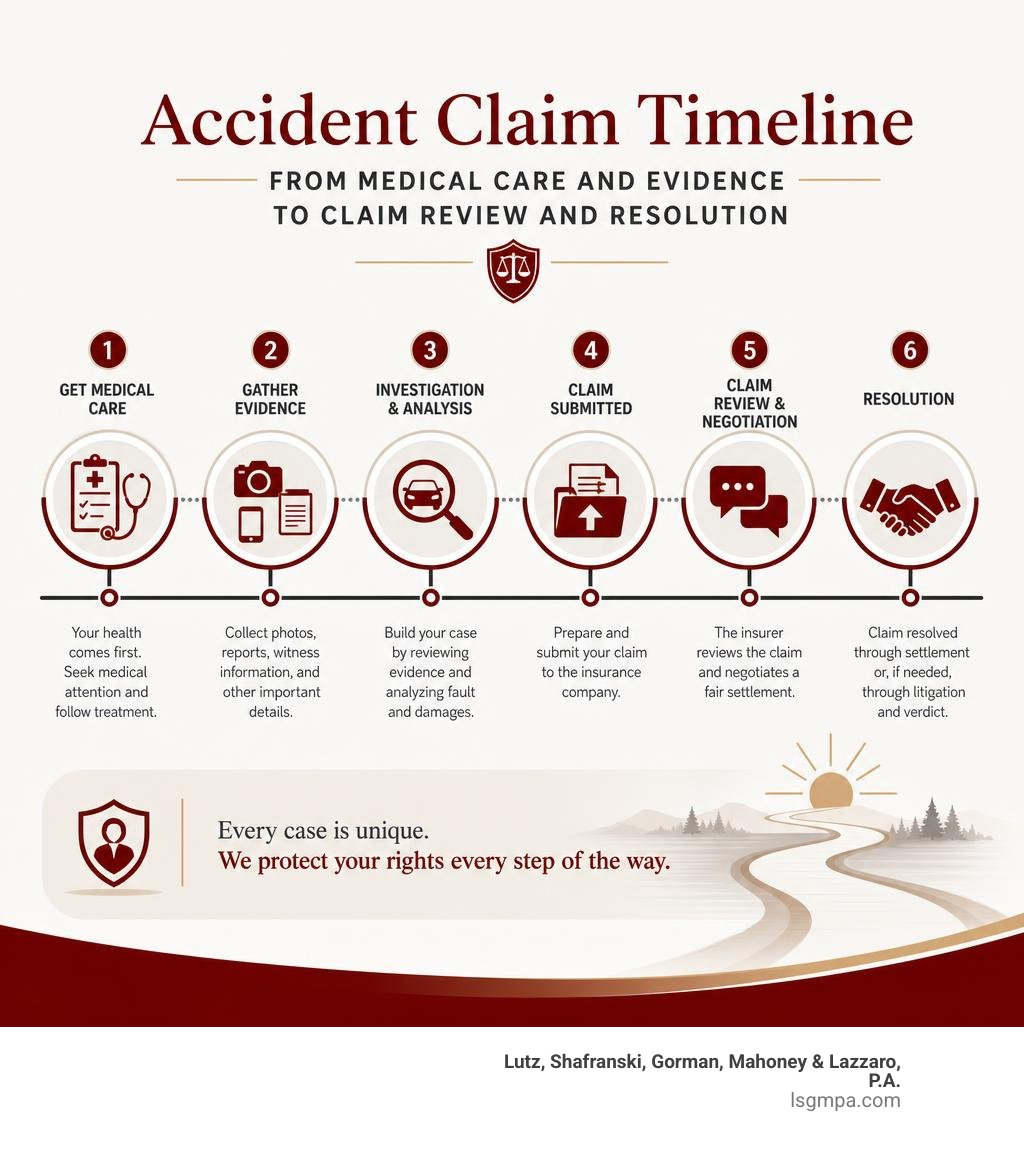
Important accident claim lawyers terms:
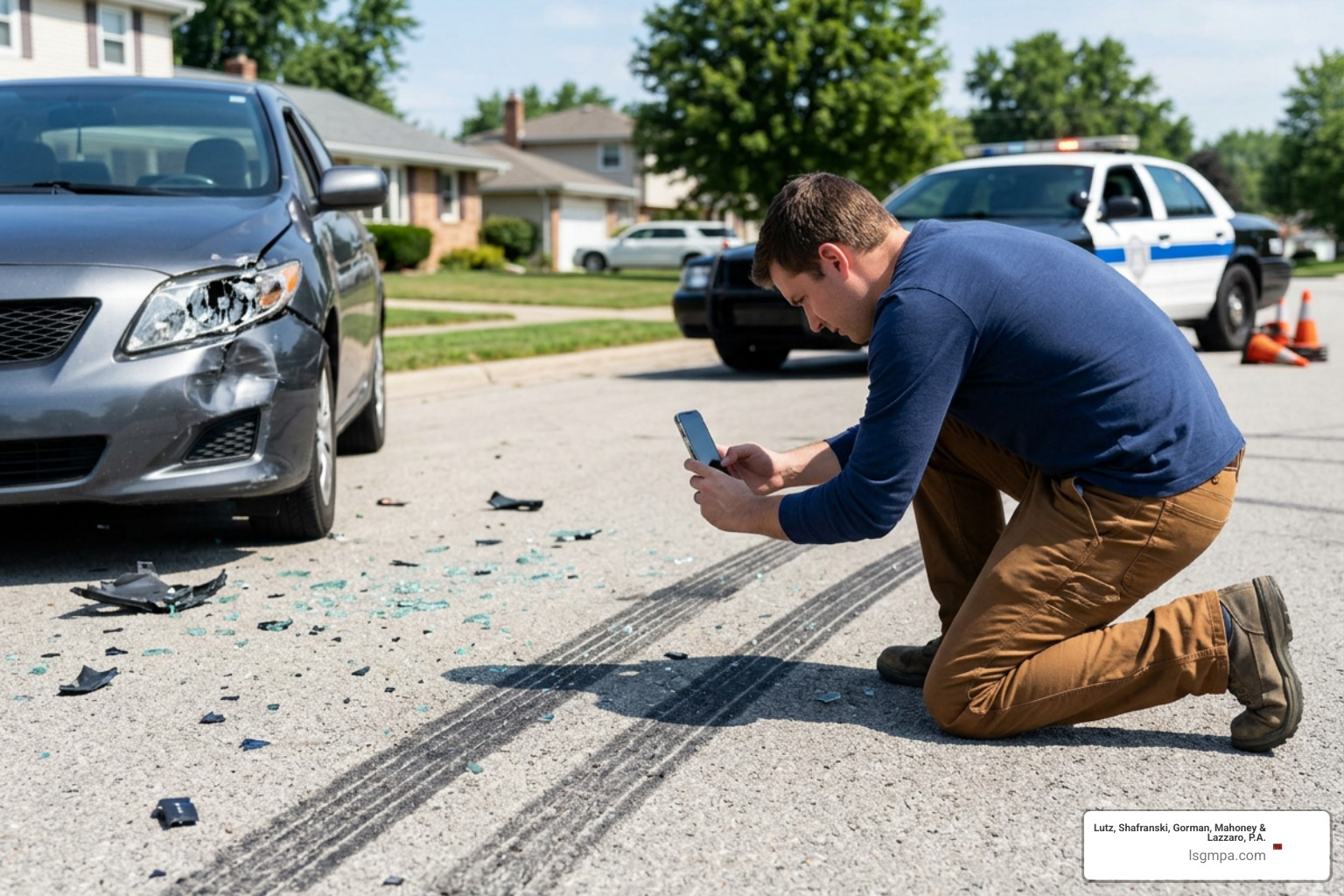
The moments immediately following a collision or unexpected injury on Route 1, Route 18, or anywhere across New Jersey can feel completely chaotic. However, taking the right actions in the immediate aftermath protects both your health and your legal rights. Knowing the proper steps to take after a middletown car accident or crash in Middlesex County can make or break your ability to secure full financial recovery.
- Prioritize Immediate Medical Attention: Your health comes first. Call 911 right away. Even if you feel fine or believe you only have minor bruises, seek a medical evaluation immediately. Internal bleeding, concussions, and soft tissue injuries often display delayed symptoms. Furthermore, immediate medical documentation ties your injuries directly to the incident.
- Contact Law Enforcement: Ensure the local municipal police or New Jersey State Police arrive at the scene to generate an official police crash report. This report serves as an unbiased baseline record documenting the location, parties involved, road conditions, and initial officer observations.
- Gather Crash Scene Evidence: If you are physically able to do so safely, take clear photos and videos of all damaged vehicles, road debris, skid marks, traffic signals, and physical hazards. Capture visible injuries as well. Collect contact and insurance information from all involved drivers, alongside names and phone numbers of eyewitnesses.
- Be Cautious with Recorded Statements: Insurance adjusters often call within 24 to 48 hours, sounding friendly and eager to help. Avoid giving recorded statements or speculating on your injuries before speaking with an attorney.
- Protect Your Financial Health Early: Unexpected emergency room bills and vehicle replacement costs mount fast. To avoid financial distress, make sure you understand how dont let a fender bender break the bank find a car accident lawyer in new jersey can keep insurance companies from shifting unjust financial burdens onto your shoulders.
When to Hire Accident Claim Lawyers for Your Injury Case
Many accident victims wonder whether hiring a lawyer is strictly necessary after a collision. While minor property-damage-only incidents can often be resolved directly with insurers, complex personal injury cases require skilled legal representation.
You should consult experienced accident claim lawyers as soon as possible after receiving emergency medical treatment. Early legal involvement ensures that physical evidence is preserved before skid marks wash away, surveillance footage gets overwritten, or vehicles are repaired or destroyed. Furthermore, navigating complex claims alongside a dedicated catastrophic injury lawyer levels the playing field when facing aggressive insurance defense teams.
In New Jersey, timing is also constrained by strict statutory deadlines. Wait too long, and you risk missing critical notice windows, especially if a government entity or municipal vehicle was involved in the crash.
Certain crash scenarios immediately demand professional legal advocacy:
- Permanent or Severe Disability: Injuries involving traumatic brain injury, spinal damage, loss of limb, or permanent disfigurement carry lifelong medical and financial consequences. Pursuing claims involving severe trauma—such as understanding how amputation injury lawsuits work and what to expect—requires detailed expert testimony and life-care planning.
- Disputed Liability: If the opposing driver or their insurance carrier denies responsibility or claims you caused the crash, we step in to conduct a detailed forensic investigation.
- Multi-Vehicle Collisions: Crashes involving multiple passenger vehicles, rideshares, or commercial trucks create complex liability webs with multiple insurance policies competing to limit payouts.
- Unreasonable Delays or Bad Faith: If an insurer refuses to communicate, denies a valid claim without explanation, or offers an insultingly low initial settlement, immediate legal representation is vital.
How Contingency Fees Work with Accident Claim Lawyers
A common misconception is that retaining top-tier personal injury lawyers requires expensive retainer fees and hourly bills. At our firm, we represent injured clients on a strict contingency fee basis.
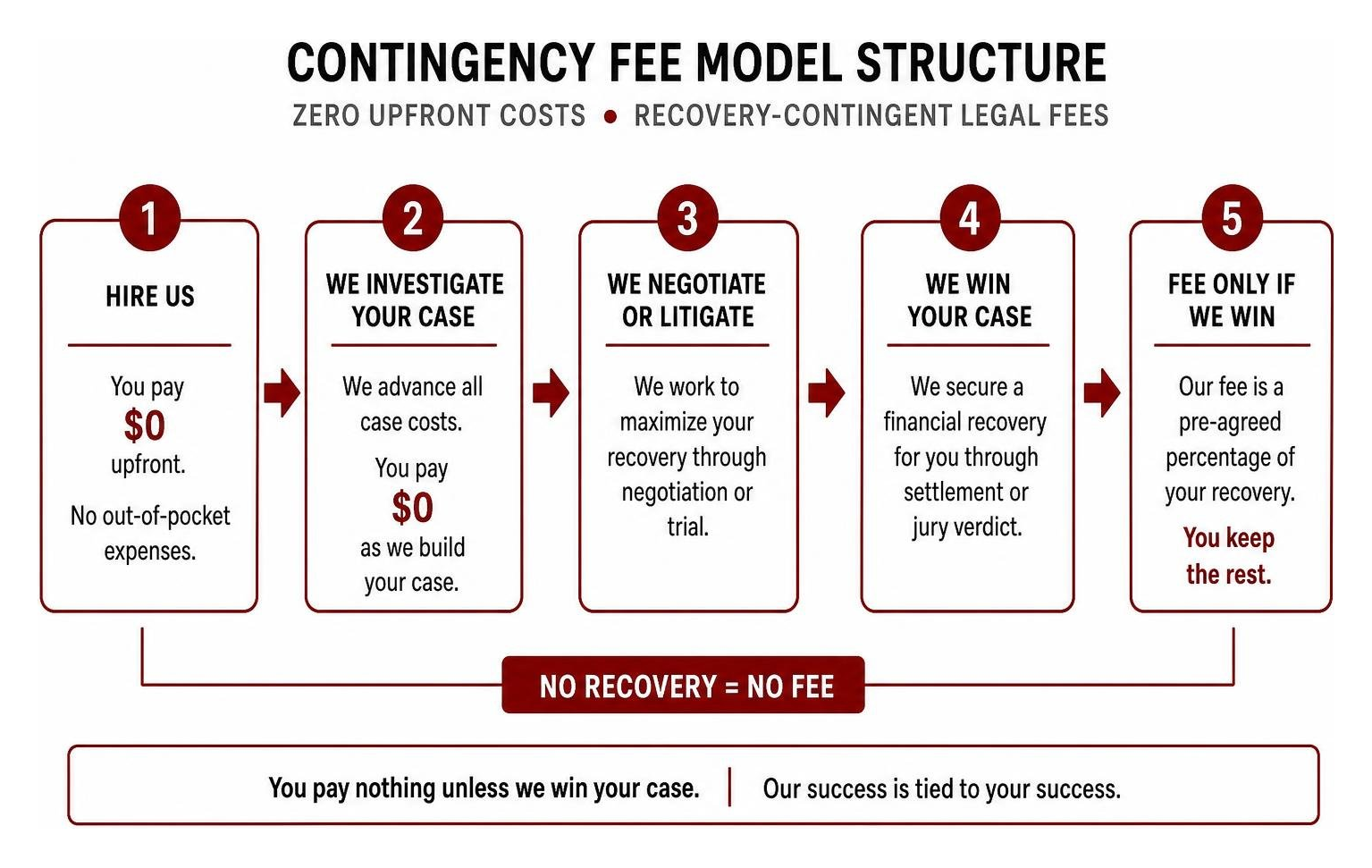
Under a contingency fee agreement:
- No Upfront Out-of-Pocket Expenses: You pay zero dollars out-of-pocket to hire us or begin work on your case.
- We Cover Investigation Costs: Our firm advances all legal costs, including hiring expert witnesses, securing accident reconstruction, obtaining certified medical records, and court filing fees.
- No Legal Fees Unless We Win: We only collect an attorney fee if we successfully secure a financial recovery for you through a negotiated settlement or jury verdict. Our fee is calculated as a predetermined percentage of the total monetary award.
This structure aligns our goals directly with yours: maximizing your total financial recovery as efficiently as possible while removing all financial risk from your recovery journey.
Understanding Damages and Case Value in Personal Injury Claims
Evaluating the overall value of a personal injury claim requires examining both tangible financial losses and intangible physical and emotional impacts. Accident claim lawyers analyze medical records, employment documentation, and expert reports to calculate a comprehensive demand for damages.
| Category |
Economic Damages |
Non-Economic Damages |
| Definition |
Direct, quantifiable financial losses directly caused by the accident. |
Intangible, subjective non-monetary losses impacting quality of life. |
| Documentation |
Hospital bills, pay stubs, tax returns, repair receipts, life-care plans. |
Medical journal entries, pain logs, psychological evaluations, testimony. |
| Examples |
Emergency medical care, future surgeries, physical therapy, lost wages, diminished earning capacity, vehicle repair/replacement. |
Physical pain, emotional distress, mental anguish, loss of enjoyment of life, permanent scarring, loss of consortium. |
| Calculation |
Direct addition of actual expenses and projected expert financial modeling. |
Multiplier methods, per diem calculations, and case law precedent comparisons. |
How Accident Claim Lawyers Evaluate Your Damages
To build a compelling claim, we thoroughly document every tier of your economic financial losses:
- Past and Future Medical Expenses: From emergency ambulance rides and hospital stays in New Brunswick to ongoing physical rehabilitation, prescription medication, and anticipated future surgeries.
- Lost Earnings and Earning Capacity: If your injury forces you to miss work or prevents you from returning to your prior occupation, we calculate both immediate lost paychecks and the long-term reduction in your future earning potential.
- Property Damage: Restoring or replacing your vehicle is an essential early step. Working with an experienced automobile property damage lawyer ensures your vehicle repairs are accurately assessed and diminished value claims are properly evaluated.
Calculating Pain, Suffering, and Wrongful Death Claims
Non-economic damages address the human toll of an injury. In New Jersey personal injury claims, proving non-economic loss requires demonstrating that an injury significantly alters your daily life.
To qualify for pain and suffering damages under New Jersey automobile insurance standards (specifically under policies governed by the Limitation on Lawsuit threshold), an injury must fall into specific legal categories, such as permanent injury, dismemberment, significant disfigurement, or loss of a fetus.
When negligence results in the tragic loss of a loved one, surviving family members can pursue a wrongful death and survival action. Lawyers evaluate wrongful death claims by reviewing:
- Loss of financial support and income the deceased would have provided.
- Loss of companionship, care, guidance, and parental instruction.
- Funeral, burial, and end-of-life medical expenses.
When tragic events unfold in Middlesex County, navigating a catastrophic injury lawsuit in milltown nj requires compassionate guidance and trial-tested strategic planning.
How Insurance Companies Attempt to Reduce Your Payout

Insurance carriers operate as profit-driven corporations. Their primary objective following a serious motor vehicle crash is to resolve claims for the absolute lowest amount possible. Adjusters utilize sophisticated tactics to minimize payouts:
- Quick, Lowball Settlement Offers: Within days of a crash, adjusters often offer a fast cash settlement. These early offers are designed to lock you into a release of liability before the true extent and long-term cost of your medical treatment are known.
- Requesting Recorded Statements: Adjusters sound empathetic when asking for a recorded statement “just to get your side of the story.” In reality, they use leading questions to coax statements that can later be twisted to imply fault or minimize injury severity.
- Shifting Fault and Comparative Liability: Insurers will search for any angle to claim you were speeding, distracted, or partially responsible for the crash. Under New Jersey comparative negligence law, lowering their policyholder’s percentage of fault directly reduces the money they owe you.
- Delaying Claims Processing: Strategic delays put financial pressure on injured victims who face mounting medical bills and lost wages, pushing them into accepting lower settlements out of desperation.
- Blaming Pre-Existing Conditions: Adjusters frequently inspect past medical histories to argue that current back, neck, or joint pain was caused by prior degenerative conditions rather than the crash.
Whether handling cases involving high-speed collisions or incidents linked to distracted driving in middletown, we protect clients by taking over all insurance communications directly.
Navigating Fault, Evidence, and Legal Procedures
Proving liability in an accident claim requires establishing four foundational legal elements: duty of care, breach of duty, causation, and actual damages.
To satisfy these elements, accident claim lawyers assemble robust physical and forensic evidence:
- Police Crash Reports & Traffic Citations: Official records indicating driver violations, such as speeding, failing to yield, or driving under the influence.
- Digital Evidence & Commercial Black Box Data: In truck and commercial transit claims, electronic logging devices (ELDs) and event data recorders capture critical speed, braking, and steering inputs seconds before impact.
- Expert Reconstruction & Witness Statements: Independent accident reconstruction engineers use physical evidence, skid marks, and vehicle deformation to create objective 3D crash simulations.
First-Party Insurance Claims vs. Third-Party Lawsuits
Understanding the distinction between first-party claims and third-party lawsuits is vital under New Jersey’s auto insurance framework:
- First-Party PIP Claims: New Jersey is a no-fault auto insurance state regarding medical coverage. Regardless of who caused the crash, your own vehicle insurance policy’s Personal Injury Protection (PIP) pays for your initial medical treatment, emergency room visits, and essential doctor care.
- Third-Party Fault Claims & Lawsuits: When another driver’s negligence causes serious bodily injury, you bring a third-party claim or court lawsuit directly against the at-fault driver’s liability insurance policy. This action seeks compensation for losses beyond PIP limits, including uncompensated lost wages, future pain and suffering, and loss of quality of life.
Rideshare and commercial crashes introduce additional layers of liability. For instance, resolving complex rideshare incidents often requires working with a specialized new jersey uber accident attorney to navigate tiered commercial insurance coverages.
Comparative Negligence and Shared Liability
Can you still recover financial compensation if you were partially to blame for an accident? In New Jersey, the answer is yes—subject to the modified comparative negligence rule (N.J.S.A. 2A:15-5.1).
Under New Jersey law:
- 51% Bar Rule: You can recover damages as long as your percentage of responsibility is 50% or less. If a court or jury determines you were 51% or more at fault, you are legally barred from recovering any financial compensation from other drivers.
- Proportional Reduction: If you are awarded compensation but found partially at fault, your recovery is reduced in direct proportion to your fault percentage. For example, if your total assessed damages are $100,000 and you are found 20% at fault, your net recovery is $80,000.
Insufficiencies in evidence can leave you vulnerable to exaggerated claims of shared fault. Experienced legal representation shields you against unfair liability assessments.
Frequently Asked Questions About Personal Injury Claims
How long do I have to file a personal injury lawsuit after an accident?
Under New Jersey’s statute of limitations (N.J.S.A. 2A:14-2), you generally have two years from the exact date of the accident to file a personal injury lawsuit in court.
However, critical exceptions exist. If your accident involved a government vehicle, public transit bus, or municipal property, you must file a formal Notice of Claim under the New Jersey Tort Claims Act within just 90 days of the incident. Missing these statutory deadlines permanently revokes your legal right to seek financial compensation.
What should I avoid saying to an insurance adjuster after a crash?
When communicating with any insurance adjuster following an accident, remember three key rules:
- Never Say “I’m Sorry” or Admit Fault: Politeness can be misinterpreted as an admission of legal responsibility. Stick strictly to basic facts.
- Never Say “I’m Fine” or Guess Injury Severity: Do not discuss your physical medical condition until a doctor has thoroughly evaluated you. Saying you feel fine shortly after an accident can be used against you if pain develops later.
- Refuse Recorded Statements: You are not legally obligated to provide a recorded statement to the opposing driver’s insurer. Politely decline and direct them to your legal representation.
How do I choose the right attorney for my injury case?
Selecting the right legal team is pivotal to your case outcome. Look for attorneys who demonstrate:
- Certified Trial Expertise: Choose lawyers recognized as Certified Civil Trial Attorneys by the Supreme Court of New Jersey—a distinction held by a small percentage of attorneys exhibiting proven courtroom proficiency.
- Deep Local Knowledge: Practitioners familiar with local courts in New Brunswick, Middlesex County, and central New Jersey understand local procedural nuances and judicial expectations.
- A Proven Track Record: Review past case outcomes, six- and seven-figure recoveries, and authentic client reviews on trusted directories like Best Lawyers in New Brunswick, NJ and Best Lawyers in Milltown, NJ.
- Transparent Communication: Learn how to choose a car accident lawyer in middletown who offers clear, responsive communication without overwhelming legal jargon.
Conclusion
Navigating the aftermath of a severe injury, mounting medical bills, and complex insurance policies does not have to be overwhelming. Partnering with experienced accident claim lawyers levels the playing field, protects your rights, and ensures insurance companies take your financial recovery seriously.
At Lutz, Shafranski, Gorman, Mahoney & Lazzaro, P.A., our team brings decades of local courtroom litigation experience to central New Jersey residents across New Brunswick, Milltown, Perth Amboy, Edison, Woodbridge, Piscataway, East Brunswick, Sayreville, Middlesex, North Brunswick, Highland Park, and Monroe. We fight aggressively for maximum compensation while you focus on what matters most: your physical healing and family’s well-being.
If you or a loved one was hurt due to someone else’s negligence, contact a dedicated New Brunswick Car Accident Lawyer today for a free, no-obligation consultation. Let us put our experience to work for you.


 Call Us Today (732) 249-0444
