

 Call Us Today (732) 249-0444
 October 20, 2026

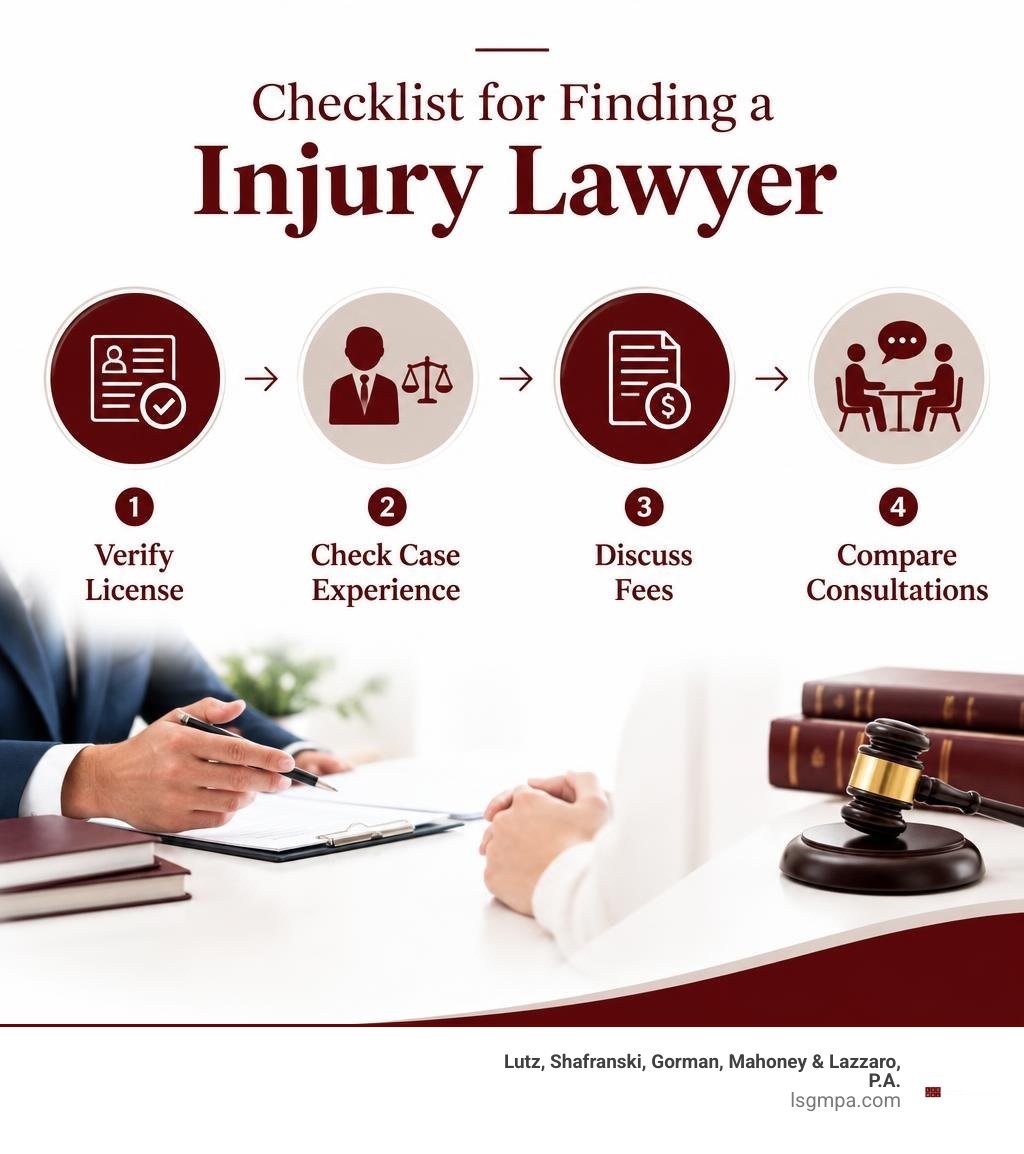
If someone else’s carelessness caused your injury, look for a personal injury lawyer who handles your type of claim in New Jersey. Check their license and disciplinary record, ask about their experience with similar cases, and get the fee agreement in writing before you hire them.
A good first meeting should leave you with clear answers: What evidence matters? Who will handle your case? What costs could come out of a settlement? You do not need a promise of a large payout. You need a lawyer who explains the risks as clearly as the opportunities.
I’m Frank Lazzaro, a New Jersey Certified Civil Trial Attorney who has secured six- and seven-figure verdicts in personal injury cases. As a personal injury lawyer, I’ve also recovered millions of dollars for clients and taught trial skills to other attorneys.

At its foundation, personal injury law is built upon civil tort liability. When an individual, business, or municipal entity fails to uphold a standard of reasonable care and causes harm to someone else, the civil justice system provides a pathway for financial recovery. As civil advocates, we step into the gap between injured victims and the complex legal machinery working against them.
Our primary duty is establishing negligence by proving four distinct legal elements:
Navigating these claims requires deep technical investigation. We gather police collision reports, subpoena surveillance footage, interview eyewitnesses, preserve physical evidence, and audit medical treatment plans. We handle all communications with aggressive insurance adjusters whose job is to minimize claims. When you seek comprehensive accident claim legal guidance, our goal is to build a foundation of evidence that forces the defense to negotiate in good faith.
Personal injury law covers a wide spectrum of accidents and negligence scenarios. Every category demands distinct evidence and specific application of New Jersey statutes:
Understanding how opposing legal teams operate clarifies why skilled representation matters. While plaintiff counsel works to maximize recovery for the injured party, insurance defense counsel works to limit financial liability for insurers and corporate policyholders.
| Comparison Area | Plaintiff Attorney (Our Role) | Insurance Defense Counsel |
|---|---|---|
| Primary Client | The injured individual or surviving family | Insurance carriers and corporate policyholders |
| Core Objective | Maximize compensation for damages | Minimize, delay, or deny financial payouts |
| Payment Structure | Contingency fee (paid only upon recovery) | Hourly billing rates (paid win or lose) |
| Case Evaluation | Assesses total damages and human impact | Analyzes liability limits and defense loopholes |
| Trial Strategy | Demonstrates negligence, injury, and loss | Challenges causation and claims pre-existing injury |
Practicing personal injury law requires a Juris Doctor (JD) degree, admission to the state bar, passing a written professional ethics examination, and meeting ongoing Continuing Legal Education (CLE) requirements. However, standard licensure represents the baseline of legal practice, not the ceiling.
When choosing an advocate, courtroom experience matters. In New Jersey, the Supreme Court recognizes attorneys with exceptional courtroom skill through the Certified Civil Trial Attorney designation. This credential is held by less than 3% of all licensed lawyers in the state, requiring substantial jury trial experience, favorable peer evaluations from judges and fellow attorneys, and passing a rigorous written exam.
Beyond state board certifications, peer-review recognition can help you assess an attorney’s standing. Platforms like Super Lawyers use a peer-influenced, research-driven selection process to evaluate candidates on 12 indicators of peer recognition and professional achievement. The Super Lawyers list highlights the top 5% of attorneys in each state, while their Rising Stars list identifies the top 2.5% of up-and-coming practitioners. When evaluating options through a directory of accredited legal advocates, look closely at demonstrated trial verdicts, peer ratings, and published case results.
Personal injury attorneys must follow state Rules of Professional Conduct. These ethical duties protect your rights:

One major benefit of personal injury law is the contingency fee structure. Injured individuals rarely have the funds to pay standard hourly attorney rates while coping with mounting medical bills and lost paychecks. Under a contingency agreement, you pay zero upfront legal fees. Our payment is tied directly to recovering compensation for you.
Contingency fee structures reflect the stage at which your case resolves:
It is important to distinguish legal fees (the lawyer’s pay) from litigation disbursements (the operational costs of running a lawsuit). Pursuing a claim involves hard expenses, such as:
A reputable law firm advances these costs during litigation and recoups them from the final gross settlement or verdict. If no recovery is obtained, you owe no legal fees.
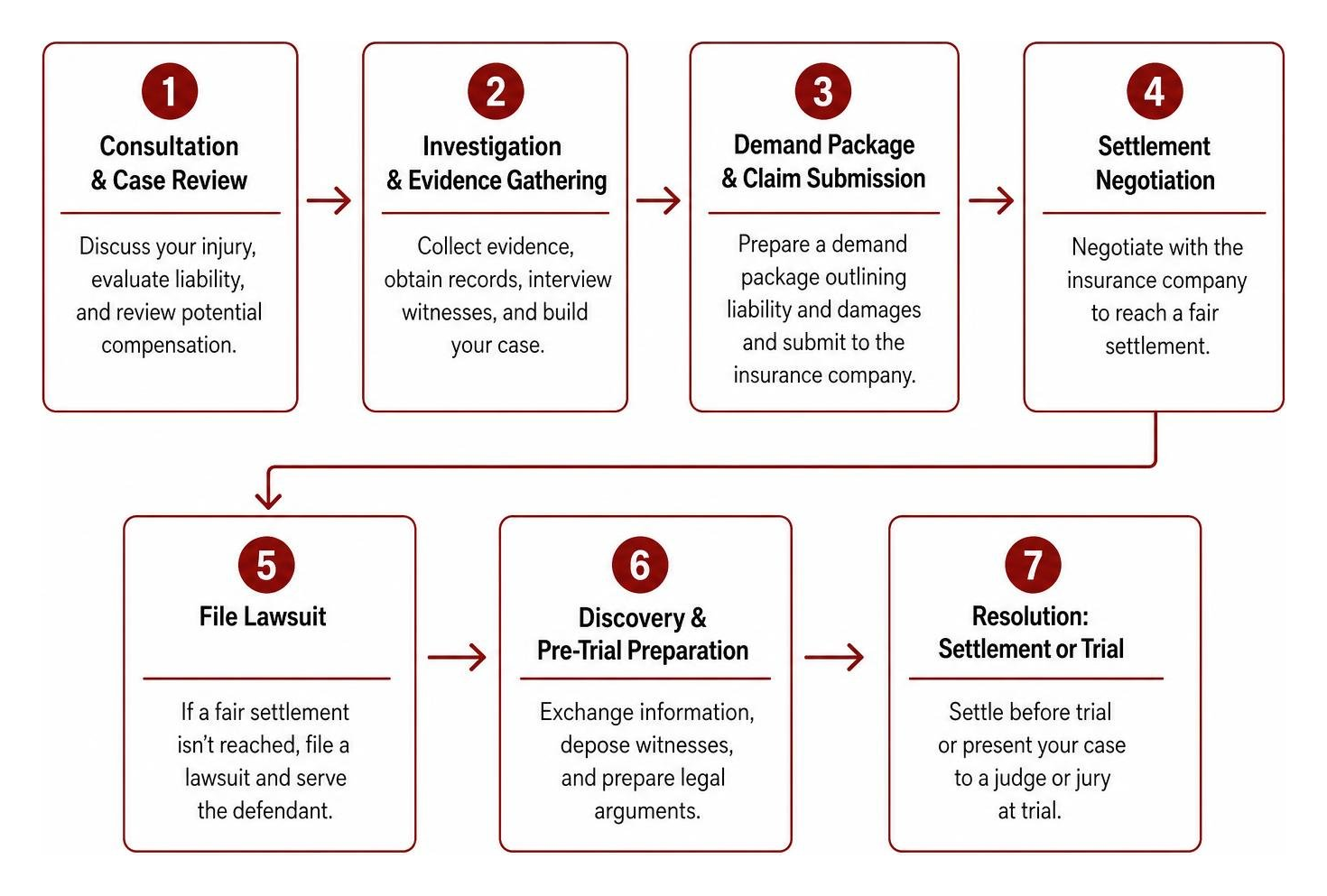
Navigating a personal injury claim involves several distinct phases:
When starting this journey, finding local injury counsel who knows local court procedures helps keep your case on track.
Valuing a personal injury claim requires examining both tangible financial losses and general human damages.
Economic Damages (Tangible Losses):
Non-Economic Damages (Intangible Losses):
Punitive Damages: Reserved for cases of egregious, malicious, or reckless behavior (such as extreme drunk driving). Punitive damages punish the wrongdoer and deter similar conduct.
When researching compensation standards, cross-referencing resources across statewide legal directories can provide insight into regional litigation trends.
Critics of the civil justice system often claim that personal injury lawsuits are frivolous or drive up consumer prices. However, research paints a very different picture.
A landmark study conducted by the Robert Wood Johnson Foundation found little evidence that traditional tort reforms reduce medical liability costs or stop the practice of defensive medicine. Similarly, a bipartisan, comprehensive study in Texas revealed that sweeping tort reform measures had no measurable impact on lowering healthcare costs for consumers.
Personal injury litigation serves as an essential check on corporate negligence. Without civil accountability, manufacturers have less incentive to recall dangerous products, property owners may cut corners on basic maintenance, and commercial trucking companies might overlook mandatory driver rest breaks. Lawsuits do not harm the economy—they protect everyday citizens and ensure injured workers and families are not left to shoulder the costs of someone else’s negligence.
Consulting a qualified attorney should cost nothing out of pocket. We provide free case evaluations to review the facts of your accident, answer questions, and determine whether you have a viable claim. Because we work on a contingency fee basis, you take on no financial risk to retain legal representation.
In New Jersey, the general statute of limitations for personal injury claims is two years from the date the accident occurred (N.J.S.A. 2A:14-2). Missing this statutory deadline almost always results in losing your right to pursue compensation permanently.
Certain exceptions exist under the “discovery rule” for injuries that appear over time, and claims against government entities require a formal Title 59 Notice of Claim within just 90 days. That is why securing car accident counsel in New Brunswick early helps preserve critical evidence and protect your rights.
To help us evaluate your claim quickly, bring all documentation related to the incident:
Using a practical injury lawyer consultation checklist can help you organize these materials before your first meeting.
A serious injury impacts your physical health, financial security, and daily routine. Insurance companies protect their bottom lines with teams of adjusters and defense lawyers. You deserve a dedicated legal advocate who will stand up for your rights and pursue full compensation for every dollar you have lost.
At Lutz, Shafranski, Gorman, Mahoney & Lazzaro, P.A., we bring decades of trial experience and client advocacy to communities across Middlesex County and central New Jersey—including New Brunswick, Milltown, Perth Amboy, Edison, Woodbridge, Piscataway, East Brunswick, Sayreville, Middlesex, North Brunswick, Highland Park, and Monroe. We fight for the financial recovery you need so you can focus on healing.
Contact experienced New Jersey personal injury attorneys today to schedule your free consultation and take the first step toward securing the justice you deserve.