

 Call Us Today (732) 249-0444
 August 25, 2026

The best car wreck lawyers are not simply the firms with the biggest ads or the most promises. They are attorneys who can explain your options clearly, personally oversee your case, prepare it for trial when needed, and give you a written fee agreement you understand.
For a quick way to compare lawyers after a crash, look for these signs:
After a wreck, medical bills, missed work, pain, and insurance calls can arrive all at once. Choosing counsel is not about finding a guarantee – no honest lawyer can guarantee a result – but about finding a team with the skill, time, and preparation to protect your claim.
I am Frank Lazzaro, a New Jersey Supreme Court Certified Civil Trial Attorney who has obtained multiple six- and seven-figure personal injury verdicts and recoveries. As you compare the best car wreck lawyers, my trial experience and work teaching other attorneys can help frame what meaningful courtroom readiness should look like.
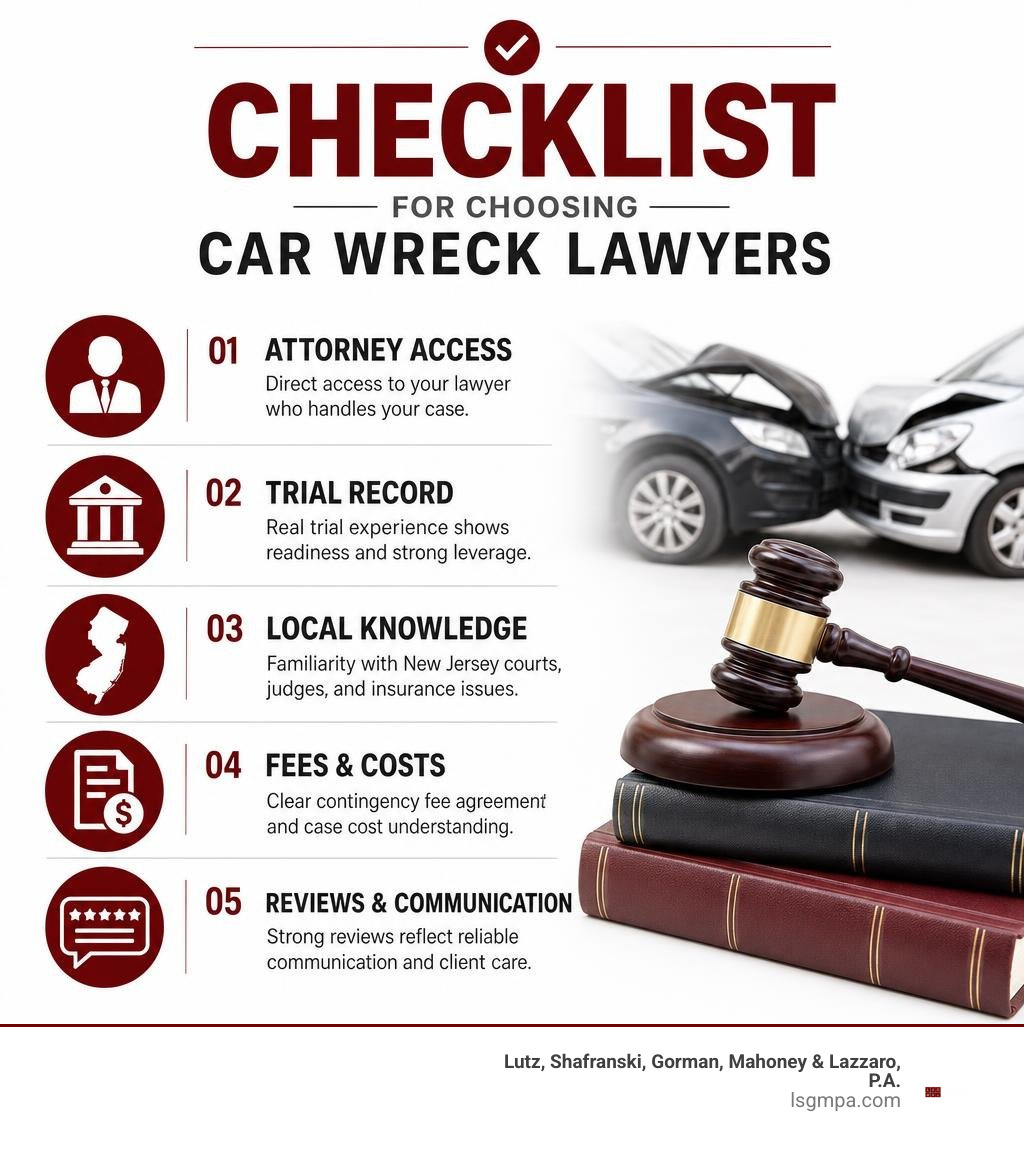
Best car wreck lawyers terms you need:
When you begin searching for legal representation after a serious collision in New Jersey, you will quickly notice a stark divide in how law firms operate. On one end of the spectrum are high-volume advertising practices often referred to in the legal industry as “settlement mills.” On the other end are boutique trial firms dedicated to personalized advocacy and courtroom readiness.
Understanding the operational differences between these two firm models is vital for crash victims. Settlement mills rely on heavy television, billboard, and digital advertising campaigns to generate thousands of client leads per year. Because these firms maintain enormous caseloads, their business strategy centers on quick turnaround. They frequently settle claims rapidly with insurance adjusters—often for a fraction of the claim’s true long-term value—so they can clear files and maintain cash flow.
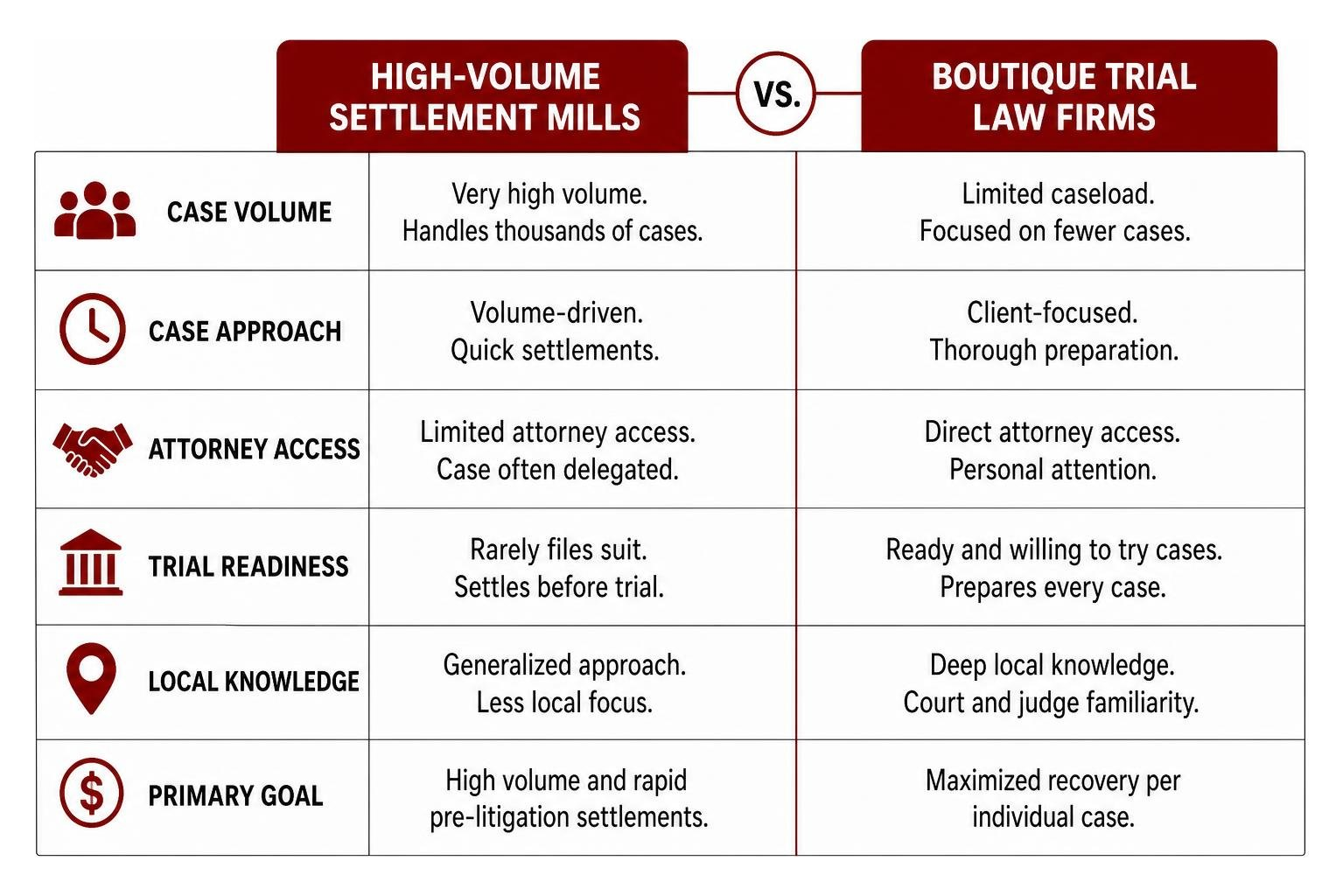
In contrast, boutique trial firms intentionally limit their caseloads. By keeping case volume manageable, dedicated personal injury attorneys can invest the time, financial resources, and tactical planning necessary to build maximum leverage against insurance carriers. When insurance adjusters evaluate a claim, they look closely at the reputation of the law firm representing the victim. Adjusters know which high-volume firms routinely accept initial lowball settlement offers to avoid going to court, and which trial attorneys will unhesitatingly file suit and present a compelling case to a jury.
| Operational Feature | High-Volume “Settlement Mills” | Boutique Trial Law Firms |
|---|---|---|
| Primary Business Goal | High case volume and rapid pre-litigation settlements | Maximized recovery per individual case through full preparation |
| Primary Contact Person | Non-attorney case managers or paralegals | Your assigned trial lawyer |
| Caseload Per Professional | Hundreds of files per staff member | Select, limited caseload per attorney |
| Trial Readiness | Rarely file lawsuits or proceed to courtroom trials | Fully prepared to litigate and try cases before a judge and jury |
| Insurance Company Perception | Viewed as high-volume negotiators willing to discount claims | Respected as credible courtroom threats, driving higher settlement offers |
Before signing a retainer agreement with any firm, take time to scrutinize independent review platforms, such as the Better Business Bureau (BBB), Google Business profiles, and Trustpilot. Looking beyond overall star ratings often reveals critical operational flaws. For instance, some of the largest national advertising personal injury firms maintain average review ratings as low as 2.9 out of 5 stars across major platforms, with recurring client complaints regarding complete communication breakdowns.
Common red flags in client feedback include:
Learning how to choose a car accident lawyer in Middletown without losing your mind requires verifying that you will have direct, direct access to a trial lawyer throughout the life of your personal injury claim.
Insurance adjusters use sophisticated claim-evaluation software, but human valuation decisions ultimately rest on risk assessment. An insurance company’s financial risk dramatically increases when facing a law firm with proven trial capability and local courtroom familiarity. Across the country, top litigation boutiques have demonstrated the power of courtroom readiness—securing landmark results such as $100,000,000 federal court verdicts in catastrophic injury matters.
In New Jersey courtrooms—whether in Middlesex County or neighboring jurisdictions—local judicial familiarity matters. Attorneys who regularly try cases before local judges and juries understand venue-specific evidentiary nuances, jury pool dynamics, and opposing defense counsel tactics. Furthermore, attorneys who have prior experience in insurance defense bring invaluable insight into how insurance adjusters evaluate reserves, identify claim weaknesses, and decide when to offer maximum policy limits.
Virtually all top car accident lawyers represent injured victims on a contingency fee basis. This structure ensures that crash victims can access high-quality legal representation without paying upfront retainers or hourly fees out-of-pocket. Under a contingency agreement, the law firm advances all initial investigation and litigation expenses, earning a legal fee only if they secure a financial recovery through a settlement or jury verdict.
However, contingency agreements are not identical across all firms. During an initial free consultation, you must review the detailed fine print of the fee contract to ensure complete transparency regarding financial terms and expense deductions.
To properly evaluate a law firm during your initial consultation, ask specific, direct questions about who will handle your case and how costs are calculated.
In New Jersey personal injury practice, the standard contingency fee pre-litigation rate is generally around 33.3% (one-third) of the net or gross recovery, subject to state court administrative caps designed to protect consumers. However, many fee agreements contain provisions where the contingency percentage increases to 40% if a formal court complaint must be filed or if trial preparation begins.
Additionally, clients must understand the difference between legal fees and case expenses. Case expenses are out-of-pocket costs required to build a solid claim, including:
High-volume firms sometimes pass administrative fees onto the client or fail to explain how case expenses are deducted relative to the total recovery. Reading your retainer agreement carefully prevents surprises when funds are disbursed. To avoid unnecessary financial stress after a crash, take time to learn how to find legal representation so you don’t let a fender bender break the bank.
What you do in the hours and days immediately following a motor vehicle accident dramatically impacts the strength of your legal claim. Insurance companies begin gathering evidence and building defense arguments right away; to protect your rights, you must take parallel action to preserve crucial facts.
If you are involved in a collision anywhere in Middlesex County or central New Jersey, following a systematic protocol safeguards both your health and your right to fair compensation.
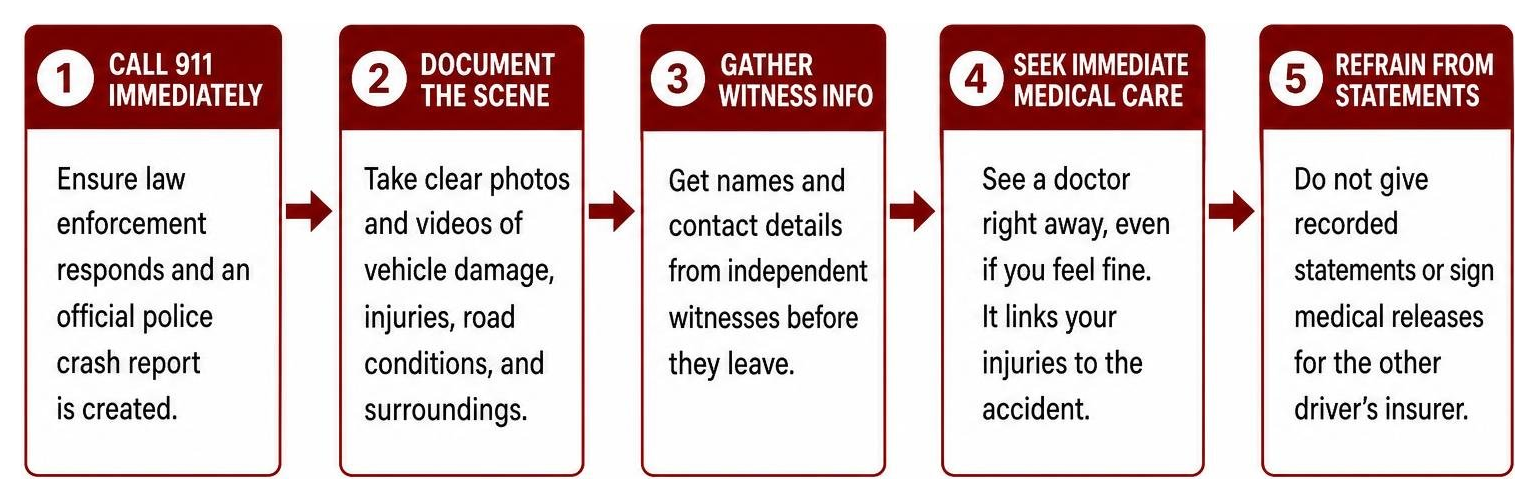
Knowing the detailed steps to take after an accident ensures your rights remain protected from day one. In addition, addressing property damage quickly is crucial, which is why consulting an automobile property damage lawyer early on can resolve vehicle repair and total loss disputes smoothly.
Under New Jersey personal injury law, crash victims are entitled to pursue full compensation for all losses stemming from another driver’s negligence. Compensation falls into two primary categories: economic damages and non-economic damages.
Economic Damages (Calculable Financial Losses):
Non-Economic Damages (Quality-of-Life Impacts):
Calculating non-economic damages requires demonstrating how the crash altered your daily life. For instance, when dealing with collisions caused by distracted driving and your rights to compensation, thorough documentation of medical recovery progress and personal journal entries regarding pain levels provides clear evidence during settlement negotiations or trial presentation.
Navigating a personal injury claim involves managing strict statutory deadlines and complex insurance policy frameworks. Missing a filing deadline will permanently bar your right to financial recovery, making early legal consultation essential.
In New Jersey, the general statute of limitations for personal injury claims arising from a car accident is two years from the date of the crash. However, critical exceptions apply:
When serious crashes involve catastrophic injuries or reckless driving—such as cases explored in sobering truths about drunk driving accident claims—acting swiftly allows your attorney to preserve physical vehicle evidence and obtain electronic black box data before it is destroyed.
Complex motor vehicle claims—such as multi-vehicle crashes, disputed liability tractor-trailer collisions, or commercial vehicle wrecks—require extensive investigative resources and specialized legal strategies. High-stakes litigation often involves high policy limits, multiple primary and excess insurance carriers, and aggressive defense teams. Law firms across the country have proven that uncompromising litigation preparation delivers extraordinary results, such as securing a $22,700,000 settlement in a disputed liability tractor-trailer collision case on the eve of trial, or achieving an $8,000,000 auto accident settlement in complex personal injury matters.
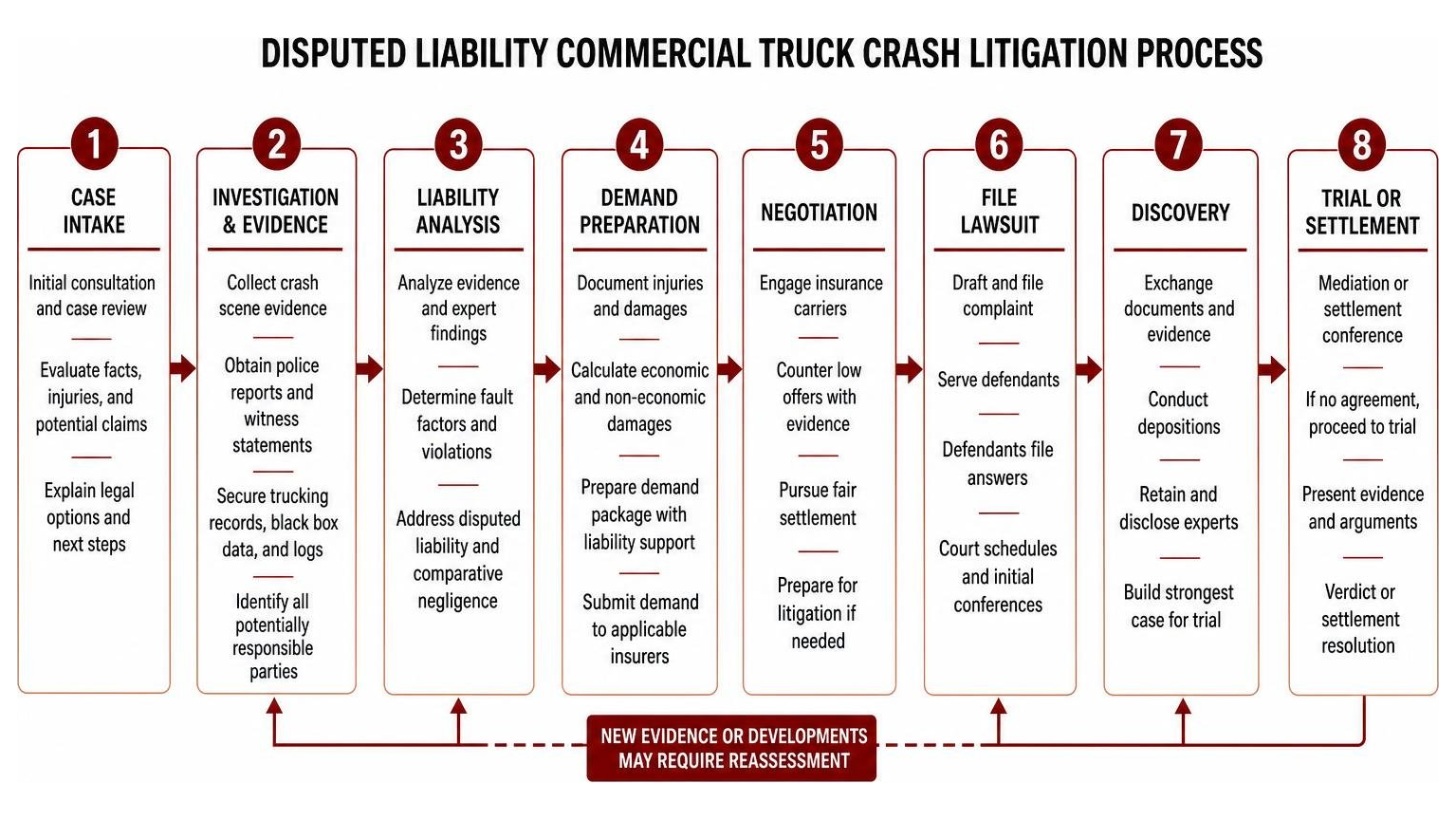
In complex claims, your lawyer must also navigate first-party insurance policies, including Personal Injury Protection (PIP) medical coverage and Uninsured/Underinsured Motorist (UM/UIM) policy provisions. When a negligent driver carries inadequate coverage, your attorney can tap into your own UIM policy limits to ensure you receive complete financial recovery.
If you hired a high-volume law firm and are experiencing poor communication, ignored messages, or pressure to accept an inadequate settlement offer, you are not trapped. New Jersey law gives clients the absolute right to discharge their lawyer and switch legal counsel at any point during a personal injury case.
Switching lawyers does not cost you extra money out-of-pocket:
A case manager is a non-lawyer staff member assigned to assist with administrative paperwork, organize medical bills, and collect basic records. A licensed attorney is an officer of the court legally authorized to give legal advice, evaluate settlement values, negotiate with insurance adjusters, conduct depositions, and litigate your case in court. While case managers provide valuable support, your substantive legal strategy and critical settlement decisions should always be directed personally by your assigned attorney.
Under New Jersey insurance regulations, filing a first-party claim for Uninsured Motorist (UM) or Underinsured Motorist (UIM) benefits through your own auto insurance policy should not result in a premium rate hike, provided you were not at fault for the accident. UM/UIM coverage is a contractual protection you pay for precisely to cover damages when a negligent driver lacks adequate policy limits.
The timeline for resolving a personal injury claim varies based on case complexity, injury severity, and medical treatment duration. Straightforward claims where liability is clear and medical treatment concludes quickly may resolve in 4 to 8 months. However, severe injury claims requiring ongoing surgeries, extensive physical therapy, or complex litigation can take 1 to 3 years. A reputable personal injury attorney will never rush a case to settlement before you reach Maximum Medical Improvement (MMI), as doing so prevents you from claiming future medical costs.
When disaster strikes on New Jersey roads, securing the best car wreck lawyers means finding a dedicated legal team that combines courtroom competence with personal client commitment. At Lutz, Shafranski, Gorman, Mahoney & Lazzaro, P.A., we provide robust personal injury advocacy for crash victims across Middlesex County and surrounding areas—including New Brunswick, Milltown, Perth Amboy, Edison, Woodbridge, Piscataway, East Brunswick, Sayreville, Middlesex, North Brunswick, Highland Park, and Monroe.
We believe that every injured client deserves direct attorney access, exhaustive evidence preparation, and uncompromising trial readiness. If you or a family member has been injured in a collision, contact our office today for a free, no-obligation case evaluation. Let our experienced attorneys evaluate your rights, handle the insurance companies, and seek the full financial compensation you deserve. Explore how an experienced New Brunswick car accident lawyer can protect your future starting right now.

