

 Call Us Today (732) 249-0444
 July 18, 2026

Common dog bite injuries affect millions of Americans every year — and the consequences can be far more serious than most people expect.
Here are the most common types of dog bite injuries:
According to the CDC, approximately 4.5 million people are bitten by dogs each year in the United States. Of those, around 800,000 require medical attention. Nearly half of all victims are children.
The injuries range from minor scrapes to life-altering trauma — including nerve damage, disfigurement, and in rare cases, death.
If you or someone you love has been bitten by a dog in New Jersey, understanding the type of injury you’re dealing with is the critical first step — both for your health and for any legal claim you may have.
I’m Frank Lazzaro, a Certified Civil Trial Attorney certified by the Supreme Court of New Jersey, and I’ve helped numerous victims pursue compensation for common dog bite injuries that resulted in serious medical expenses, lost income, and lasting pain. In the sections below, I’ll walk you through exactly what these injuries look like, how they should be treated, and what your legal rights are.
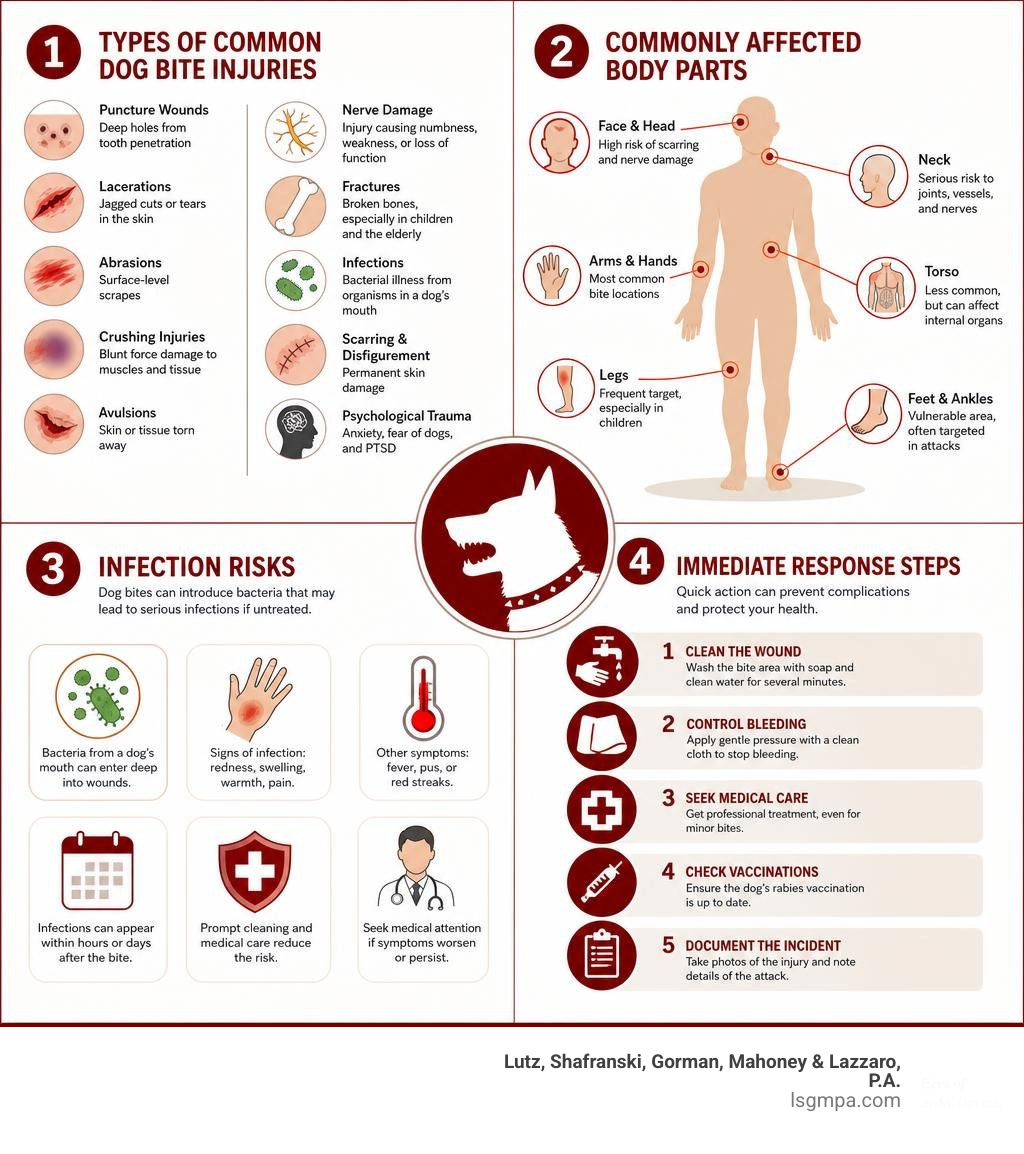
When a dog attacks, the physical mechanics of the bite create a combination of tearing and crushing forces. Unlike sharp surgical incisions, a dog’s teeth are designed to grip, puncture, and pull. This means that even a seemingly minor bite can cause substantial damage beneath the surface of the skin.
To help you understand what might be happening under the surface, let’s break down the most common dog bite injuries we see in our practice:
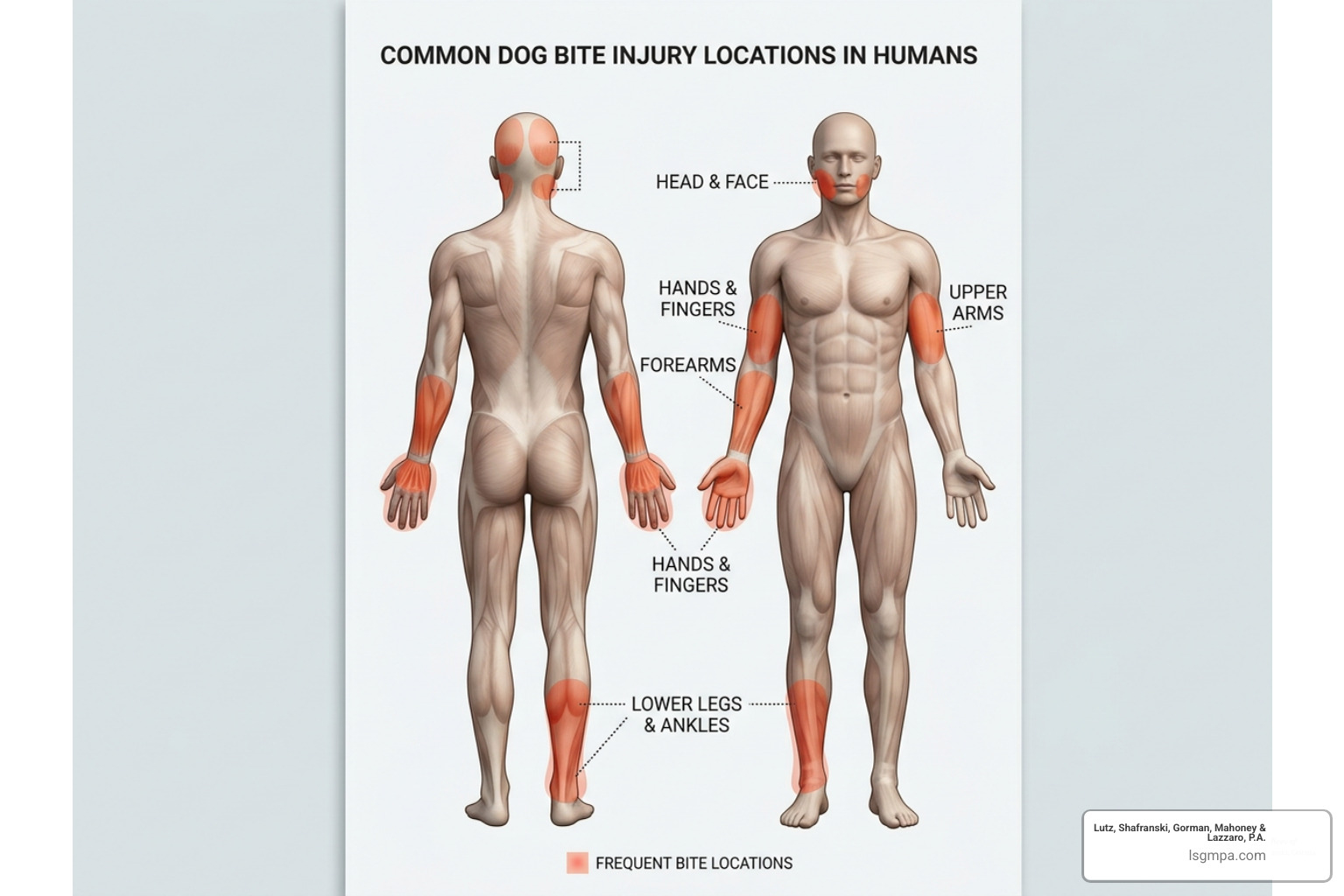
The location of the bite often depends on the relationship between the victim and the dog. Studies show that bites from unfamiliar dogs most commonly target the hands, arms, and lower extremities as victims raise their limbs in self-defense. Conversely, bites from familiar household pets are more likely to occur on the face, head, or neck because people frequently lean close to dogs they trust.
To help visualize the differences between these primary wound types, we have put together this comparison table:
| Wound Type | Primary Cause | Infection Risk | Common Medical Treatment |
|---|---|---|---|
| Puncture Wound | Deep tooth penetration | Extremely High (bacteria sealed inside) | Deep irrigation, antibiotics, left open to drain |
| Laceration | Tearing of skin and tissue | Moderate to High | Thorough washing, surgical debridement, stitches |
| Crushing Injury | High jaw pressure/force | Low to Moderate (depends on skin break) | Imaging (X-rays), splinting, monitoring for compartment syndrome |
| Avulsion | Ripping away of skin/tissue | Very High | Reconstructive surgery, skin grafts, IV antibiotics |
The physical differences between children and adults lead to drastically different injury patterns during a dog attack. Because of their shorter height and smaller physical stature, children are naturally positioned at eye-level with most medium-to-large dogs. Consequently, children are disproportionately victims of severe facial, head, and neck trauma.
According to clinical data, children aged 5 to 9 years old have the highest incidence of dog bites of any age demographic. Furthermore, infants make up roughly 12% of all dog bite-related fatalities, usually due to devastating crushing injuries to the skull or neck.
When a child is attacked, the canine teeth can easily pierce the immature cranial bones of a young child’s skull. A comprehensive retrospective study on facial trauma, Evaluating Dog Bite‐Induced Facial Trauma: A Study From a Single Tertiary Care Center, highlights that over 60% of pediatric facial injuries are caused by family dogs during everyday activities like playing or feeding. The cheeks, lips, and nose are the most frequently targeted areas, often requiring delicate plastic surgery to prevent permanent disfigurement.
As personal injury attorneys representing families in New Brunswick and across New Jersey, we know that pediatric injuries carry heavy long-term burdens. Beyond the immediate physical pain, children are highly vulnerable to severe psychological trauma and may suffer from bullying or social isolation due to visible facial scars.
A dog bite is not just a structural wound; it is a biological event. The human body must fight off a host of external pathogens while trying to repair torn tissue. If left untreated, several severe complications can arise:
Between 10% and 15% of all dog bites become infected. This rate jumps to a staggering 36% when the bite is located on the hand, where poor blood circulation and tight anatomical spaces allow bacteria to thrive. The primary culprit is Pasteurella multocida, a bacterium found in the mouths of over 50% of healthy dogs. Pasteurella infections are notoriously aggressive, often causing pain, redness, and swelling within 12 to 24 hours of the bite. Other dangerous pathogens include Capnocytophaga canimorsus, which can trigger life-threatening sepsis in immunocompromised individuals, diabetics, or those without a functioning spleen.
Tetanus is a serious bacterial infection that affects the nervous system, causing painful muscle contractions. If you have not had a tetanus booster within the last 5 years, a dog bite wound is considered “dirty,” and you will need a booster shot immediately.
Rabies, while rare in domestic U.S. dogs due to strict vaccination laws, is virtually 100% fatal once symptoms appear. If the dog’s vaccination status is unknown or the animal cannot be quarantined for 10 days, emergency rabies post-exposure prophylaxis (PEP) is mandatory.
As wounds heal, they can form various types of permanent scars. These include keloids (raised, thick scars that grow beyond the original wound boundary), hypertrophic scars (raised red scars), and contracture scars (which pull the skin tight and can restrict joint movement).
The emotional scars of a dog attack can last a lifetime. Many victims, particularly children, develop Post-Traumatic Stress Disorder (PTSD), severe anxiety around animals, sleep disturbances, and a profound fear of leaving their homes.
For a deeper clinical look at how medical professionals categorize and manage these risks, you can review the Human and Mammal Bites – Injuries; Poisoning – MSD Manual Professional Edition.
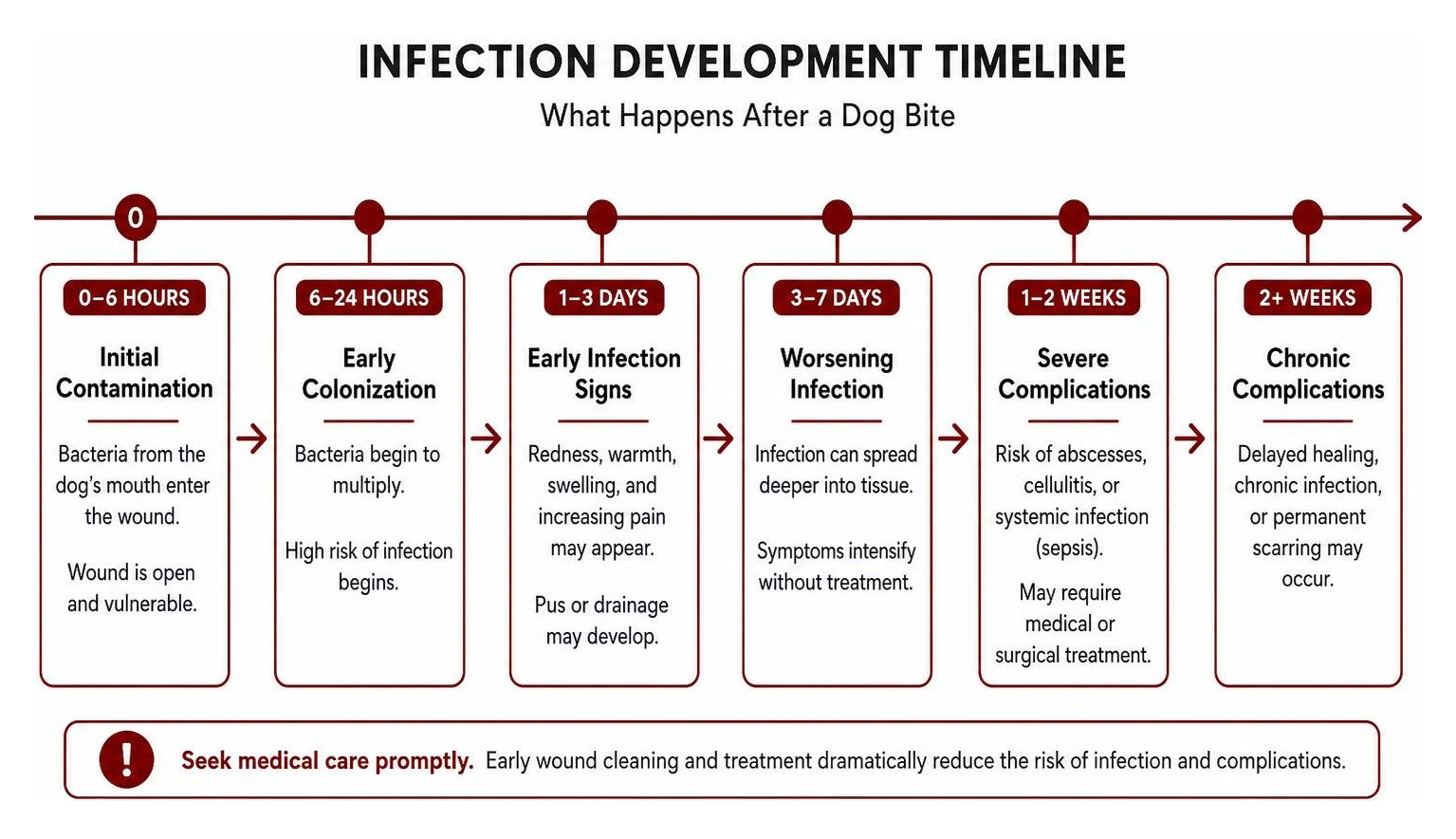
If you or a loved one is bitten by a dog, taking swift, calculated action can dramatically reduce the risk of infection and long-term complications. Wounds treated within the first six hours have the absolute best chance of healing cleanly.
Here is the step-by-step first aid process we recommend following immediately after an attack:
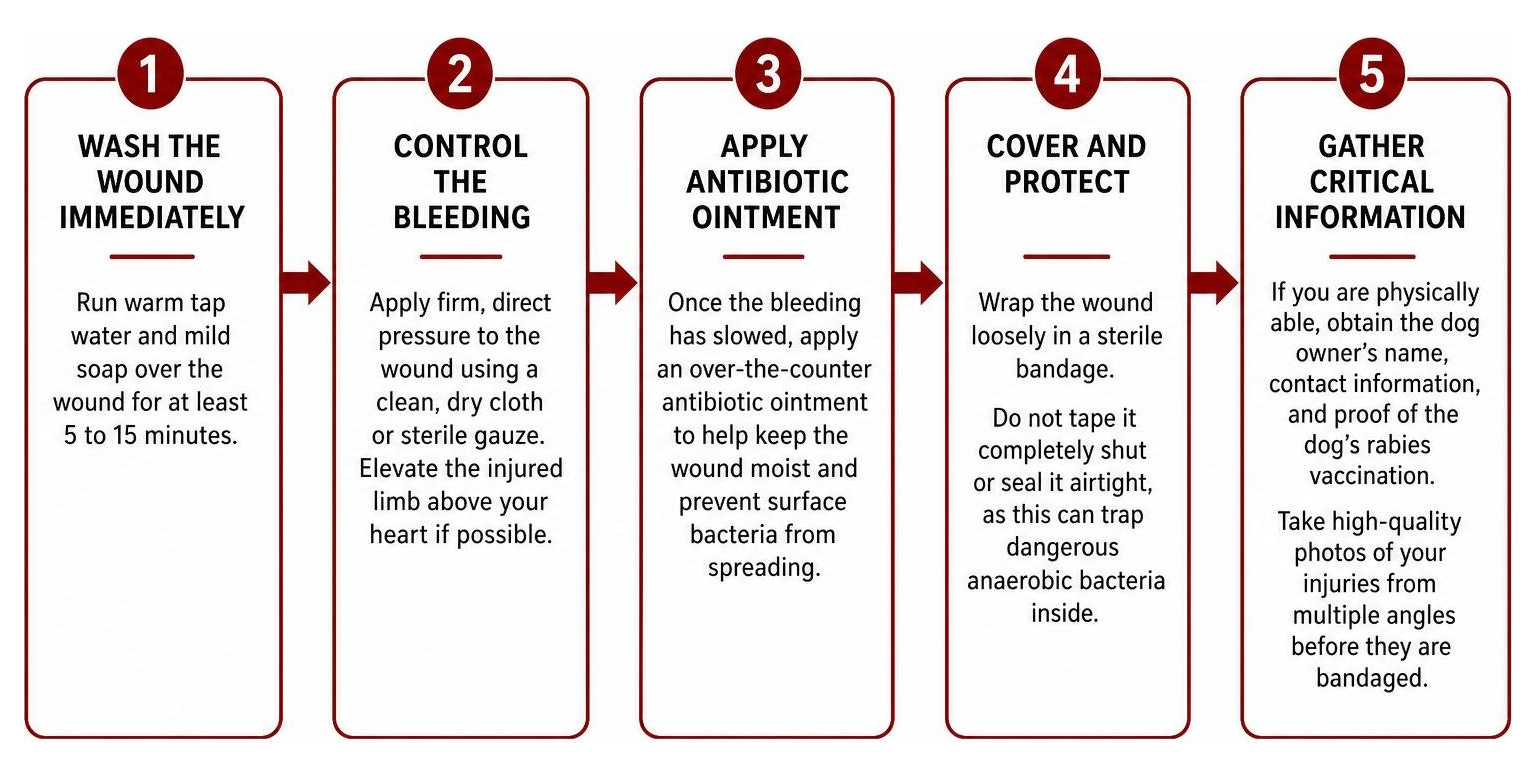
For more detailed guidance on identifying when a bite requires emergency intervention, you can read the Dog bites: How to prevent or treat them – Harvard Health article.
When a dog attack occurs, the physical recovery is only half the battle. The financial aftermath of medical treatments, surgeries, physical therapy, and lost work can quickly become overwhelming. Fortunately, New Jersey has some of the most victim-friendly laws in the country.
Under the New Jersey Dog Bite Statute, N.J.S.A. 4:19-16, dog owners are held strictly liable for any injuries their dog inflicts by biting.
This means that as a victim, you do not have to prove that the dog had a history of aggression, or that the owner was negligent in handling the dog. To recover compensation, you only need to establish three things:
You are considered “lawfully present” if you are carrying out a legal duty (like delivering mail or packages) or if you were on the property at the express or implied invitation of the owner.
However, New Jersey also recognizes comparative negligence. If the dog owner can prove that you actively provoked the dog (such as abusing, hitting, or teasing the animal) or knowingly put yourself in harm’s way, your final compensation could be reduced by your percentage of fault.
In almost all cases, dog bite claims are paid out through the dog owner’s homeowners’ or renters’ insurance policy. This means you do not have to worry about financially ruining a neighbor or friend by seeking compensation; their insurance policy exists specifically to cover these kinds of accidents.
In New Jersey, the statute of limitations for filing a personal injury claim is generally two years from the date of the bite. If you do not file a lawsuit within this window, you lose your right to seek compensation forever. For injured minors, the two-year clock typically does not begin until they turn 18, but it is always best to act quickly so that evidence is preserved and witnesses’ memories remain fresh.
If you are injured in New Brunswick, Milltown, Perth Amboy, or anywhere else in New Jersey, our legal team at Lutz, Shafranski, Gorman, Mahoney & Lazzaro, P.A. (LSGMPA) is here to provide comprehensive advocacy. We handle all negotiations with insurance adjusters, gather medical evidence, and build a strong case to secure compensation for your medical bills, lost earnings, and pain and suffering.
The most common infection resulting from a dog bite is caused by Pasteurella multocida. This bacterium is present in the mouths of over half of all healthy dogs. Because it thrives in environments with low oxygen, it is easily injected deep into tissue through puncture wounds.
Pasteurella infections are highly aggressive and can manifest within hours of the attack, causing severe throbbing pain, redness, swelling, and pus. Because dog bites are polymicrobial (containing a mix of multiple bacterial species), doctors typically prescribe broad-spectrum antibiotics, with amoxicillin-clavulanate (Augmentin) being the first-line treatment.
In New Jersey, the statute of limitations for filing a personal injury lawsuit after a dog bite is two years from the date the injury occurred.
There is a major exception for children: if the victim was under the age of 18 at the time of the attack, the two-year clock is paused (tolled) until their 18th birthday, giving them until age 20 to file. However, waiting is rarely advisable. Documenting injuries, securing veterinary records, and identifying home insurance policies are tasks best handled immediately after the incident.
While a very superficial scrape might heal with basic home care, any dog bite that breaks the skin carries a high risk of infection and should be evaluated by a healthcare professional.
Puncture wounds, in particular, can look deceptively small and clean on the surface while trapping dangerous bacteria deep underneath. Furthermore, without a professional medical evaluation, you risk missing the window for critical preventative treatments, such as a tetanus booster or rabies post-exposure prophylaxis.
Recovering from a dog attack requires focusing on both your physical healing and your peace of mind. Common dog bite injuries can leave lasting physical scars, lead to dangerous infections, and cause deep emotional trauma. Taking immediate medical action is the single most important step you can take to protect your health.
Once your physical well-being is secure, protecting your financial future is the next logical step. At Lutz, Shafranski, Gorman, Mahoney & Lazzaro, P.A., we have spent decades fighting for accident and injury victims in New Brunswick, Milltown, Perth Amboy, and across New Jersey. We understand the physical, emotional, and financial toll of a serious dog attack, and we are dedicated to securing the full compensation you deserve.
If you or a family member has been injured, do not navigate the complex legal and insurance systems alone. Contact a New Brunswick dog bite lawyer at LSGMPA today for a free, confidential consultation, and let us help you take the first step toward recovery.