

 Call Us Today (732) 249-0444
 September 18, 2026

Catastrophic brain damage is a life-changing brain injury that causes lasting loss of physical, cognitive, or behavioral function and may require lifelong care. If another person’s negligence caused the injury, a strong claim should account for more than today’s hospital bills: it should evaluate future treatment, rehabilitation, lost income, home changes, assistive equipment, and the human impact on the injured person and their family.
These injuries can follow a fall, car crash, workplace accident, violent assault, or penetrating head wound. They may involve bleeding, swelling, diffuse axonal injury, or oxygen loss that worsens damage in the hours and days after the initial trauma.
Recovery is uncertain, but it is not always fixed in the first days or weeks. Medical needs can change for months or years, which is why families should preserve evidence, follow medical guidance, and avoid accepting an early settlement before the long-term outlook is clearer.
I am Frank Lazzaro, a New Jersey Certified Civil Trial Attorney who has secured multiple six- and seven-figure personal injury verdicts and millions in client recoveries. In catastrophic brain damage cases, my experience helps families assess the full consequences of an injury and pursue support that reflects a lifetime of needs.
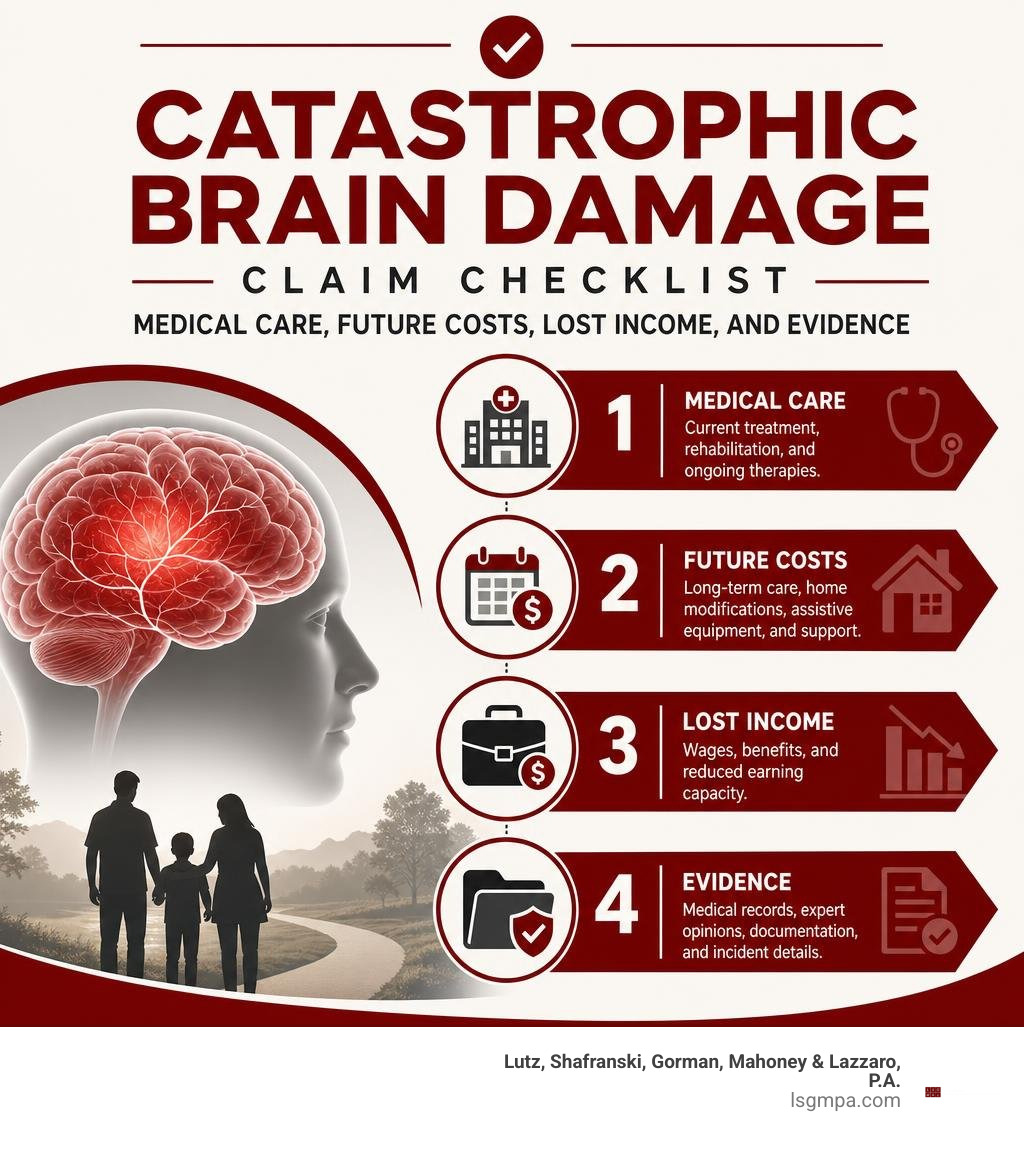
Must-know catastrophic brain damage terms:
Traumatic brain injury (TBI) remains one of the most common causes of disability and death in adults across the country. More than 1.5 million people sustain a TBI annually in the United States. While mild head impacts often heal with time, severe neurotrauma inflicts permanent disruptions on neural networks, motor pathways, and cognitive centers.
The epidemiology of severe brain trauma reveals distinct vulnerability across demographic groups:
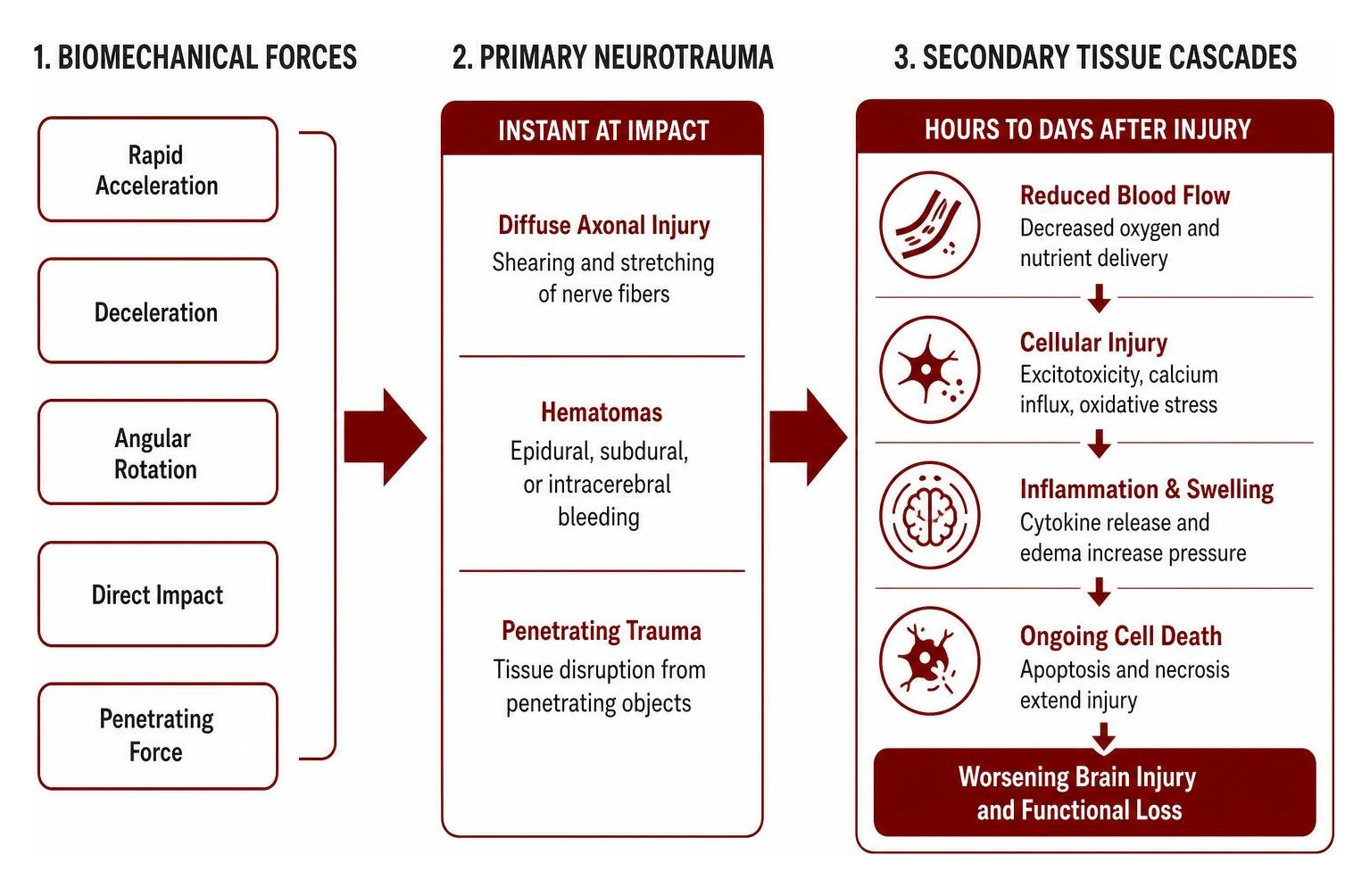
Primary brain damage occurs instantaneously at the moment of physical impact. The biomechanical forces involved in high-speed car crashes, falls from heights, or violent blows subject the brain tissue to rapid translational and angular acceleration.
Key primary injury forms include:
The damage caused by severe neurotrauma does not end when the initial impact stops. Secondary brain damage develops over hours, days, and weeks as systemic and cellular cascades compound tissue destruction.
Following trauma, the breakdown of the blood-brain barrier induces cytotoxic and vasogenic edema (cerebral swelling). Because the skull is an unyielding bone vault, severe swelling increases intracranial pressure (ICP). When ICP exceeds normal physiological parameters, it compromises cerebral perfusion pressure (CPP), starving sensitive brain tissue of oxygen and glucose (ischemia).
Uncontrolled secondary insults may provoke “neuro-storming” (paroxysmal sympathetic hyperactivity or autonomic dysregulation). Patients experience dramatic surges in blood pressure, elevated heart rates, severe sweating, hyperthermia, and abnormal posturing, which can exhaust metabolic reserves and worsen neurological deficits.
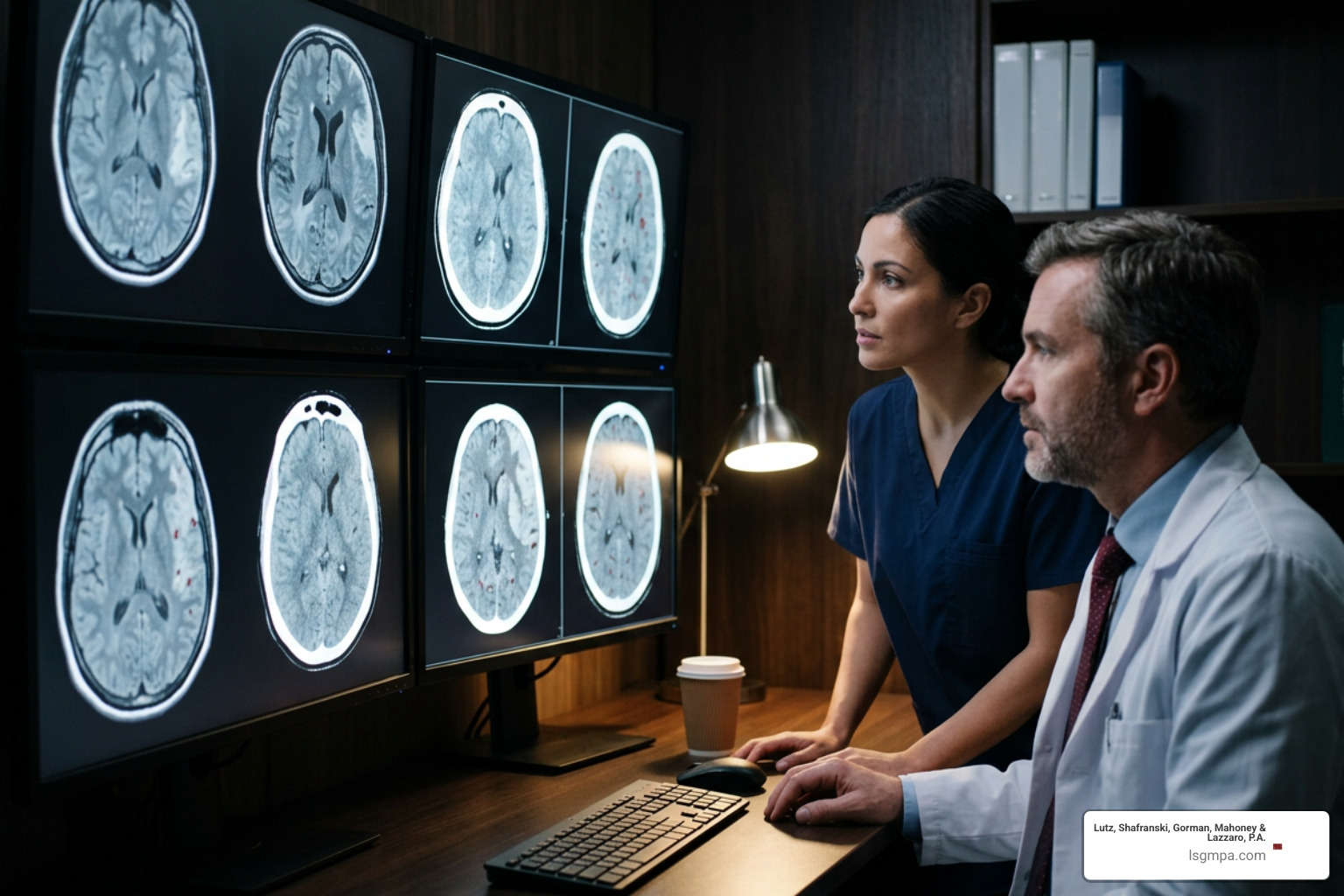
Accurate clinical evaluation begins in the emergency trauma bay. Clinicians evaluate level of consciousness using the Glasgow Coma Scale (GCS), which scores eye opening (1–4), verbal response (1–5), and motor responsiveness (1–6). A GCS score of 8 or below defines a severe traumatic brain injury.
Diagnostic imaging tools include:
Severe traumatic injuries often disrupt the delicate communication networks between the cerebral cortex, thalamus, and brainstem, altering or eliminating conscious awareness.
| State of Consciousness | Sleep-Wake Cycles | Awareness of Self and Environment | Motor Function / Responsiveness |
|---|---|---|---|
| Coma | Absent (Eyes closed) | Absent | Reflexive posturing only; no voluntary movement |
| Unresponsive Wakefulness Syndrome (Vegetative State) | Present (Eyes open periodically) | Absent | Autonomic reflexes preserved; no purposeful interaction |
| Minimally Conscious State (MCS) | Present | Inconsistent, reproducible signs of awareness | May follow simple commands, track objects, or vocalize |
| Brain Death | Irreversible cessation | Completely absent | No brainstem reflexes; absence of independent respiration |
Understanding consciousness states is vital for establishing accurate prognoses. Landmark neuropathological findings in persistent vegetative state demonstrated that catastrophic, permanent loss of cognitive awareness can occur primarily from severe, bilateral destruction of the thalamus—the central cognitive routing hub—even while extrathalamic brainstem circuits maintain basic sleep-wake cycles and spontaneous breathing.
A minimally conscious state differs significantly from a vegetative state: patients demonstrate fluctuating but undeniable evidence of purposeful behavioral interaction, such as sustained visual pursuit, reaching for objects, or intelligible verbalization. Brain death, by contrast, constitutes the complete, irreversible loss of all clinical brain and brainstem function.
Survivors of severe neurotrauma endure profound, multifaceted functional challenges:
Stabilizing a patient in the neuro-intensive care unit requires strict adherence to evidence-based protocols, such as the guidelines for the management of severe neurotrauma.
Key acute medical and surgical interventions include:
Historically, medical teams viewed the prognosis for severe brain trauma through a lens of therapeutic nihilism, assuming that lack of rapid awakening signaled permanent, total dependence. Modern medical science paints a far more nuanced picture.
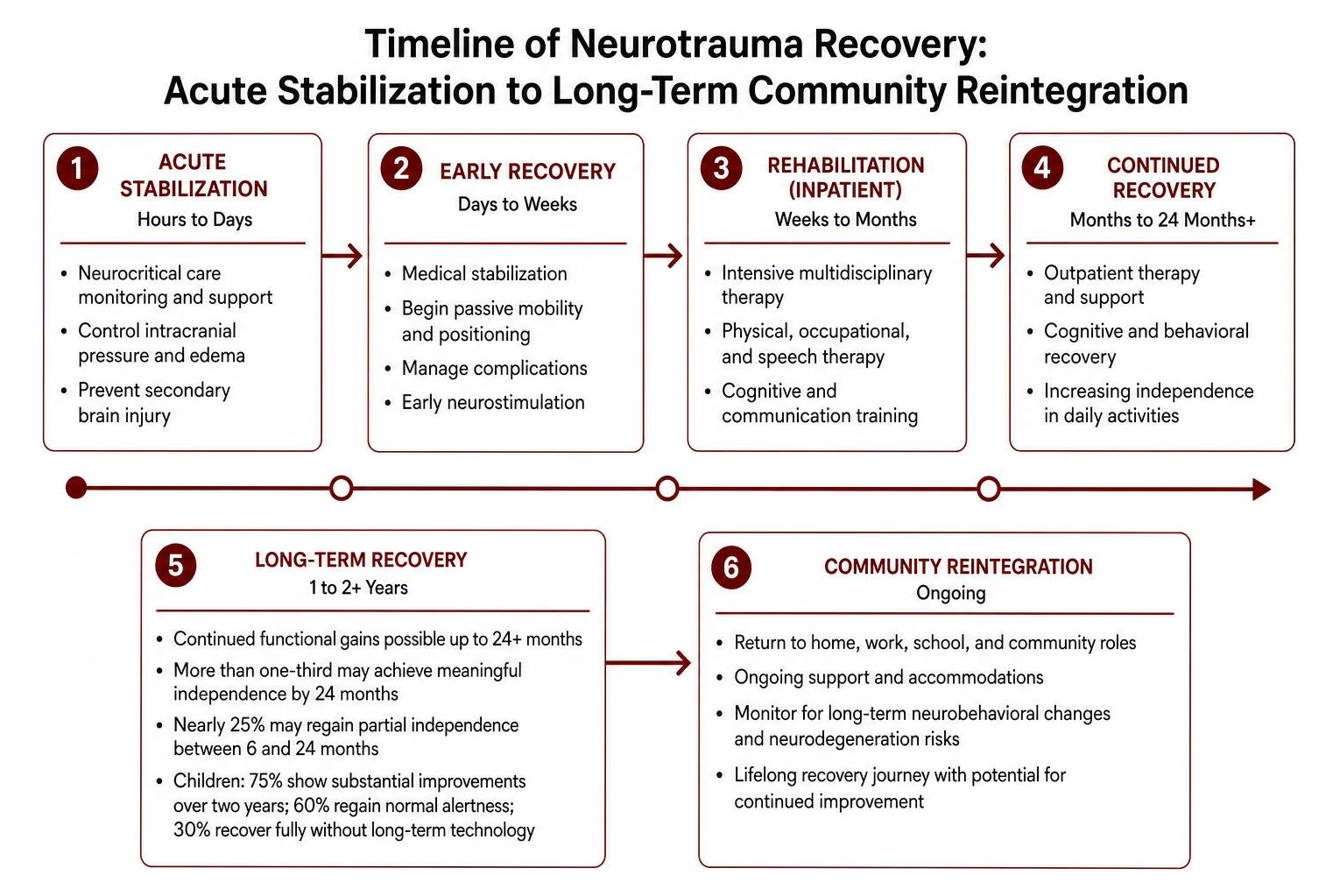
Groundbreaking clinical research has completely reshaped our understanding of recovery trajectories. A recent study on early withdrawal of care in severe brain injury revealed that more than one-third of critically ill TBI patients who were categorized as completely dependent at three months achieved meaningful functional independence—living independently for eight or more hours a day—by 24 months. Nearly 25% of survivors regained partial independence between 6 and 24 months post-injury. Because withdrawal of life-sustaining treatment is the leading cause of death in ICU-admitted severe TBI patients, premature prognostic conclusions can cut short recoverable lives.
This extended potential for recovery is also evident in pediatric populations. Long-term research examining clinical characteristics and outcomes of children with acute catastrophic brain injury revealed that among children surviving severe neurotrauma, 75% demonstrated substantial improvements in functional status over two years, with 60% regaining normal alertness and 30% recovering completely without long-term technology dependence. Undamaged neural networks leverage neuroplasticity to adapt, rewire, and assume functions previously managed by injured tissue.
Recovering functional independence requires aggressive, specialized multidisciplinary rehabilitation programs:
When a catastrophic brain injury results from a reckless driver, unsafe workplace conditions, defective industrial machinery, or a preventable fall on poorly maintained commercial property, the legal system provides a path to secure accountability and comprehensive financial recovery.
At Lutz, Shafranski, Gorman, Mahoney & Lazzaro, P.A. (LSGMPA), we represent catastrophic injury victims across Middlesex County and central New Jersey—including New Brunswick, Milltown, Perth Amboy, Edison, Woodbridge, Piscataway, East Brunswick, Sayreville, Middlesex, North Brunswick, Highland Park, and Monroe. Our team coordinates legal advocacy to ensure responsible parties provide the resources required for a lifetime of care.
Calculating the lifetime cost of catastrophic neurotrauma requires extensive financial modeling. We partner with certified life care planners, medical economists, and neurotrauma specialists to evaluate both economic and noneconomic damages:
Proving fault in catastrophic brain damage claims requires establishing that a property owner, commercial driver, contractor, or manufacturer breached their legal duty of care.
For instance, in complex fall-down claims, property owners frequently attempt to deflect blame or minimize hazard visibility. Understanding why you need a slip and fall lawyer is vital to ensure evidence is preserved before security footage is erased or physical hazards are repaired. Selecting seasoned representation through how to choose the best slip and fall personal injury attorney for your case ensures that building codes, lighting levels, and maintenance logs are rigorously evaluated by premises safety experts.
Insurance companies handling multi-million-dollar claims deploy aggressive tactics to minimize payouts or push for early settlements before the full scope of neurological damage emerges.
Our trial attorneys provide clear guidance on navigating a catastrophic injury lawsuit, managing forensic evidence preservation, retaining world-class medical experts, resolving complex healthcare liens, and presenting persuasive damages cases to juries. When families review the practical considerations of finding a catastrophic injury lawyer, they find that our deep familiarity with New Jersey courts and Certified Civil Trial Attorney credentials provide the strength needed to pursue maximum recoveries.
Mild concussions typically involve temporary functional disruptions without visible structural destruction on standard imaging, with most symptoms resolving over weeks. In contrast, catastrophic brain injuries cause profound structural damage—such as widespread diffuse axonal shearing, extensive contusions, or severe hemorrhage. They result in prolonged loss of consciousness (GCS score ≤ 8), permanent cognitive or physical disability, and an inability to live fully independently without ongoing medical or custodial support.
Yes. Clinical studies demonstrate that meaningful functional recovery can continue well past the initial months of trauma, frequently extending through 12 to 24 months post-injury and beyond. Through sustained, intensive multidisciplinary neurorehabilitation, neuroplasticity allows undamaged regions of the brain to form new synaptic connections and compensate for damaged neural pathways.
A catastrophic brain injury claim value is calculated by combining past emergency medical expenses with lifetime projected costs. This includes future medical care, specialized therapies, 24-hour home attendant care, medical equipment, home accessibility renovations, and lost lifetime earning potential. Noneconomic damages—such as physical pain, mental suffering, loss of consortium, and loss of life enjoyment—are also evaluated to reflect the total human impact of the injury.
A catastrophic brain injury transforms life in an instant, presenting patients and their families with daunting physical, emotional, and financial challenges. Yet, as modern neurocritical research continues to prove, recovery is a dynamic, years-long journey of neuroplastic adaptation and functional rebuilding. Families should never allow insurance carriers or initial prognostic assumptions to limit their loved one’s potential or settle a claim before the true lifetime cost of care is fully known.
At Lutz, Shafranski, Gorman, Mahoney & Lazzaro, P.A., we stand with injured individuals and their families across New Brunswick, Edison, Woodbridge, and all of Middlesex County, New Jersey. We provide compassionate, fearless legal representation to secure the financial resources and dignity our clients need to navigate lifelong care. Contact us today to discuss your case and take the first step toward securing the support your family deserves.
