

 Call Us Today (732) 249-0444
 August 20, 2026

A New Brunswick medical malpractice lawyer can review whether a doctor, nurse, hospital, or other provider failed to meet the accepted standard of care and caused you harm. If a medical error left you with added medical bills, lost income, pain, or a need for future treatment, legal advice can help you understand whether you may have a claim under New Jersey law.
A malpractice case is not based on an unwanted medical result alone. It generally requires evidence that a provider’s unreasonable error caused a specific injury. These cases often involve detailed records, medical experts, and strict filing deadlines.
I am Frank Lazzaro, a New Jersey Supreme Court Certified Civil Trial Attorney who has obtained multiple six- and seven-figure personal injury verdicts and multimillion-dollar recoveries. As a New Brunswick medical malpractice lawyer resource, this guide explains the core issues that can shape a medical negligence claim.
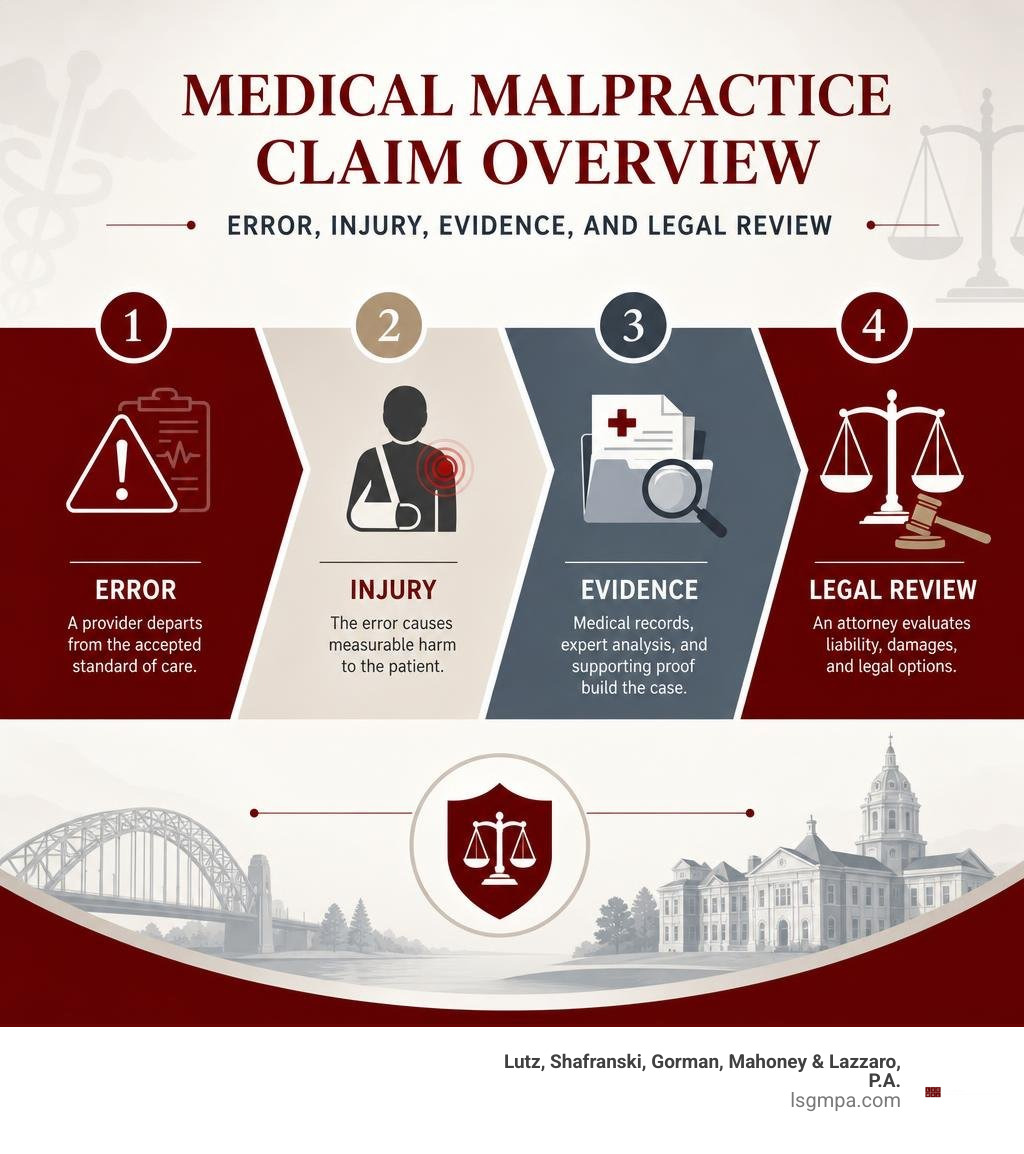
Medical malpractice occurs when a licensed healthcare provider—such as a physician, surgeon, registered nurse, physician assistant, or hospital system—acts negligently by failing to provide treatment that aligns with accepted medical standards, resulting in measurable harm or wrongful death. In New Jersey, medical negligence is not defined by a poor medical outcome alone; medicine is inherently complex, and bad outcomes can happen even when doctors do everything correctly. Actionable malpractice requires proving that the practitioner committed a specific mistake or breach of care that a reasonably prudent healthcare professional in the same field would not have made under similar circumstances.
To establish standard of care violations, courts evaluate what a reasonably competent doctor or medical team in that specific medical specialty ought to have done. When healthcare facilities or practitioners deviate from these standard protocols, the consequences can be catastrophic. For those dealing with life-altering trauma due to medical errors or catastrophic accidents, consulting The Ultimate Guide to Finding a Catastrophic Injury Lawyer offers essential insight into pursuing complete accountability and full financial recovery.
Medical errors occur across every discipline of healthcare, from outpatient urgent care clinics in Perth Amboy to major regional hospitals across Middlesex County. Some of the most frequent types of actionable medical negligence include:
In any New Jersey civil injury lawsuit, the injured plaintiff holds the legal burden of proof. Winning a medical malpractice claim requires establishing four foundational legal elements by a preponderance of the evidence:
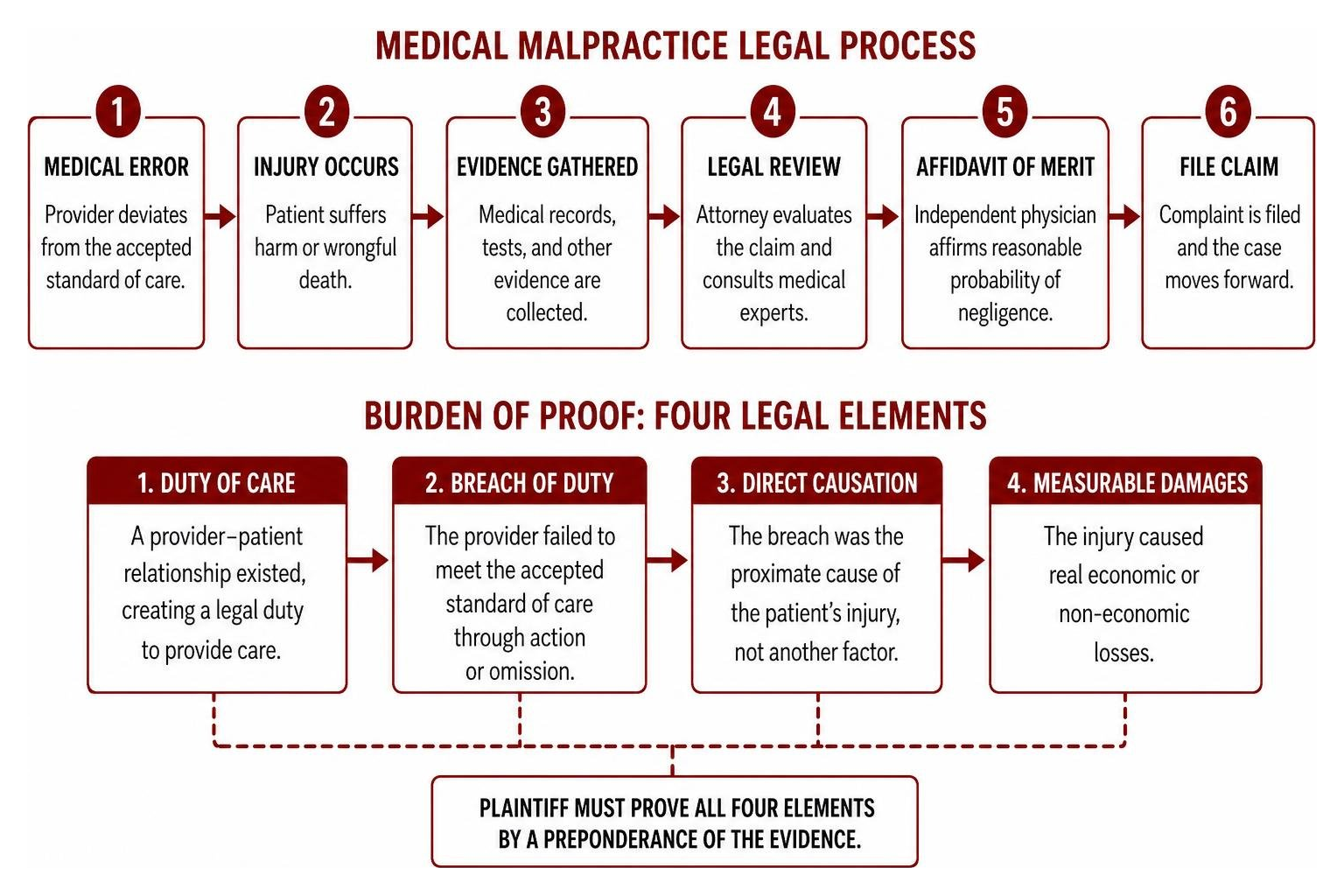
Under New Jersey law (N.J.S.A. 2A:53A-27), medical malpractice claims require an “Affidavit of Merit.” Early in litigation, an independent, board-certified physician in the same field as the defendant must execute a sworn statement attesting that there is a reasonable probability the defendant’s care fell outside acceptable professional standards. Without this specialized medical expert testimony, a court will dismiss the case.

Attempting to navigate a complex medical negligence claim without legal assistance puts injured patients at a severe disadvantage. Medical institutions, hospital networks, and malpractice insurance carriers deploy experienced defense legal teams and substantial resources to dispute claims and limit financial payouts. A specialized new brunswick medical malpractice lawyer levels the playing field by thoroughly investigating medical records, handling procedural hurdles, and retaining top-tier medical experts.
| Key Aspect | Self-Representation (Pro Se) | Professional Legal Advocacy |
|---|---|---|
| Understanding Complex Laws | Highly challenging; strict procedural rules and filing deadlines can easily result in case dismissal. | Expert knowledge of New Jersey tort laws, court rules, and Affidavit of Merit requirements. |
| Medical Expert Network | Extremely difficult for individuals to locate, hire, and fund qualified board-certified medical experts. | Direct access to nationwide networks of top medical specialists across all medical fields. |
| Evidence Gathering | Hospital networks may resist releasing complete charts, electronic audit trails, or internal notes. | Full legal authority to subpoena records, review electronic health data, and take depositions. |
| Settlement Negotiation | Insurance adjusters frequently offer low settlement amounts or deny liability outright. | Skilled negotiation backed by formal trial preparation to demand fair compensation. |
| Financial Risk | Personal responsibility for upfront expert fees, filing charges, and medical record costs. | Claims handled on contingency; no upfront legal fees or out-of-pocket expenses unless compensation is won. |
When choosing legal representation for a medical negligence claim in Middlesex County, look for the following core credentials:
When you contact our firm for help, your initial interaction is designed to provide clear answers without financial obligation. During your free consultation, our legal team will:
If you or a family member suffered severe injuries stemming from systemic medical negligence or unexpected accidents, reviewing our guide on When Disaster Strikes: Navigating a Catastrophic Injury Lawsuit in Milltown, NJ provides further clarity on how personal injury suits are built and litigated in local courts.
Time is one of the most critical factors in any New Jersey medical malpractice lawsuit. The law sets strict deadlines, known as statutes of limitations, within which an injured party must formally file a lawsuit in court.
In New Jersey, the general statute of limitations for personal injury and medical malpractice claims is two years from the date the negligent act or omission occurred (N.J.S.A. 2A:14-2). However, key exceptions and rules can adjust this timeframe:
Because gathering records, conducting expert reviews, and drafting affidavits of merit can take several months, contacting a new brunswick medical malpractice lawyer as soon as you suspect negligence is crucial to protecting your rights.

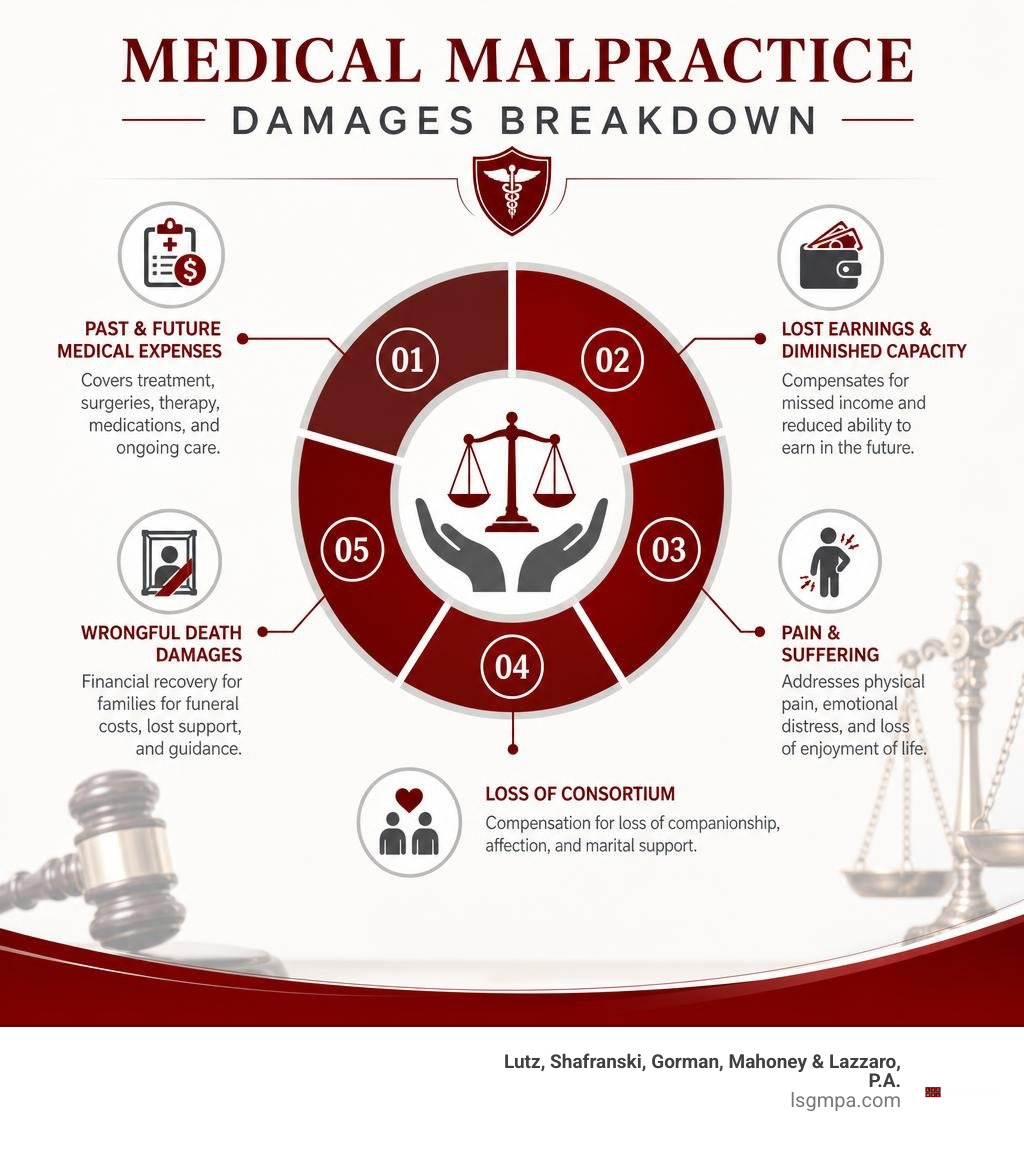
When medical negligence alters your life, financial compensation helps ease financial burdens and secures needed long-term care. In New Jersey, victims of medical errors can recover both economic and non-economic damages:
Medical malpractice cases generally take anywhere from 18 months to over three years to fully resolve. Because these lawsuits involve extensive discovery, obtaining complete electronic medical records, deposing multiple doctors and nurses, and securing formal reviews from board-certified medical experts, they require thorough preparation. While some claims settle during pre-trial negotiations, complex cases involving catastrophic harm often proceed toward formal trial dates in Middlesex County Superior Court.
To win a medical negligence lawsuit in New Jersey, you must prove four core elements:
Additionally, your attorney must file a sworn Affidavit of Merit signed by a qualified medical expert confirming the standard of care was breached.
Victims of medical negligence can recover both economic damages (such as past and future medical bills, rehabilitation costs, lost wages, and lost future income capacity) and non-economic damages (such as physical pain and suffering, mental anguish, permanent disability, disfigurement, and loss of quality of life). In cases involving fatal errors, surviving family members can seek financial recovery through a wrongful death claim.
Facing the aftermath of a preventable medical injury can leave you feeling overwhelmed, uncertain, and anxious about your future. When medical professionals make mistakes, you should not have to carry the financial, physical, and emotional burdens alone. Working with an experienced team can help you assert your legal rights and demand the financial resources required to heal.
At Lutz, Shafranski, Gorman, Mahoney & Lazzaro, P.A., we bring decades of legal experience, proven trial success, and compassionate client representation to victims throughout New Brunswick, Perth Amboy, Milltown, and across Middlesex County. If you suspect that a medical error caused serious harm to you or a loved one, take the first step toward recovery today. Contact a New Brunswick Catastrophic Injury Lawyer to schedule your free, confidential consultation and learn how we can fight for the justice you deserve.