

 Call Us Today (732) 249-0444
 September 12, 2026

After a New Brunswick truck accident, protect your health and your claim: call 911, get medical care, document the scene if it is safe, collect witness details, and avoid giving a recorded statement or accepting a quick settlement before you know the full cost of your injuries.
Truck crashes can involve more than one responsible party, including the driver, trucking company, maintenance provider, cargo loader, or vehicle manufacturer. Important evidence – such as electronic driving logs, onboard data, inspection records, and dashcam footage – can disappear quickly.
I am Frank Lazzaro, a New Jersey Supreme Court Certified Civil Trial Attorney with experience obtaining significant recoveries in personal injury cases. That trial-focused experience helps me assess the evidence and financial stakes in a New Brunswick truck accident claim.
Commercial freight vehicles are massive machines. When fully loaded, an eighteen-wheeler can weigh up to 80,000 pounds, while a typical passenger vehicle weighs around 3,500 to 4,000 pounds. That vast size and weight disparity means that any collision carries severe physical forces. Understanding why these crashes occur is the first step toward holding the responsible parties accountable.
Common root causes of commercial vehicle collisions include:
Weather in Central New Jersey changes rapidly. Rain, black ice, fog, and winter slush drastically reduce tire traction and visibility. When roads become slick, heavy commercial trucks need even more distance to stop safely. Commercial drivers who fail to decrease their speed and increase following distance when precipitation begins violate baseline safety standards.
These hazards are amplified on heavily traveled local transit corridors like Route 1, Route 18, the New Jersey Turnpike near Exit 9, and Interstate 287. Heavy traffic flow combined with sudden congestion creates prime conditions for deadly chain-reaction highway collisions when a speeding or inattentive truck driver cannot slow down in time.
Commercial freight shipping runs around the clock, creating pressure on drivers to meet tight delivery deadlines. To protect the traveling public, the Federal Motor Carrier Safety Administration (FMCSA) enforces strict Hours-of-Service (HOS) rules:
Despite these safety mandates, some motor carriers and drivers falsify Electronic Logging Device (ELD) data or pressure drivers to push through exhaustion. Fatigue slows reaction times, impairs spatial judgment, and can cause a driver to drift across lane markers into oncoming traffic.
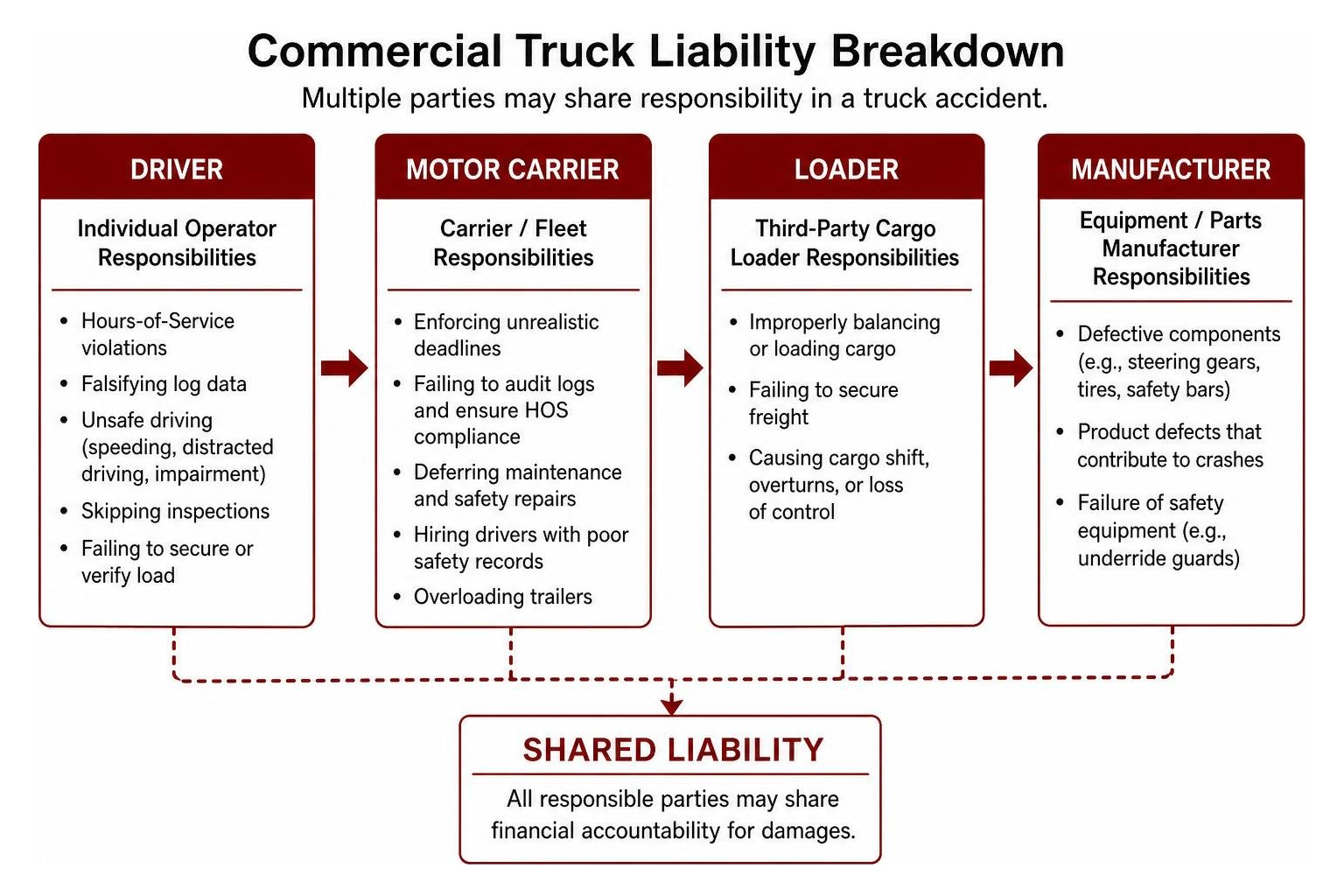
Unlike a typical two-car accident, commercial vehicle accidents involve multiple corporate entities and regulatory layers. Identifying every liable entity ensures access to sufficient insurance coverage to address catastrophic medical expenses and long-term losses.
When mechanical negligence, load shifting, or driver errors lead to high-impact wrecks—including reports of serious commercial truck fires—we evaluate both the individual operator’s choices and the corporate policies of the motor carrier.
| Area of Negligence | Driver Responsibility | Motor Carrier Liability |
|---|---|---|
| Hours-of-Service Compliance | Driving beyond legal shift limits; falsifying log data. | Enforcing unrealistic delivery deadlines; failing to audit logs. |
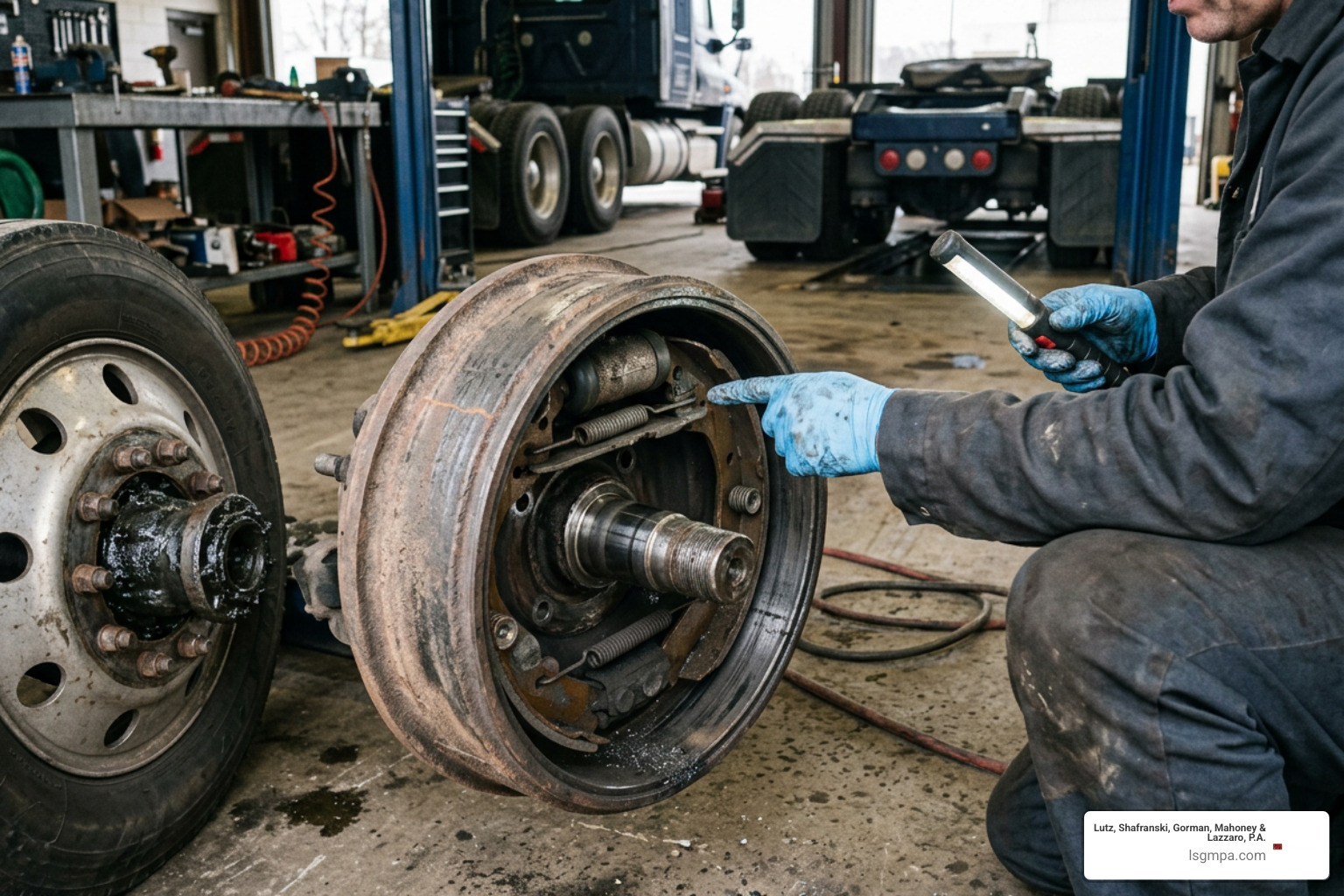
| Vehicle Maintenance | Skipping mandatory pre-trip inspections; ignoring dash alerts. | Deferring safety repairs; failing to service brakes, tires, and lights. |
| Operational Conduct | Speeding, tailgating, distracted driving, or driving impaired. | Hiring drivers with poor safety records; inadequate background checks. |
| Cargo Management | Failing to verify trailer balance and securement prior to transit. | Overloading trailers beyond gross vehicle weight ratings. |
Liability often extends beyond the truck driver and their employer. Commercial transport involves multiple specialized vendors, any of whom may share financial accountability for a wreck:
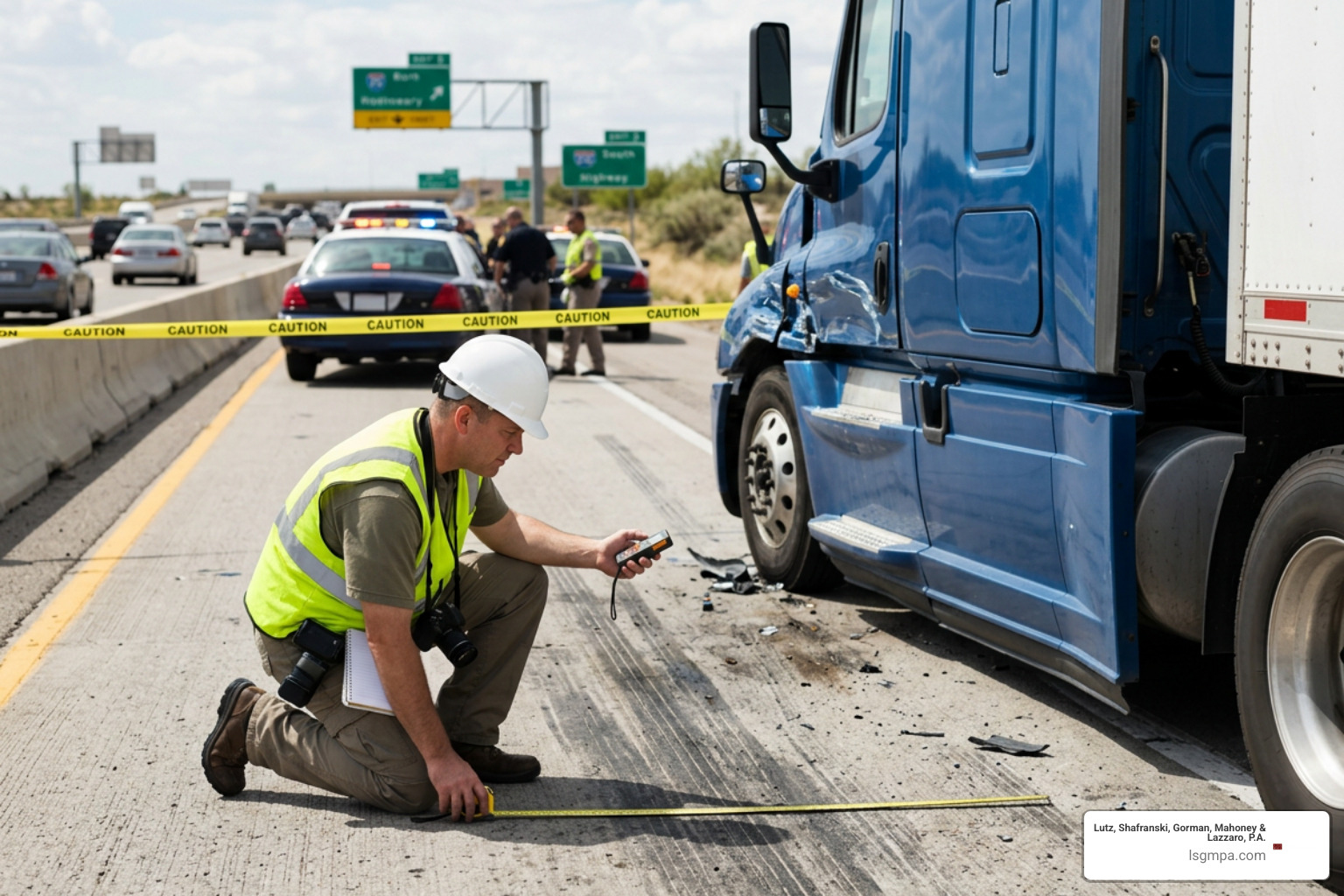
Commercial trucking companies move quickly after a crash. Many dispatch rapid-response teams within hours to gather data and build a defense. Protecting your legal claim means securing vital digital and physical evidence before it is overwritten, repaired, or lost:
Commercial truck crashes often inflict life-altering injuries that require extensive medical care and long-term support. In New Jersey, victims can pursue compensation through economic and non-economic damages to rebuild their lives.
Compensation after a serious collision falls into two main categories:
1. Economic Damages (Measurable Financial Losses):
2. Non-Economic Damages (Intangible Losses):
When a collision causes permanent spinal cord trauma, severe burns, or traumatic brain injury, a dedicated catastrophic injury lawyer works to ensure life-care plans and long-term financial projections reflect the full scope of your future needs.
New Jersey operates under a “no-fault” auto insurance framework. In standard accidents, your own auto policy’s Personal Injury Protection (PIP) pays your initial medical bills, regardless of who caused the collision.
However, commercial tractor-trailers do not operate under the same standard private passenger auto limits. Because truck crashes frequently involve severe trauma, victims readily meet the statutory threshold to step outside the PIP system and file third-party claims directly against the negligent trucker and their motor carrier.
Commercial freight carriers carry liability insurance policies ranging from $750,000 to several million dollars. Because the financial stakes are so high, insurance adjusters often employ aggressive tactics to minimize payouts:
Partnering with experienced accident claim lawyers shields you from insurance pressure and ensures all communications, paperwork, and financial negotiations are handled professionally.
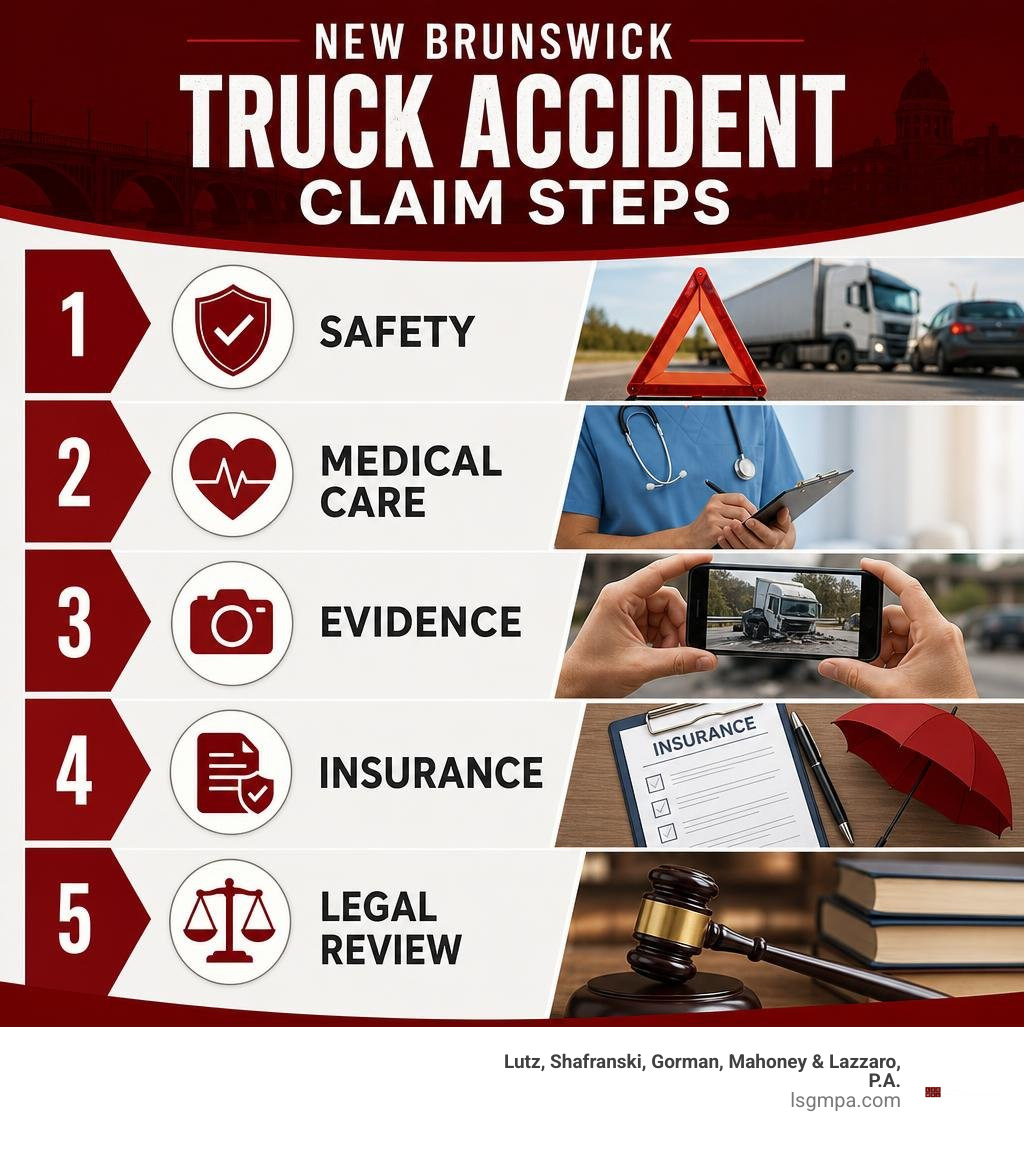
The minutes and hours following a truck crash can be disorienting. Taking deliberate steps protects your health, preserves crucial evidence, and lays a solid foundation for your recovery.
If you are involved in a commercial vehicle collision and are physically able to do so safely, follow these essential steps:
Handling a complex commercial truck claim on your own while recovering from injuries can be overwhelming. Trucking corporations and their insurers have teams dedicated to protecting their bottom line. Working with knowledgeable car crash lawyers evens the playing field by:
Multiple parties may share legal responsibility for a commercial truck crash. Depending on the circumstances, liable entities can include the individual truck driver, the trucking company or motor carrier, third-party maintenance and repair shops, warehouse freight loaders, and vehicle parts manufacturers. An attorney investigates the evidence to identify all responsible parties and their insurance policies.
Adverse weather does not excuse truck drivers from safe operation. Under federal safety regulations (49 CFR § 392.14) and commercial driving standards, commercial operators are required to exercise extreme caution during hazardous conditions such as rain, snow, ice, or fog. Drivers must reduce their speed, increase following distances, and pull off the roadway safely when conditions become too dangerous. Failing to adjust driving behaviors to bad weather constitutes negligence.
Victims of commercial truck accidents can recover both economic and non-economic damages. This includes reimbursement for emergency medical care, surgeries, physical therapy, anticipated future medical costs, lost wages, and loss of future earning potential. Victims may also recover compensation for physical pain and suffering, emotional distress, permanent disability, disfigurement, and loss of enjoyment of life. In cases involving fatal collisions, surviving family members can pursue compensation through wrongful death claims.
A collision with a commercial truck can disrupt your life in an instant. Dealing with medical appointments, physical recovery, lost income, and aggressive insurance companies creates unnecessary stress. You do not have to navigate this complex legal and insurance system alone.
At Lutz, Shafranski, Gorman, Mahoney & Lazzaro, P.A., we serve injured motorists across New Brunswick and Middlesex County communities, including Edison, Woodbridge, Piscataway, East Brunswick, Perth Amboy, Sayreville, and Milltown. We focus on uncovering the facts, establishing liability, and pursuing full financial recovery for your medical expenses, lost earnings, and pain and suffering.
New Jersey enforces strict statutory deadlines for filing personal injury claims, and crucial commercial trucking records can be legally overwritten or destroyed if not preserved promptly. Contact an experienced New Brunswick truck accident lawyer today to schedule a free case evaluation and take the first step toward securing the compensation you deserve.