

 Call Us Today (732) 249-0444
 September 16, 2026

After a bicycle crash, protect your health and your claim right away:
A collision with a car can cause head injuries, broken bones, road rash, back injuries, and lasting anxiety. A lawyer can help identify who was at fault, pursue available insurance benefits, and seek payment for medical care, lost income, pain, and other losses.
I am Frank Lazzaro, a New Jersey Certified Civil Trial Attorney with experience securing significant personal injury verdicts and recoveries for people harmed by negligence. As a bicycle accident lawyer New Brunswick residents may consult, I focus on the evidence, insurance issues, and legal strategy that can shape an injury claim.
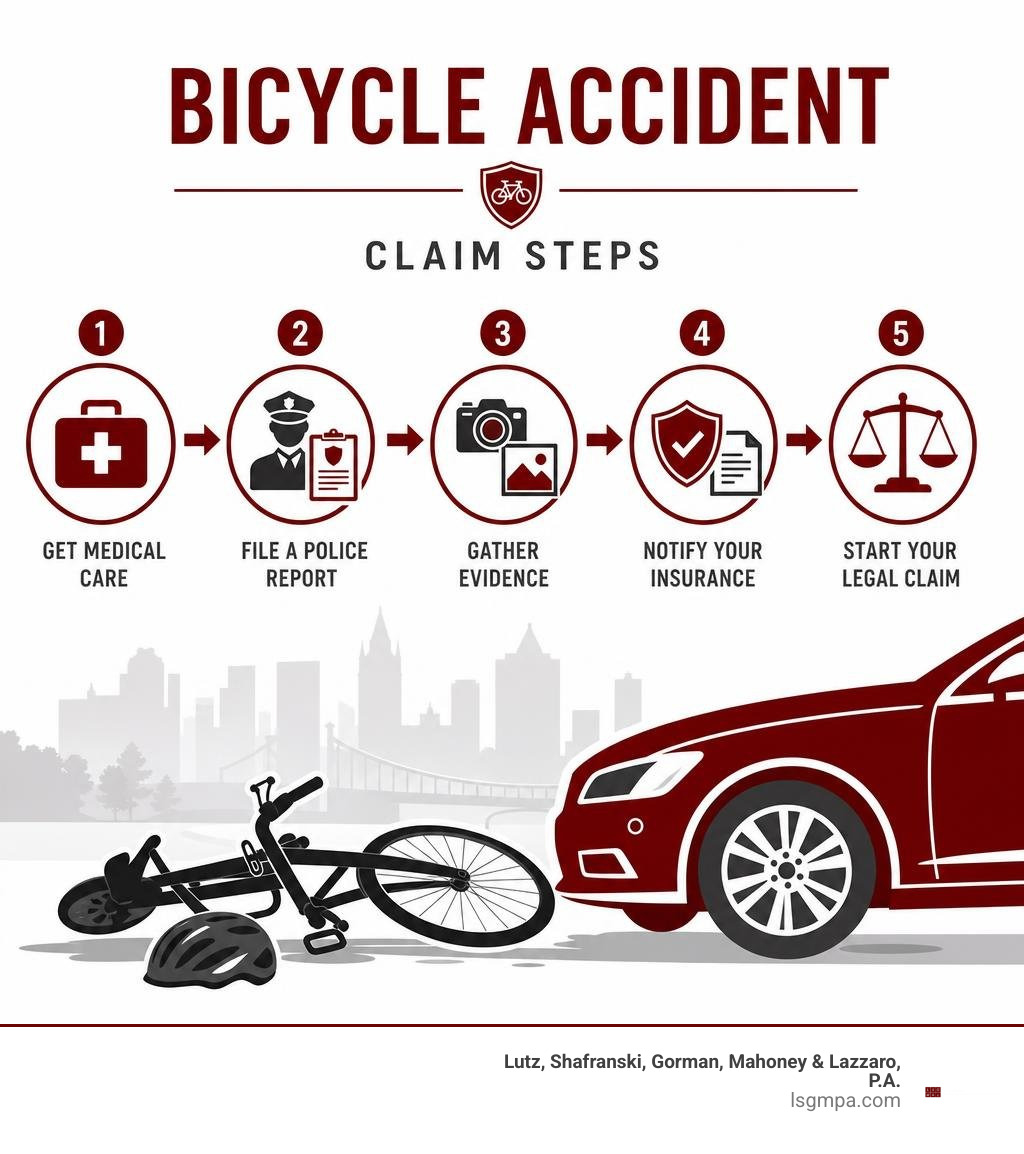
Simple guide to bicycle accident lawyer new brunswick terms:
When a motor vehicle strikes a bicycle, the rider absorbs the vast majority of the physical impact. In those frantic moments immediately following a collision, adrenaline surges, often masking severe pain and confusion. Knowing the proper protocol helps protect both your immediate well-being and any future legal claims you may need to file. If you are also familiar with how to handle a cycling injury, you understand that immediate, methodical action lays the groundwork for physical recovery and fair compensation.
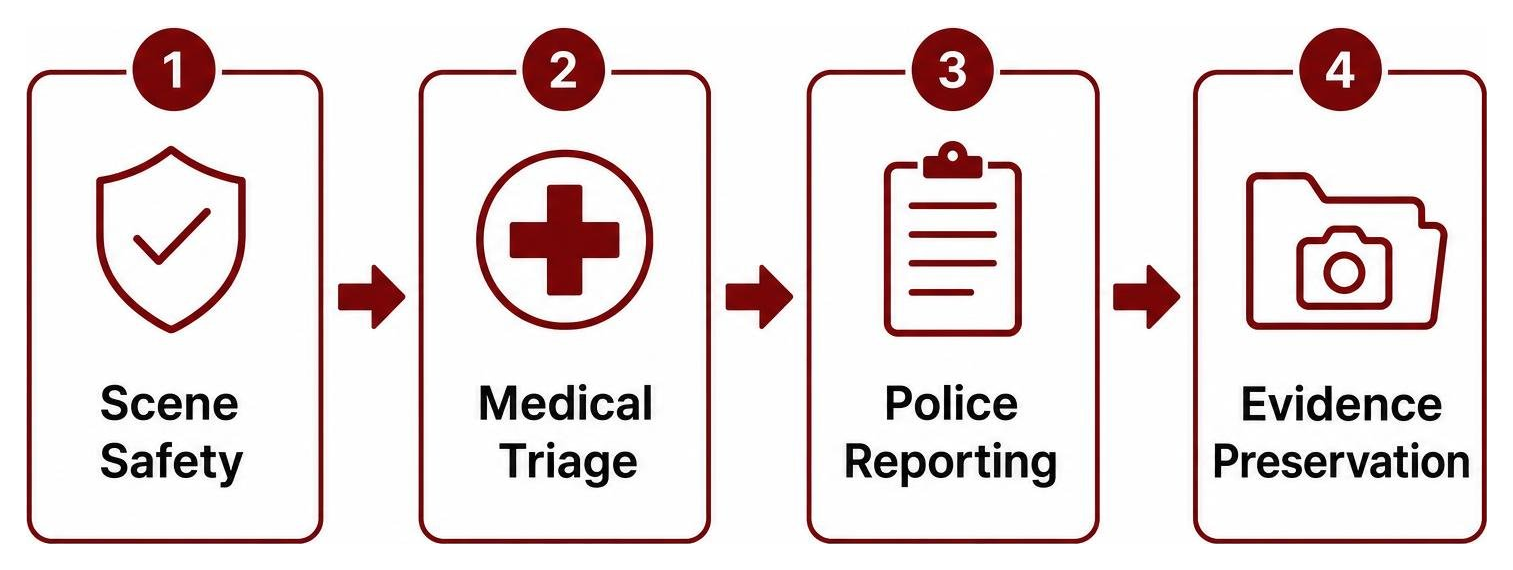
Your physical health is always the top priority. Many life-threatening cycling injuries—such as traumatic brain injuries (TBIs), internal bleeding, cervical spine trauma, and organ damage—do not immediately display obvious symptoms. Shock and adrenaline can easily disguise internal trauma. Seeking immediate emergency medical care creates a contemporaneous record connecting your physical injuries directly to the motor vehicle collision, preventing insurance adjusters from later claiming your injuries were pre-existing.
Under statutory rules, any motor vehicle accident resulting in physical injury, death, or total property damage exceeding $1,000 must be officially reported to law enforcement. Calling 911 ensures an officer arrives on the scene to complete a formal collision report, interview the involved drivers, document initial roadway positions, and note vehicle damages. Always request the police report incident number before leaving the area or heading to the hospital.
Physical evidence at a crash scene deteriorates quickly. Weather changes, vehicle traffic, and road cleanup can erase critical details within hours. If your physical condition allows, or if a companion can assist you, take the following steps:
Riding a bicycle alongside motor vehicles requires a clear understanding of road regulations. Cyclists are not second-class road users; they have recognized legal rights and standard duties when sharing the roadway with vehicular traffic.
Under Section 176 of the Motor Vehicle Act, a person operating a bicycle on a highway has all the rights and is subject to all the duties applicable to the driver of a motor vehicle, except those provisions which by their very nature have no application.
Cyclists are subject to specific operational rules designed to maintain safety:
Determining fault in a bicycle collision involves establishing whether a party breached their legal duty of reasonable care. However, liability is not always assigned 100% to one party. Under contributory negligence principles, if an injured cyclist failed to follow safety rules, the court may determine that both parties share fault, reducing the cyclist’s compensation proportionally.
Several notable legal precedents demonstrate how courts evaluate shared liability:
Approximately one in three cycling fatalities occurs when road safety rules are violated. Demonstrating compliance with all applicable traffic rules is essential to protect against claims of contributory negligence.
Cyclists involved in motor vehicle collisions face severe injuries that require extensive rehabilitation, specialized surgeries, and long periods away from work. Obtaining full financial recovery involves handling both immediate no-fault benefits and long-term tort claims. Cyclists benefit from the same legal mechanisms used when navigating auto injury settlements to account for long-term losses.
Following a bicycle accident involving an automobile, an injured cyclist is generally entitled to access no-fault statutory benefits, commonly referred to as Section B benefits. These benefits are provided regardless of who caused the collision. If the cyclist holds their own auto policy, their insurer covers them; if they do not own a vehicle, the insurer of the at-fault driver provides these benefits.
Section B benefits provide essential safety nets, including:
While Section B benefits assist with short-term losses, they rarely cover the true financial cost of severe injuries. To recover complete damages, an injured cyclist must bring a Section A tort claim against the at-fault driver.
Through a tort claim, an injured cyclist can recover:
| Benefit Category | Section B (No-Fault Benefits) | Section A (Tort Claims Against At-Fault Driver) |
|---|---|---|
| Fault Required? | No, available regardless of fault | Yes, must prove driver negligence |
| Income Loss Coverage | Capped at $250 per week | Full actual past and future income losses |
| Medical Expenses | Covered up to statutory caps (4-year limit) | Full lifetime projected care and rehabilitation |
| Pain and Suffering | Not available | Recoverable based on injury severity |
| Property Damage | Not covered | Full replacement of bicycle and gear |
If the driver who struck you is uninsured or flees the scene in a hit-and-run, compensation remains accessible. Claims can be filed through uninsured motorist provisions or through the Facility Association, a statutory safety net funded by the insurance industry to ensure injured victims receive compensation even when an at-fault driver cannot be identified or lacks insurance.
Personal injury claims involving bicycles present distinct challenges. Insurance adjusters often exhibit inherent bias against cyclists, assuming the rider was reckless, darted into traffic, or failed to pay attention. Having an experienced legal advocate protects you from low settlement offers and unfair blame.
Consulting a lawyer should occur as soon as your medical condition stabilizes. Immediate legal counsel is especially critical when:
Experienced legal teams, such as our attorneys at Lutz, Shafranski, Gorman, Mahoney & Lazzaro, P.A., step in immediately to preserve critical traffic camera footage, interview witnesses before their memories fade, and prevent insurance companies from taking advantage of vulnerable claimants.
Selecting the right legal representation directly impacts the resolution of your claim. When evaluating personal injury attorneys, consider the following standards:
Under provincial law, the general limitation period for initiating a personal injury claim is two years from the date of the collision. Failing to file a statement of claim within this two-year statutory window generally bars you from seeking compensation forever. Certain narrow exceptions exist, such as cases involving injured minors or individuals who are legally incapacitated, but waiting is never advisable because critical physical evidence and witness testimony can be lost early on.
Under comparative negligence laws, being partially at fault does not automatically bar you from recovering compensation. Instead, the court assigns a percentage of fault to each party involved. Your total financial compensation is simply reduced by your assigned percentage of responsibility. For example, if your total damages are assessed at $200,000 and you are found to be 20% at fault for riding without proper lighting, you will still recover 80% of your award, or $160,000.
Yes. If you are injured by an uninsured driver or an unidentified motorist in a hit-and-run, you are not left without financial options. You can still access immediate Section B medical and wage loss benefits through your own auto insurer or the policy covering the vehicle involved. For broader pain and suffering and tort damages, claims can be brought against the Facility Association or under the uninsured motorist provisions of an accessible household auto policy.
A bicycle collision can disrupt your physical health, your emotional stability, and your financial security in an instant. Navigating statutory benefit schemes, establishing driver negligence, and combating insurer bias requires focused, dedicated legal advocacy.
At Lutz, Shafranski, Gorman, Mahoney & Lazzaro, P.A., we represent injured cyclists and accident victims across New Brunswick and Middlesex County communities, including Perth Amboy, Edison, Woodbridge, Piscataway, East Brunswick, Sayreville, North Brunswick, Milltown, and Highland Park. We fight to hold negligent motorists accountable and work to secure the compensation you need for medical bills, future care, lost earnings, and pain and suffering.
If you or a family member has been injured in a cycling collision, do not face the insurance companies alone. Contact our experienced legal team today through our New Brunswick injury and compensation attorney portal for a free, comprehensive consultation to protect your rights and start your recovery.

