

 Call Us Today (732) 249-0444
 October 22, 2026

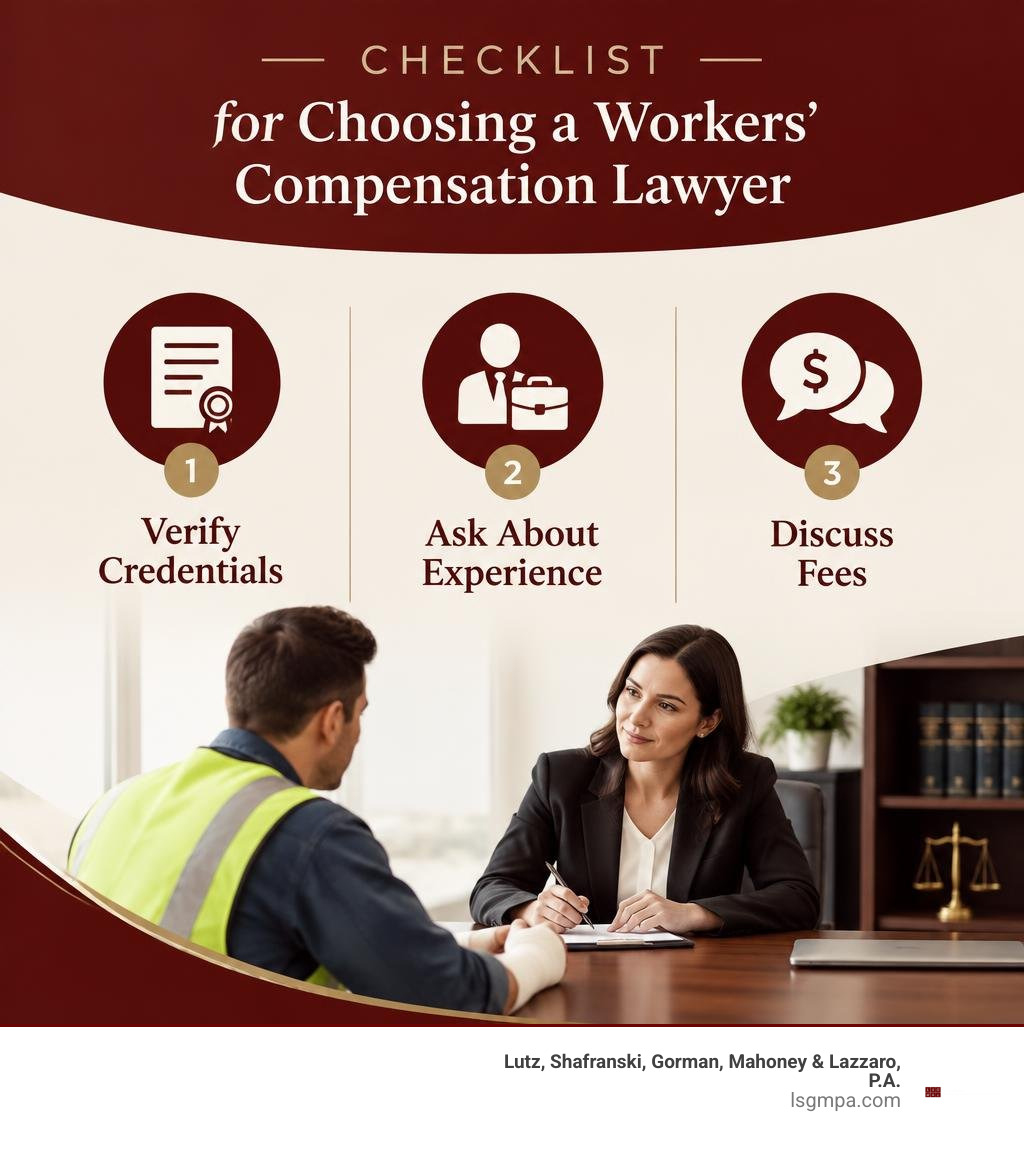
Start with a New Jersey lawyer who handles workers’ compensation claims. Check their license status with the state bar, ask how often they handle disputed claims and hearings, and find out who will work on your case. Before signing, ask how fees are approved and what you might owe.
If you were hurt at work, report the injury to your employer promptly and keep copies of your medical records and claim papers. A lawyer can help when benefits are denied, treatment is delayed, or you are unsure whether someone outside your employer may also be responsible. The New Jersey Department of Labor and Workforce Development publishes workers’ compensation information and forms that can help you understand your rights before you hire counsel.
I’m Frank Lazzaro, a New Jersey Certified Civil Trial Attorney whose injury cases have resulted in millions of dollars in recoveries for clients. This guide will help you ask the right questions of a workers compensation lawyer and choose someone who fits your case.
Every year across the country, roughly five million people sustain injuries in accidental incidents, yet only around 5% of eligible injured individuals pursue formal legal action. The vast majority of workers attempt to handle matters on their own, often leaving significant compensation on the table. In fact, injured employees who navigate complex injury systems without professional advocacy routinely face initial settlement proposals from insurance carriers that are only 30% to 50% of the claim’s true fair value.
Under the statutory framework governing workplace incidents, your rights are established by law, but protecting them requires prompt action. In New Jersey, an injury should be reported to your employer as soon as possible, and formal notice must generally be given within statutory deadlines (within 14 to 90 days, with an absolute two-year claim petition limit). Navigating the web of authorized medical providers, wage calculations, and administrative hearings can become overwhelming quickly, especially when you are focused on physical recovery.
Workers’ compensation is a no-fault statutory insurance system designed to provide medical care, income replacement, and disability benefits to employees who suffer on-the-job injuries or occupational diseases. Because it is a no-fault program, you generally do not need to prove that your employer acted carelessly to receive benefits.
Nearly all workplace-related physical trauma and illnesses are covered under the law, including:
When an incident causes life-altering harm, reading the ultimate guide to finding a catastrophic injury lawyer can help you understand the long-term medical and economic factors at stake.
When an employee is injured on the job in New Jersey, the law provides three core benefit types:
| Benefit Type | Qualifying Criteria | Payment Structure |
|---|---|---|
| Temporary Total Disability (TTD) | Unable to work for more than 7 days; under active medical care. | 70% of average weekly wage (subject to statutory state caps) until cleared to work or reaching maximum improvement. |
| Permanent Partial Disability (PPD) | Permanent functional impairment remaining after medical care is complete. | Paid weekly or in structured schedules based on percentage of permanent impairment rating. |
| Permanent Total Disability (PTD) | Inability to engage in any gainful employment due to severe work injury. | Weekly wage replacement benefits paid for an initial statutory period, extendable for life if disability continues. |
Many simple claims with minor injuries and prompt medical approval resolve without conflict. However, when disputes arise, having dedicated legal representation makes a dramatic difference. Studies and industry records show that unrepresented claimants frequently accept adverse rulings that could be successfully appealed. For example, nearly 50% of initial medical treatment denials are accepted as final by unrepresented workers, even though a properly prepared formal appeal can overturn treatment denials and restore vital care.
Similarly, outstanding medical liens and insurance balance bills can consume 30% to 50% of an unrepresented settlement award. An attorney negotiates and reduces these liens—frequently securing lien reductions of 30% to 60% that put funds directly back into the worker’s recovery.
You should consult legal counsel immediately if:
For more insights on securing fair terms during negotiations, review our guidance on navigating the legal maze with workers comp settlement lawyers.
Under the exclusive remedy doctrine of workers’ compensation law, you generally cannot sue your direct employer or co-workers for pain and suffering caused by an accidental injury. However, workplace accidents frequently involve negligence by outside third parties.
A third-party claim is a separate civil lawsuit brought against an external entity whose negligence contributed to your workplace injury. Examples include:
In a third-party civil lawsuit, you can recover damages not provided by workers’ compensation, including full lost future earnings, loss of quality of life, and compensation for pain and suffering. If you are dealing with a severe incident involving outside parties, check our resource on when disaster strikes navigating a catastrophic injury lawsuit in Milltown NJ.
Not every legal practitioner possesses the background required to handle complex workplace disputes. Workers’ compensation involves specific administrative courts, judges, and procedural rules separate from standard civil litigation.
When verifying credentials:
Selecting an attorney is a personal decision that impacts your financial and physical future. You want an advocate who pairs aggressive legal strategy with clear, responsive communication.
In workers’ compensation cases, legal representation operates on a contingency fee basis, meaning you pay no out-of-pocket legal fees upfront. In New Jersey, attorney fees in workers’ compensation matters are strictly capped by statute (up to a maximum of 20% of the award) and must be reviewed and officially approved by a Judge of Compensation. Importantly, the judge often orders the employer or their insurance carrier to pay a substantial portion of that attorney fee.
To learn more about finding the right advocate in our area, consult a practical guide to hiring a New Brunswick injury lawyer.
When vetting prospective law firms, look for the following core qualities:
For additional tips on selecting a firm, see our advice on accident and injury solicitors near me how to choose the right one.
A free initial consultation provides an opportunity to evaluate your legal options without financial commitment. During this meeting, we evaluate the facts of your injury, review your current medical treatments, analyze your wage history to ensure benefit calculations are accurate, and identify potential third-party claims.
To get the most out of your case evaluation, bring the following items:
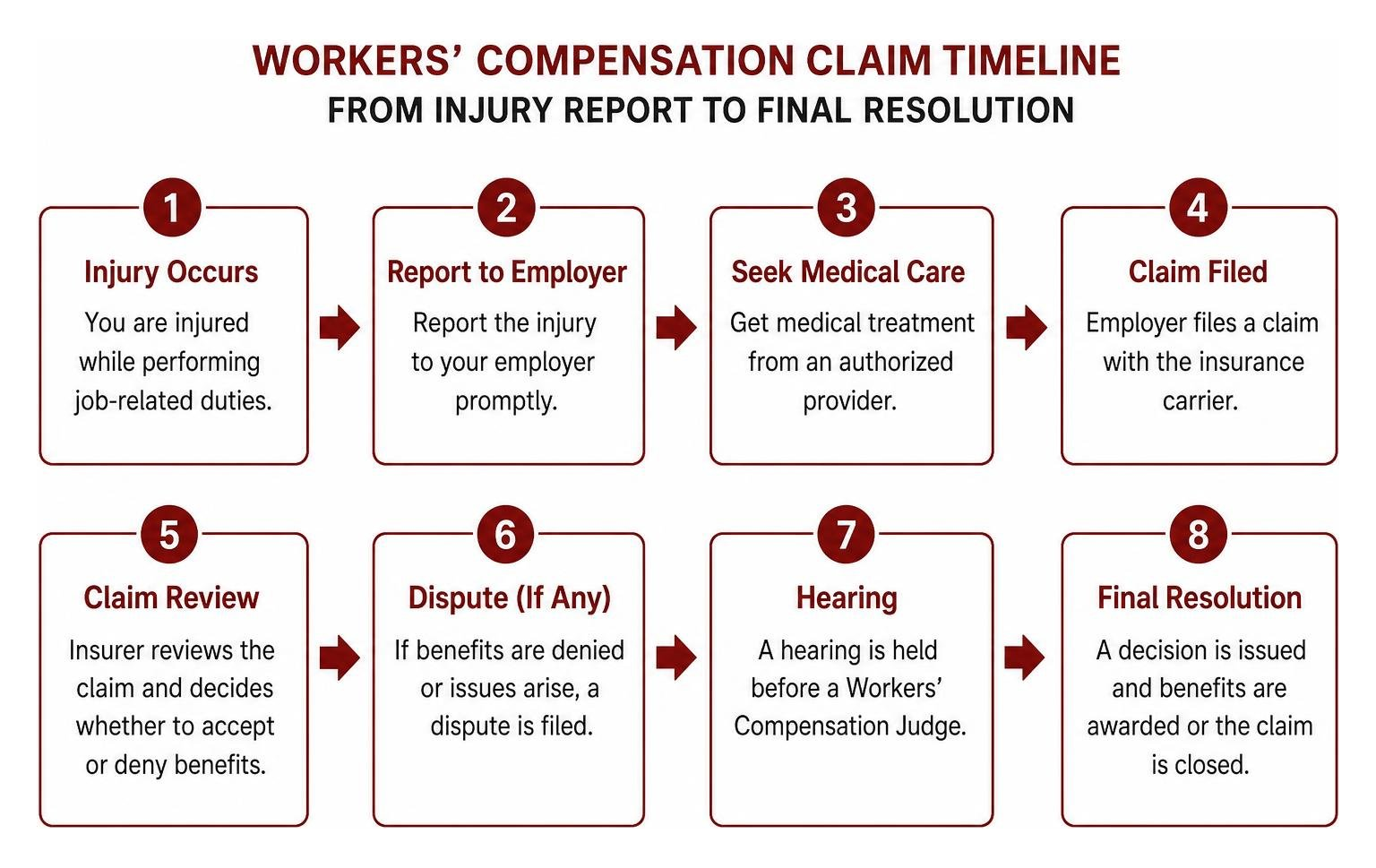
Understanding each stage of the administrative process helps remove uncertainty as your claim progresses.
When government or municipal employers are involved, specific statutory notice requirements apply. You can explore those standards further in an essential guide to filing claims against public entities.
You pay nothing out of pocket. We handle workers’ compensation cases on a contingency fee agreement. Under New Jersey law, the maximum attorney fee is 20% of the awarded compensation, and fees must be approved by the presiding workers’ compensation judge. In most cases, the judge orders the insurance carrier to pay between 50% and 60% of that fee, with only the remainder deducted from your disability award.
If your claim or necessary medical treatment is denied, do not assume the insurer’s decision is final. Contact an attorney immediately to file a formal Claim Petition and Motion for Temporary and Medical Benefits. We gather your medical evidence, challenge improper utilization review determinations, and present your case directly to a Judge of Compensation to demand authorized care and back payments.
No. New Jersey law strictly prohibits employers from firing, demoting, harassing, or retaliating against an employee simply because they reported a workplace injury or filed a workers’ compensation claim. If your employer retaliates against you, they can face substantial civil liability and statutory penalties.
A serious workplace injury brings physical pain, emotional stress, and financial pressure. You do not have to fight insurance adjusters and complex legal proceedings alone. At Lutz, Shafranski, Gorman, Mahoney & Lazzaro, P.A., we provide comprehensive advocacy to help injured workers secure every dollar of wage replacement, medical coverage, and disability compensation they deserve across Middlesex County and surrounding New Jersey communities.
If you or a family member was injured on the job, contact a dedicated New Brunswick workers’ compensation lawyer at our firm today for a free, confidential case review.
