

 Call Us Today (732) 249-0444
 July 14, 2026

A motorcycle accident lawyer is a personal injury attorney who helps injured riders recover compensation after a crash caused by someone else’s negligence. If you’ve just been in an accident, here’s what you need to know right now:
Quick answers:
One moment you’re riding, and the next you’re facing mounting medical bills, lost income, and questions you never expected to ask. It happens fast — and what comes after the crash can feel just as overwhelming as the crash itself.
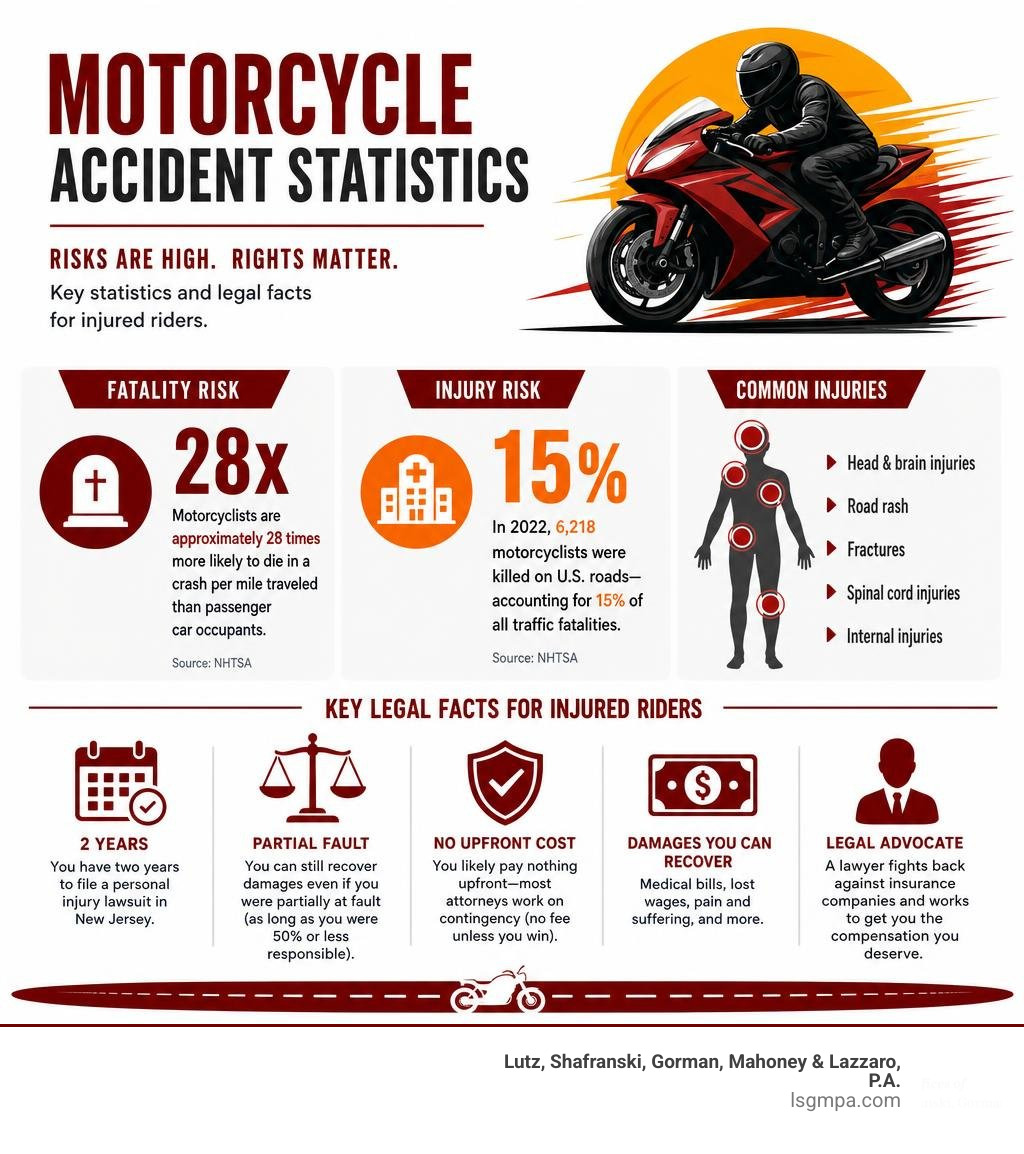
Motorcyclists face dangers that car drivers simply don’t. Riders are approximately 28 times more likely to die in a crash per mile traveled than passenger car occupants. In 2022 alone, 6,218 motorcyclists were killed on U.S. roads — accounting for 15% of all traffic fatalities.
And yet, even after a serious crash, injured riders often run into another obstacle: insurance companies that assume the worst about them. Adjusters frequently blame riders for accidents — sometimes without a shred of evidence — simply because of bias against motorcyclists.
That’s exactly where having the right legal advocate makes all the difference.
I’m Frank Lazzaro, a motorcycle accident lawyer and Certified Civil Trial Attorney — one of roughly 2% of New Jersey attorneys to earn that designation from the Supreme Court of New Jersey. I’ve spent years securing six- and seven-figure recoveries for seriously injured clients, and I understand how insurance companies think — and how to fight back.
The moments directly following a motorcycle accident are chaotic. Your adrenaline is surging, your bike is likely damaged, and you might be in shock. However, the steps you take in these crucial moments can significantly impact both your physical recovery and your future legal claim.
First and foremost, seek emergency medical care. Even if you believe your injuries are minor, the shock and adrenaline can mask severe internal trauma, soft tissue damage, or concussions. Getting evaluated by a medical professional immediately establishes an official record linking your injuries directly to the crash.
Next, ensure the police are called to the scene. A police officer will document the scene, interview witnesses, and file an official report. This report is a foundational piece of evidence in any injury claim. While waiting for the police, if you are physically able, document the scene yourself. Take photos and videos of:
Be sure to collect contact information from the other driver and any witnesses who stopped. Avoid discussing fault at the scene. It is easy to accidentally say something like “I’m sorry, I didn’t see you turn,” which insurance adjusters will later twist into an admission of liability. Stick strictly to the facts when speaking with law enforcement.
Finally, property damage is a major component of your recovery. If your bike has been totaled or severely damaged, you may need to consult our guide on Wrecked Car: Why You Need an Automobile Property Damage Lawyer Now to understand how property claims intersect with your injury case.
You should contact a motorcycle accident lawyer as soon as possible after your crash. Early legal representation is vital for several reasons. First, physical evidence at the scene can disappear quickly. Skid marks fade, weather conditions change, and local businesses may overwrite their security camera footage within days. When we get involved early, we can immediately send preservation letters to secure this evidence.
Furthermore, the insurance company representing the at-fault driver will likely reach out to you within days of the accident. They may seem incredibly friendly and sympathetic, but their primary goal is to close your file for as little money as possible. They will often ask for a recorded statement or request that you sign medical release authorizations.
Never sign anything or give a recorded statement without consulting an attorney. A skilled lawyer will handle all communications with the insurance adjusters on your behalf, protecting you from common traps. To learn more about how a dedicated attorney protects your interests during this phase, read The Ultimate Guide to Hiring an Accident Property Damage Lawyer.

When we take on a motorcycle accident case, we launch a comprehensive investigation to build a rock-solid foundation for your claim. We do not simply rely on the initial police report, which can sometimes contain inaccuracies or reflect bias against the rider.
Our investigative process often involves:
By thoroughly analyzing every piece of evidence, we can clearly demonstrate the other driver’s negligence and build a compelling case for full compensation.
One of the most frustrating hurdles injured motorcyclists face is “biker bias.” Many people—including police officers, insurance adjusters, and potential jurors—harbor unfair stereotypes that motorcyclists are inherently reckless speed demons who weave through traffic and court danger.
When a crash occurs, insurance companies routinely try to exploit this bias. They may claim you were speeding, failed to react in time, or were lane-splitting illegally, even when the evidence shows you did absolutely nothing wrong.
As experienced motorcycle accident attorneys, we know how to dismantle these defense tactics. We present clear, objective evidence—such as GPS data, accident reconstruction models, and witness testimony—to prove you were riding defensively and legally. We shift the focus back to the real cause of the crash: the driver who failed to yield, was distracted by their phone, or made an unsafe left turn directly into your path.
Motorcycle accident claims are heavily shaped by state laws, which vary dramatically across the country. For example, some states operate under strict no-fault systems, while others use comparative negligence rules to determine how fault affects your final recovery.
To illustrate these differences, let’s look at how New Jersey, Michigan, and Georgia handle these key legal concepts:
| State | Negligence System | Key Motorcycle Insurance/Legal Rule |
|---|---|---|
| New Jersey | Modified Comparative Negligence (50% Rule) | Standard PIP does not automatically cover motorcycles; riders must navigate specific policy terms and private health insurance. |
| Michigan | Modified Comparative Negligence (51% Rule) | Complex No-Fault PIP system; riders may access PIP benefits from the involved motor vehicle’s insurer. |
| Georgia | Modified Comparative Negligence (50% Rule) | Traditional tort system; riders seek recovery directly from the at-fault driver’s liability policy. |
In New Jersey, we follow a modified comparative negligence system with a 50% threshold. This means you can recover damages as long as your share of responsibility for the crash is 50% or less. However, your compensation will be reduced by your percentage of fault. For instance, if a jury determines your total damages are $100,000 but finds you 20% at fault because you were traveling slightly over the speed limit, your final recovery will be $80,000. If you are found to be 51% or more at fault, you are legally barred from recovering any compensation at all.
New Jersey’s insurance laws are notoriously complex, especially when it comes to motorcycles. Many riders are shocked to discover that the Personal Injury Protection (PIP) coverage on their standard auto insurance policy does not cover them while riding a motorcycle. Under New Jersey law, a motorcycle is not considered an “automobile” for PIP purposes.
This means if you are injured on a bike, you cannot rely on standard auto PIP to pay your medical bills. Instead, your primary source of medical coverage will typically be your private health insurance. However, health insurance policies often have high deductibles, co-pays, and exclusions for motorcycle-related injuries.
Because of these gaps, it is critical to work with an attorney who understands the nuances of New Jersey’s insurance framework. We help you explore every available avenue of recovery, including:
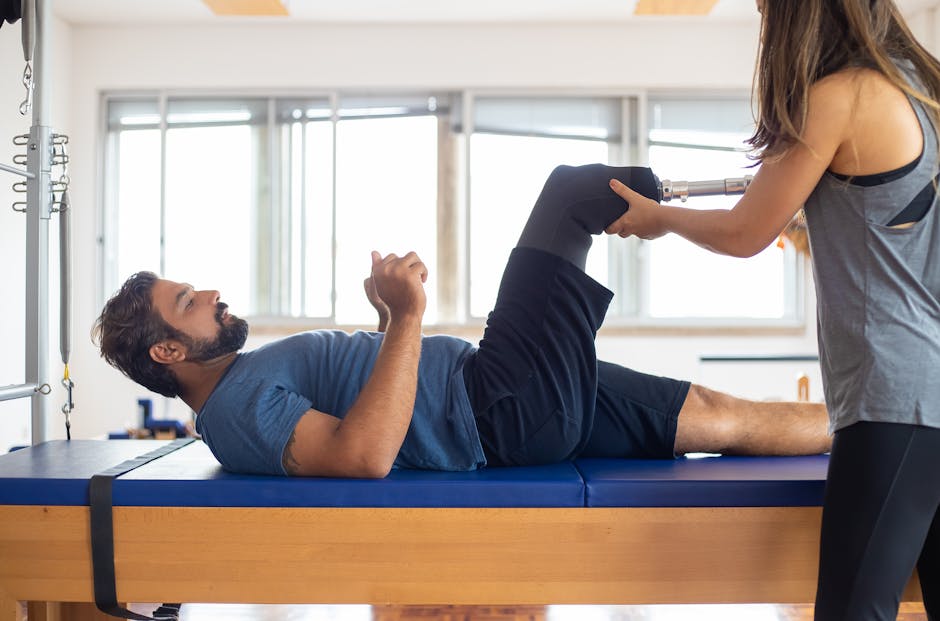
Because motorcycles offer virtually no structural protection, riders absorb the full force of a collision. This lack of barrier often results in catastrophic, life-altering injuries. Some of the most common injuries we see in motorcycle accident cases include:
When you are facing these types of severe injuries, we pursue comprehensive damages to ensure you are not left holding the financial burden of someone else’s mistake. We fight to recover both economic and non-economic damages, including:
To truly maximize the value of your claim, your lawyer must look beyond your current medical bills and calculate the true, long-term cost of your injuries. Many serious injuries require ongoing rehabilitation, future surgeries, home modifications, and specialized medical equipment years down the road.
We work closely with medical experts, life care planners, and economists to build a detailed projection of your future financial needs. This ensures that any settlement we negotiate covers your lifetime care, rather than just your immediate expenses.
If you are looking for local legal representation in New Jersey, it is important to choose a firm deeply rooted in your community. Finding the right advocate who understands the local courts in New Brunswick, Milltown, and Perth Amboy is key to ensuring your rights are protected and your claim is handled with the dedication it deserves.
Navigating the legal aftermath of a motorcycle crash is unfamiliar territory for most riders. Here are clear, straightforward answers to some of the most common questions we receive.
In New Jersey, the statute of limitations for filing a personal injury lawsuit after a motorcycle accident is two years from the date of the crash. If you do not file a formal lawsuit in court before this two-year window closes, you will lose your legal right to pursue compensation forever.
While two years might sound like a long time, it passes quickly when you are focused on surgeries, physical therapy, and physical recovery. Furthermore, building a strong case takes time. Waiting until the last minute makes it much harder to gather fresh evidence, locate witnesses, and consult with medical experts. Contacting an attorney early ensures your rights are fully protected and evidence is preserved.
We handle all personal injury and motorcycle accident claims on a contingency fee basis. This means:
This structure ensures that high-quality legal representation is accessible to everyone, regardless of their financial situation after a crash.
Yes, you can still recover damages in New Jersey even if you were not wearing a helmet. New Jersey law requires all motorcycle riders to wear a helmet, and failing to do so can be used by the defense to argue that you contributed to your own injuries under comparative negligence rules.
However, the defense must prove that your lack of a helmet actually caused or worsened your injuries. For example, if you suffered a broken leg or a crushed pelvis because a driver ran a red light, wearing a helmet would have made absolutely no difference in preventing those specific injuries. In cases involving head trauma, we often bring in medical and safety experts to determine the exact mechanics of the impact and protect your right to fair compensation.
A motorcycle accident can change your life in a fraction of a second, leaving you to deal with physical pain, emotional trauma, and immense financial stress. You do not have to carry this heavy burden alone.
At Lutz, Shafranski, Gorman, Mahoney & Lazzaro, P.A., we provide compassionate, comprehensive advocacy for seriously injured riders in New Brunswick, Milltown, Perth Amboy, and throughout New Jersey. We understand the unique challenges of motorcycle accident claims, and we have the resources, trial experience, and dedication needed to stand up to insurance companies and fight for the maximum compensation you deserve.
Let us handle the legal battle so you can focus entirely on your physical recovery. Contact our New Brunswick motorcycle accident lawyers today for a free, no-obligation consultation to discuss your case and learn how we can help.