

 Call Us Today (732) 249-0444
 September 22, 2026

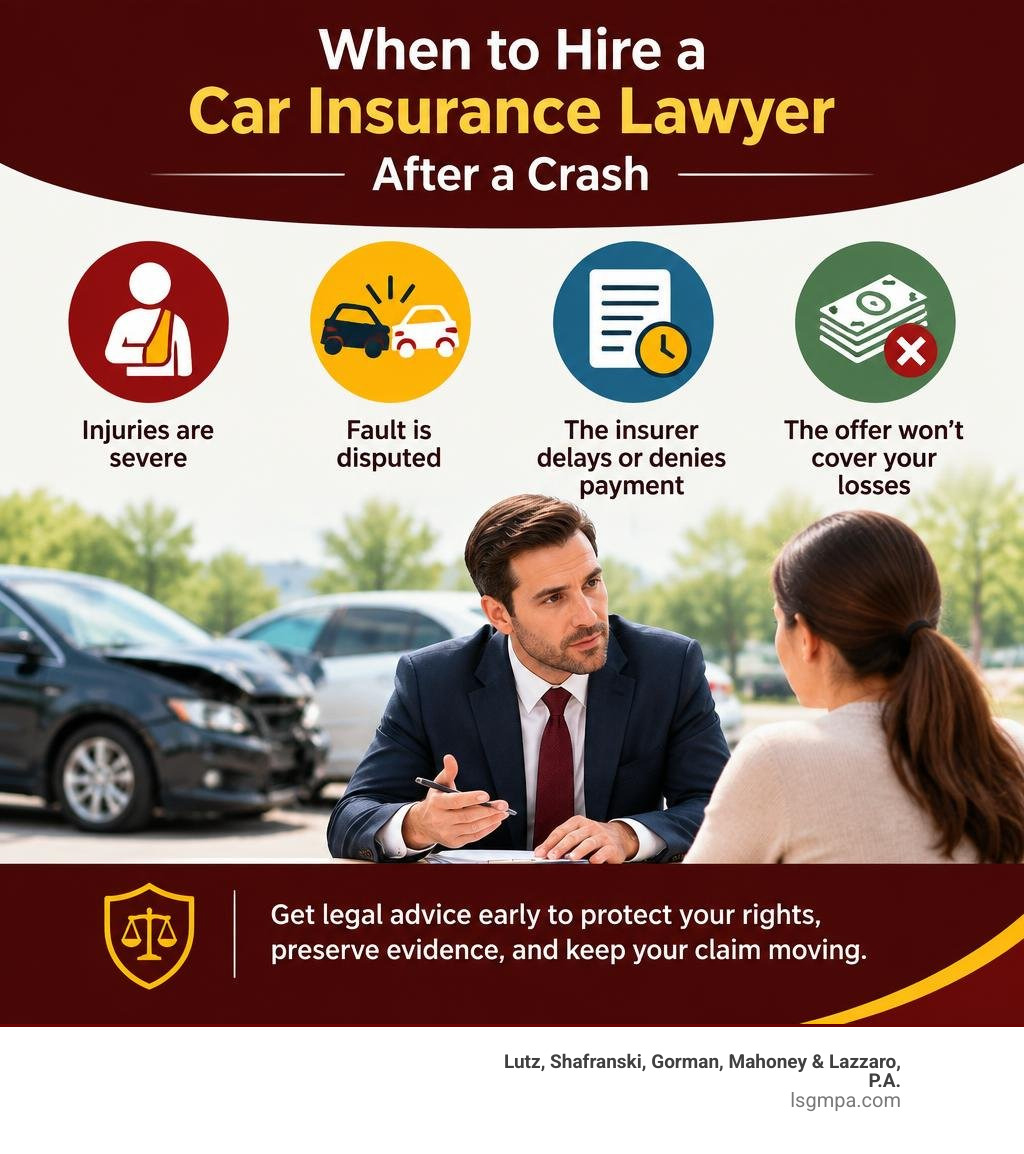
After a serious crash, hire a car insurance lawyer when injuries are severe, fault is disputed, the insurer delays or denies payment, or its offer will not cover your losses. A lawyer can review the policy, protect you from harmful claim mistakes, document medical bills and lost income, negotiate with insurers, and file suit when necessary.
Insurance claims can become difficult fast. The insurer may question who caused the crash, challenge medical treatment, or argue that coverage does not apply. Meanwhile, you may be managing pain, missed work, and growing bills. Getting legal advice early can help preserve evidence and keep your claim moving.
I am Frank Lazzaro, a New Jersey Certified Civil Trial Attorney with multiple six- and seven-figure personal injury verdicts and recoveries. As a car insurance lawyer for seriously injured people, I help clients pursue the coverage and compensation their cases require.
Learn more about car insurance lawyer:
When you purchase auto insurance, you enter into a legally binding contract. You pay your premiums on time, and in return, the insurer promises to provide financial protection when disaster strikes on the roadway. Unfortunately, the aftermath of a major motor vehicle accident often reveals a stark disconnect between policyholder expectations and corporate claims handling.
Insurance carriers are profit-driven corporations. Every dollar paid out in settlement claims directly impacts their bottom line. To protect their margins, insurance companies deploy teams of adjusters, risk analysts, and defense attorneys trained to limit payouts, dispute liability, or deny valid claims altogether.
A dedicated attorney levels the playing field. In serious collision cases, our primary objective is to take over all interactions with insurance carriers, analyze the complex language within the applicable policies, establish the full extent of your financial damages, and advocate aggressively for every dollar you deserve. When insurance carriers refuse to act fairly, navigating insurance and legal claims with an auto crash law firm ensures your rights remain protected throughout every stage of the dispute.
While people frequently use the terms interchangeably, there are distinct operational differences between general tort litigation and specialized insurance policy dispute advocacy:
Many catastrophic motor vehicle claims require both skill sets. Having accident claim lawyers explained allows victims to understand how personal injury law intersects with complex contract enforcement.
Not every minor parking lot scrape requires comprehensive legal intervention. However, hiring a dedicated legal advocate becomes necessary under specific, high-stakes circumstances:
Instead of settling car crash injury claims for a fraction of their worth, retaining seasoned counsel ensures your long-term recovery needs are thoroughly calculated and presented.
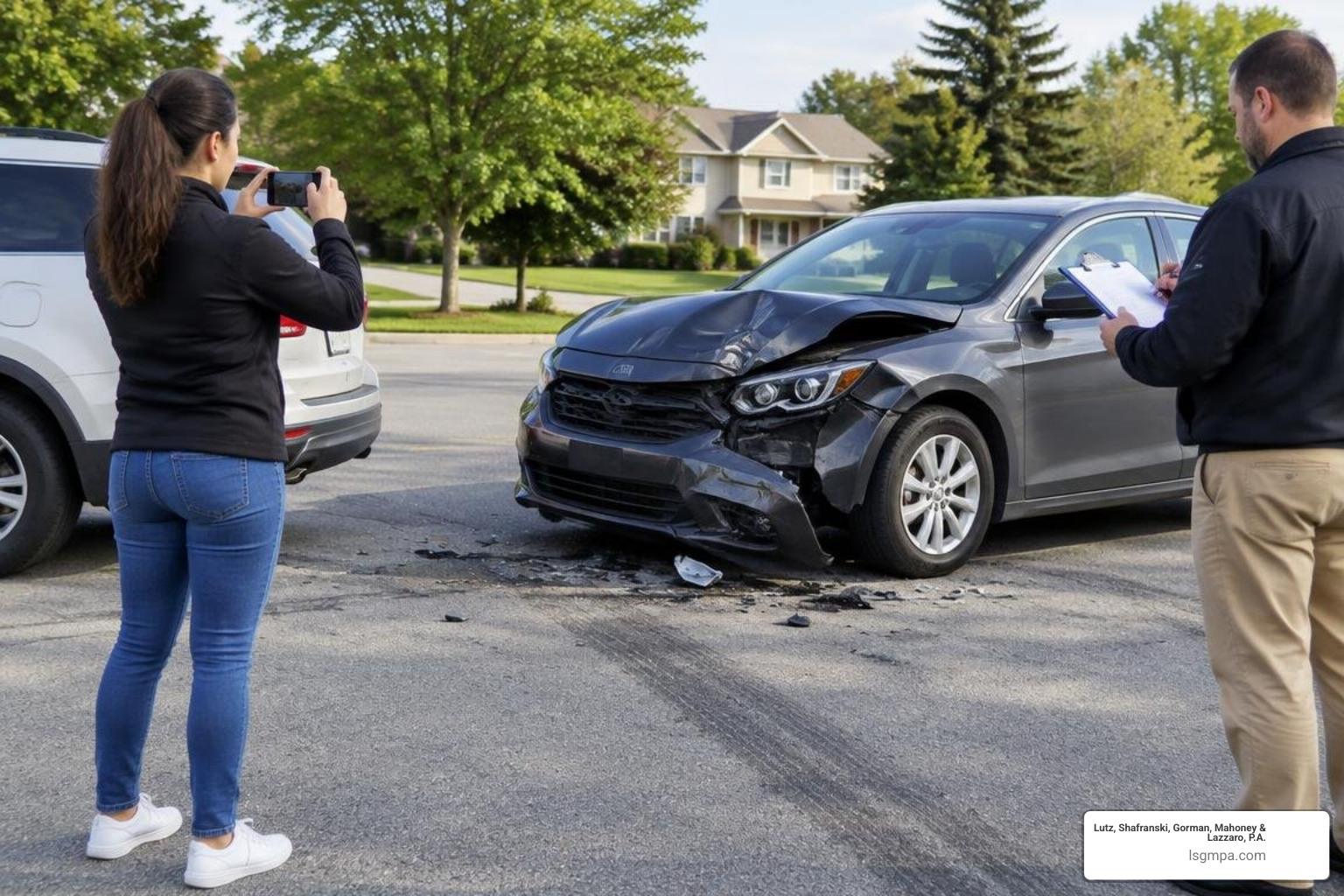
The actions you take immediately following a collision dictate the strength of your subsequent insurance claim. Insurance companies scrutinize early records, looking for gaps in medical treatment, inconsistencies in statements, or missing physical evidence to devalue your recovery.
Building a robust foundation for an insurance claim requires proactive documentation right from the crash scene whenever physically possible:
Shortly after the collision, an insurance adjuster representing the other driver—or even your own carrier—will contact you. While adjusters may sound sympathetic and helpful, their goal is to minimize corporate financial liability.
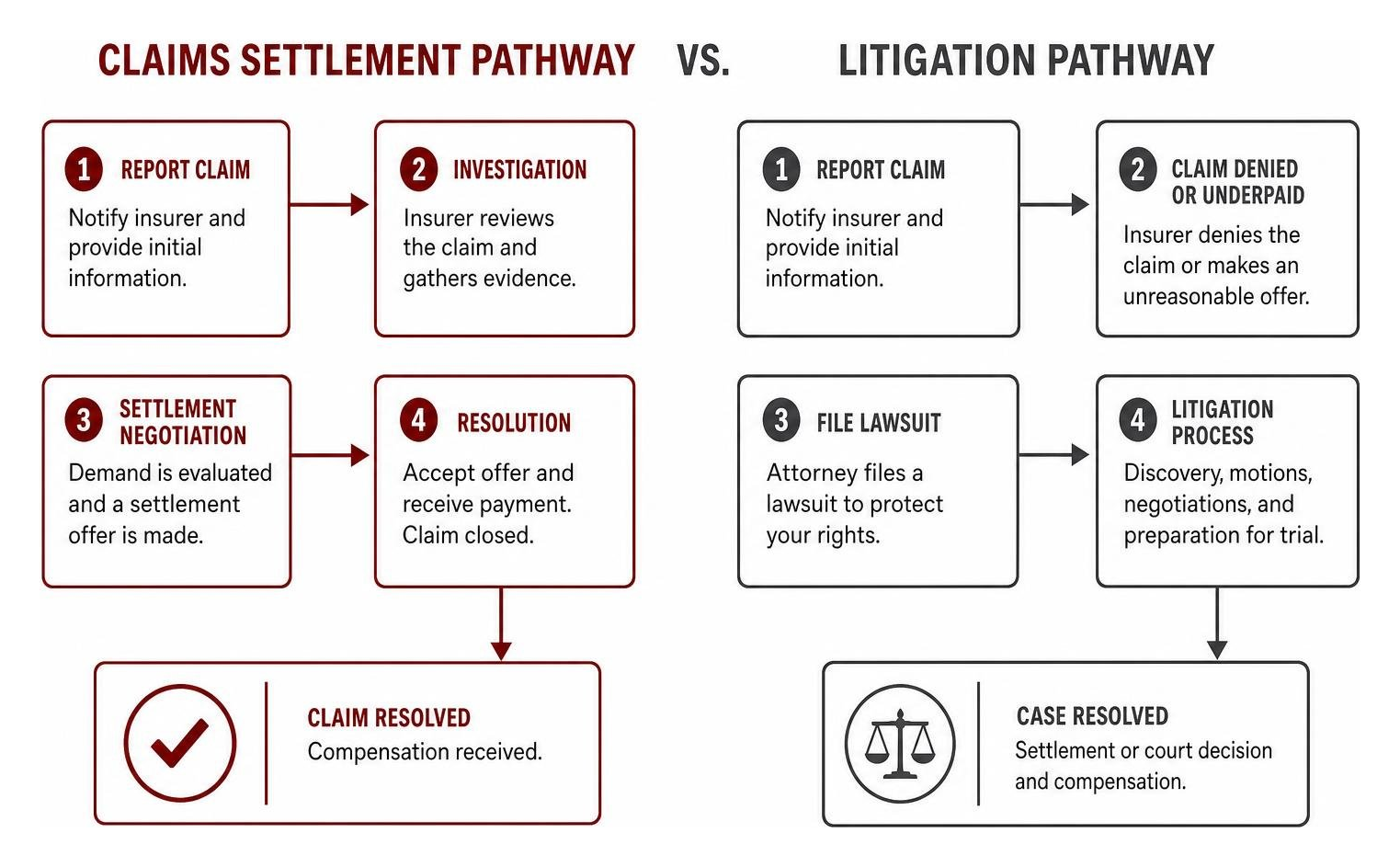
Every auto insurance policy contains an implied covenant of good faith and fair dealing. This legal doctrine requires the insurer to treat its policyholders honestly, investigate claims promptly, and pay valid claims without unnecessary obstacles. When an insurer violates these duties, it crosses the line from aggressive claims management into illegal insurance bad faith.
Bad faith can take many forms throughout the claim evaluation and settlement process. Below is an overview of how legitimate claim processing differs from unlawful bad-faith practices:
| Claim Evaluation Metric | Legitimate Insurance Claim Practice | Unlawful Bad Faith Claim Practice |
|---|---|---|
| Claim Investigation | Thorough, timely review of police reports, scene photos, and medical diagnostic records. | Refusing to interview key witnesses, ignoring physical evidence, or failing to conduct any meaningful inquiry. |
| Policy Language Interpretation | Applying clear, unambiguous contractual policy definitions consistently. | Misrepresenting policy coverage terms, exclusions, or legal limits to justify denying a claim. |
| Settlement Offers | Proposing settlement amounts consistent with documented medical costs, lost wages, and pain. | Making absurdly low offers (“lowballing”) without providing factual or medical rationale. |
| Communication Timelines | Responding to claimant inquiries and claim filings within reasonable, statutory timeframes. | Stonewalling policyholders, switching adjusters repeatedly, or refusing to return calls and letters. |
| Claim Denials | Providing detailed, written explanations referencing specific policy exclusions and findings. | Issuing flat denial letters with no explanation or justification based on actual evidence. |
Proving that an insurer acted in bad faith requires more than showing they made a mistake or disagreed on the value of a claim; you must demonstrate that the carrier acted without a reasonable basis or with reckless disregard for its contractual obligations.
Our legal team builds bad-faith claims by:
Finding qualified legal counsel is critical when taking on well-funded insurance corporations that refuse to fulfill their clear policy commitments.
When pursuing an auto insurance lawsuit or settlement, the objective is to restore you, as closely as possible, to the financial and physical position you were in prior to the collision. This compensation is divided into distinct categories of damages under the law. When handling these cases, connecting with trusted car wreck injury lawyers in your area helps ensure that all potential avenues of financial recovery are identified and pursued.
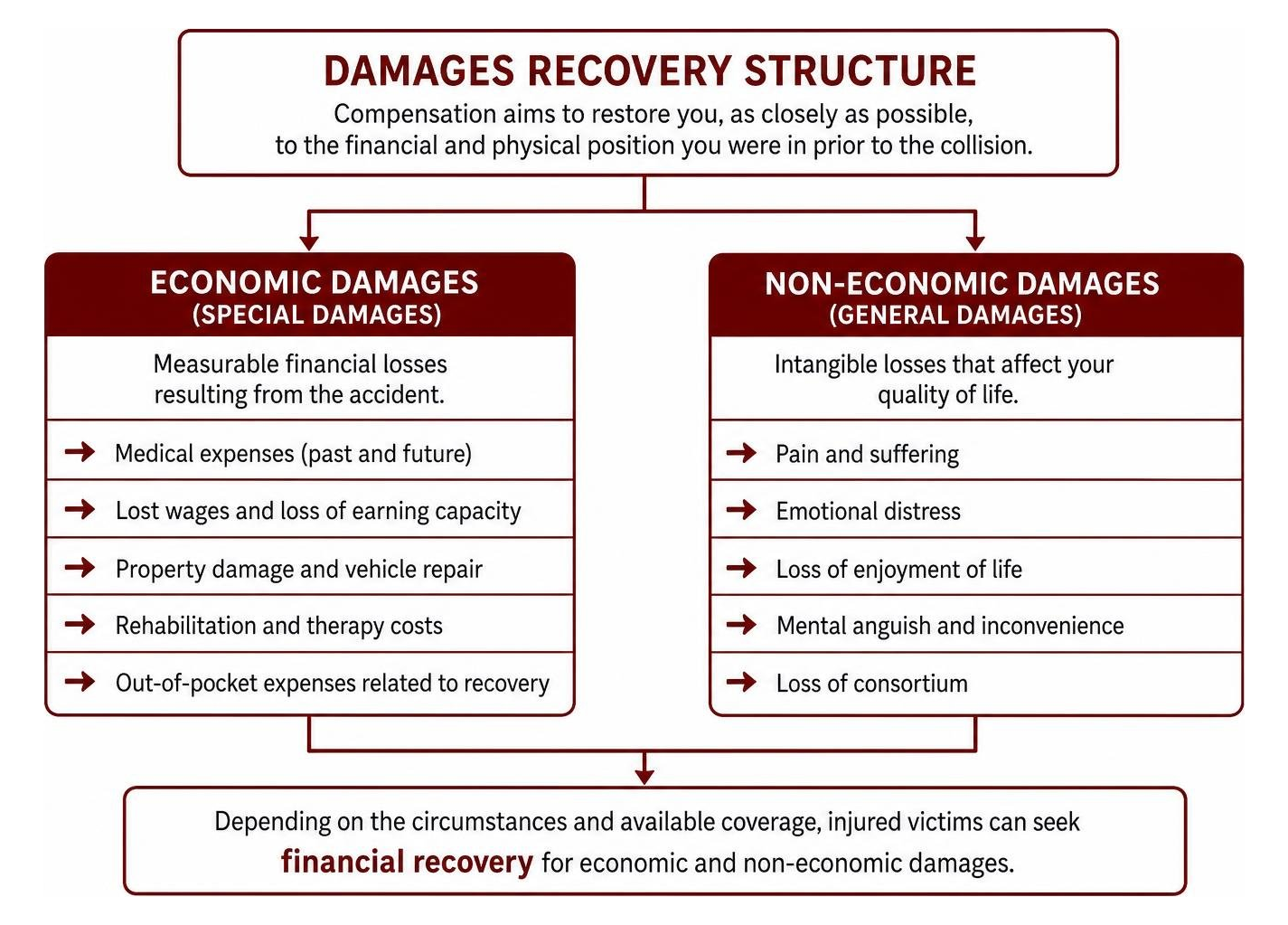
Depending on the circumstances and available coverage, injured victims can seek financial recovery for:
Successfully navigating auto injury settlements in Perth Amboy requires meticulous financial calculation to ensure every past, current, and future loss is accounted for in the final demand.
You do not have unlimited time to file a lawsuit following a motor vehicle collision. State statutes of limitations establish strict legal deadlines for taking formal action in court:
Missing a statutory filing deadline permanently extinguishes your legal right to pursue compensation through the court system, regardless of how catastrophic your injuries may be. Contacting an attorney immediately after your collision guarantees all necessary notices and pleadings are filed on time.
A common concern among injured individuals is the cost of hiring an experienced attorney. Reputable personal injury and insurance litigation firms operate on a contingency fee model.
Under a contingency fee arrangement:
When choosing legal counsel, you need a team that understands how to challenge large insurance corporations. For residents throughout Middlesex County, finding the right car accident attorney in New Brunswick NJ can make a significant difference in the final resolution of your claim.
If an insurance company denies your claim, request a formal, written denial letter detailing the specific factual and policy-language reasons for the decision. Do not accept a verbal rejection over the phone. Gather your complete policy documents, accident documentation, and medical records, and schedule a consultation with an insurance dispute attorney. A lawyer will review the denial to determine if the insurer misinterpreted coverage, failed to investigate properly, or acted in bad faith, and can file an internal appeal or civil lawsuit on your behalf.
Car insurance and personal injury attorneys represent clients on a contingency fee basis. You do not pay any hourly rates or upfront legal retainers. The attorney advances all case development expenses, and their legal fee is paid as a percentage of the total recovery obtained through a settlement or trial verdict. If the lawyer fails to recover compensation for your claim, you owe no attorney fees.
Yes. When an insurance company engages in intentional wrongdoing, fraud, malice, or gross disregard for a policyholder’s rights, courts may award punitive damages. These damages extend beyond your actual economic and personal losses to punish the insurance company for egregious behavior and deter other insurers from engaging in similar deceptive practices.
A serious car crash can disrupt your physical health, your emotional stability, and your family’s financial security in an instant. Dealing with complex insurance policy language, uncooperative adjusters, and bad-faith settlement tactics while trying to heal only adds unnecessary stress.
At Lutz, Shafranski, Gorman, Mahoney & Lazzaro, P.A., we believe that policyholders deserve honest, aggressive, and comprehensive advocacy. We do not let insurance corporations shortchange injured victims. Our team prepares every claim for trial from day one, giving our clients the strongest possible position during negotiations.
If you or a loved one has suffered injuries in a collision across Middlesex County—including New Brunswick, Milltown, Perth Amboy, Edison, Woodbridge, Piscataway, East Brunswick, Sayreville, Middlesex, North Brunswick, Highland Park, or Monroe—our team is ready to stand by your side. Contact our office today for a free, confidential case evaluation and secure the experienced car accident lawyer representation needed to protect your future.